



Assisted Reproductive Technology Market Size, Key Companies, Company Market Share, Patient Volume, Treatment Adoption Rates, Pricing Analysis, Regulatory Landscape, Competitive Positioning, and Demand Forecast
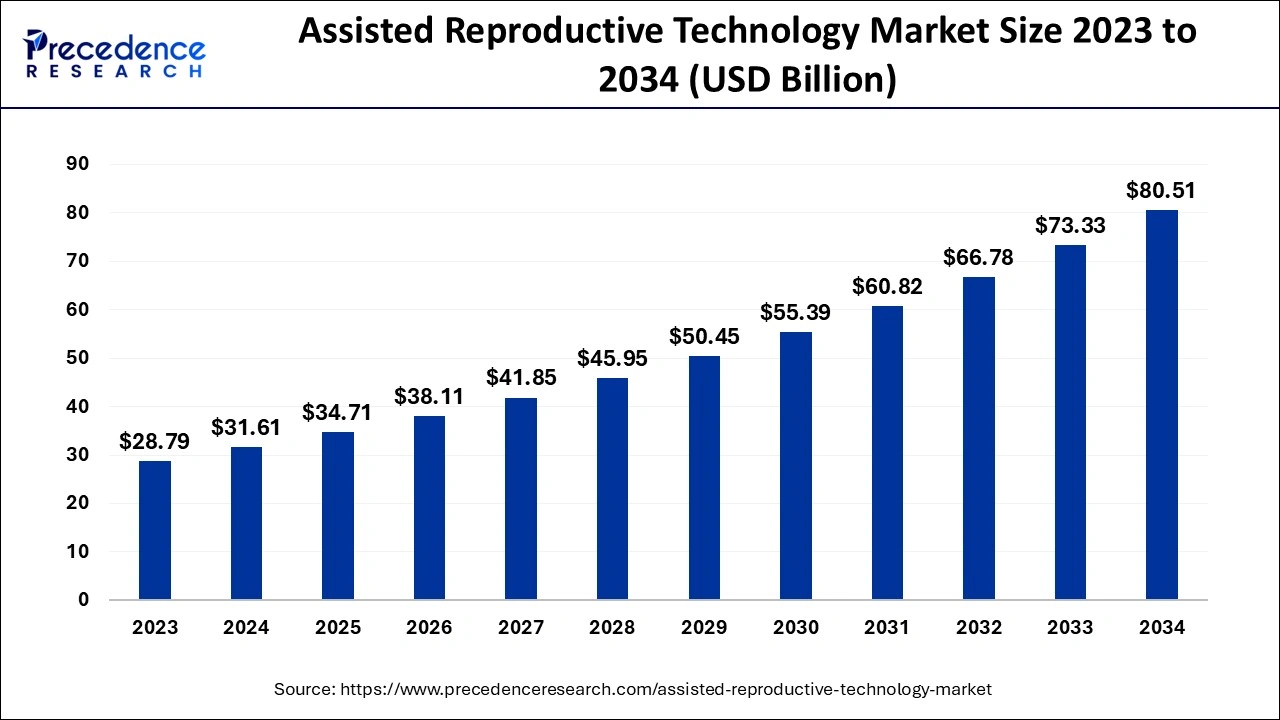
The global assisted reproductive technology market is projected to grow from USD 38.11 billion in 2026 to approximately USD 87.27 billion by 2035, registering a CAGR of 9.66% over the forecast period. The assisted reproductive technology market growth is driven by rising infertility rates, increasing adoption of advanced fertility treatments such as IVF, growing awareness and acceptance of ART, government support and healthcare investments, expanding fertility clinics, technological advancements, and improving access to reproductive healthcare services.
Source: https://www.precedenceresearch.com/assisted-reproductive-technology-market
 Get a Sample
 Table Of Content


What is the Assisted Reproductive Technology Market Size?
The global assisted reproductive technology market size accounted for USD 38.11 billion in 2026 and is anticipated to reach around USD 87.27 billion by 2035, growing at a CAGR of 9.66% from 2026 to 2035.
Assisted Reproductive Technology Market Key Takeaways
- In terms of revenue, the market is valued at USD 38.11 billion in 2026.
- It is projected to reach $87.27 billion by 2035.
- The market is expected to grow at a CAGR of 9.66% from 2026 to 2035.
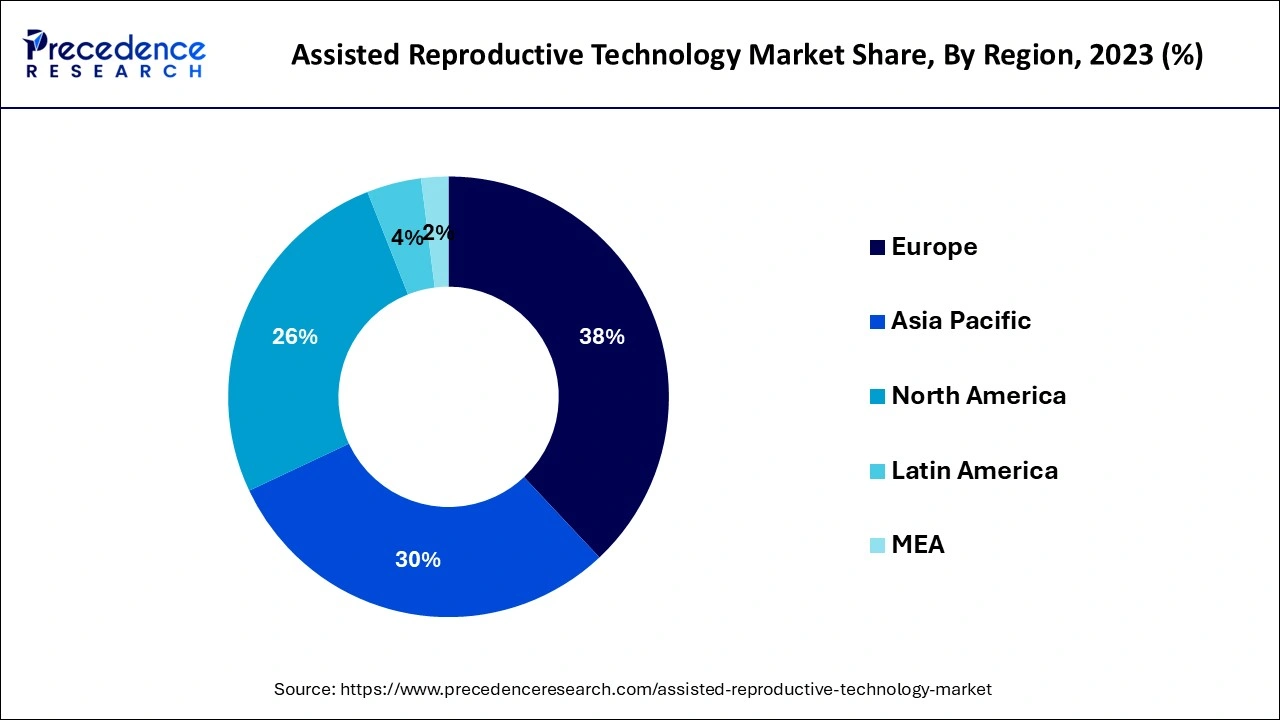
- Europe region dominated the market in 2024 with 38% of the revenue share.
- By product, the accessory & disposable segment accounted for 51% of revenue share in 2025.
- By end-uses, the fertility clinics & other facilities segment has captured 79.9% of the overall revenue share in 2025.
- By type, the IVF segment has accounted for the highest revenue share of around 93.5% in 2025.
Market Overview
Assisted reproductive technology is carried out in medical centers. With the increased growth of infertility and enhance assisted reproductive technology. Assisted reproductive technology is fertility treatment. Which involved medical treatment, for example, in-vitro fertilization (IVF), intracytoplasmic sperm injection (ICSI), cryopreservation of gametes or embryos, or fertility treatment including medications for gaining fertility. Assisted reproductive technology is majorly involved in reproductive endocrinology and infertility.
Assisted reproductive technology is also involved in surrogacy treatment but cannot be used in every surrogacy treatment. Infertility issues can be solved using assisted reproductive technology with the conventional method of treating infertility with enhanced sterility. The advanced technologies developed in the market for treating infertility problems with increasing research and development help to grow the market of assisted reproductive technology with an enhanced growth rate during the forecast period.
Impact of Covid-19 on assisted reproductive technology with a negative effect on the market with reduced patients visiting the health care centres at a reduced market rate due to fewer demands. Post-pandemic impact of covid-19 on the assisted reproductive technology market with enhanced growth rate and enhanced consultation and treatment involved in infertility helps to boost the market of assisted reproductive technology.
Assisted Reproductive Technology Market Growth Factors
Enhance the growth of assisted reproductive technology with increasing rates of infertility rate due to Sexually Transmitted Infections, increased smoking, increasing obesity, endometriosis, Polycystic Ovary Syndrome, Primary Ovary Insufficiency, and others. With the increase in demands from the customer to gain fertility from various technology developed and to drive the market of assisted reproductive technology.
The rise in acceptance of the developed technology by the market enhances the efficiency of the treatment or medication involved in treating infertility problems. Developed technologies such as Preimplantation Genetic Testing, Magnetic Activates Cell Sorting, and many more. Increasing awareness regarding the advance developed technology in infertility treatment help to propel the market of assisted reproductive technology with an enhanced growth rate during the forecast period.
The number of an organization participating in an increased number of treatments involved for treating infertility may help to boost the market of assisted reproductive technology. Government support for increasing the advanced technologies in assisted reproductive technology with increased integration of the technologies in the health care sector with enhanced developed technology help to grow the market of assisted reproductive technology. Increased government investment from various regions helps to grow the market with increased revenue share.
Market Scope
| Report Coverage | Details |
| Market Size by 2035 | USD 87.27 Billion |
| Market Size in 2025 | USD 34.71 Billion |
| Market Size in 2026 | USD 38.11 Billion |
| Growth Rate from 2026 to 2035 | CAGR of 9.66% |
| Dominated Region | Europe |
| Base Year | 2026 |
| Forecast Period | 2026 to 2035 |
| Segments Covered |
Product, Technology, Diagnosis, End-User, and Region |
| Regions Covered |
North America, Europe, Asia-Pacific, Latin America and Middle East & Africa |
Market Dynamics
Drivers
- Increasing obesity of the women - Increase utilization of assisted reproductive technology from women with increasing infertility due to various regions such as rising obesity, and lack of exercise, which led to increasing obesity among the women which led to several chronic disorders. Which gave rise to increased infertility and enhance the market of assisted reproductive technology with an enhanced market growth rate during the forecast period with enhanced developed technologies in assisted reproductive technology.
- Ovulation disorders - Increasing ovulation disorders among women with enhanced menstruation problems, and hormonal imbalance in the women may affect menstruation and ovulation with increased infertility among the women and helps to drive the market of assisted reproductive technology with increasing demands from the customer and increased integration of newly developed technologies in the healthcare center and enhance the market during the forecast period.
- Dietary intake - Changing lifestyle among the population with increasing chronic disorders and enhancing the number of patients visiting hospitals due to various disorders rising and changing dietary foods with increasing intake of junk foods and increasing obesity led to infertility problems among the women led to increasing in the adoption of assisted reproductive technology with increased advancement help to grow the market.
Challenges
The increased cost of assisted reproductive technology
- The advanced developed technologies in infertility treatment with increasing problems among women. Enhance the cost of the developed techniques with increased efficiency of the technology, efficacy, accuracy, and precision of the treatment. led to reducing the market of assisted reproductive technology due to fewer demands from the customer and a decline in the market of assisted reproductive technology.
Lack of skill among the people
- The introduction of the advanced treatment involved in assisted reproductive technology for treating infertility with the increased number of techniques for performing the procedure in fertility technology with an enhanced number of procedures involves upgraded skills required for carrying out the procedure. Lack of skill among the people may hamper the market of assisted reproductive technology due to lack of knowledge among the workers may challenge the market growth rate during the forecast period.
The increasing availability of options
- The various number of options developed in assisted reproductive technology with an increased number of treatments available for treating infertility may reduce the market of assisted reproductive technology due to the numerous options available in the medical center may challenge the market of assisted reproductive technology to grow to a larger extend.
Opportunities
Emerging regions with enhanced development
- The wide acceptance of the advance developed technology across various regions with the increasing number of facilities in the health care centers with improved infrastructure in the health care centers for enhancing the treatment of improving fertility with enhanced technology drives the market of assisted reproductive technology with enhancing demands from the market due to increasing number of women with infertility help to boost the market of assisted reproductive technology.
Increased support from the government
- Governments from various regions and countries with increased support for increasing the technologies in assisted reproductive technology for treating fertility problems and enhancing the research for increasing the number of treatments with improved efficiency and increasing the fertility rate among women with the utilization of new technology developed. Increased funding from the government with development and technology integration in medical centers and imposition of policies such as reimbursement help to grow the market rate during the forecast period.
Segment Insights
Product Insights
The instruments segment held the largest market share in 2025, driven by the need for high-precision laboratory instruments essential for successful gamete handling and embryo development. The global adoption of advanced incubation systems that mimic physiological conditions to enhance embryonic viability also contributes to this growth.
The reagents and media segment is expected to grow at the fastest rate during the forecast period due to its indispensable role in supporting various stages of gamete and embryo handling. These specialized media formulations create optimal environments for different in vitro processes, ensuring successful outcomes in fertility treatments. The success of ART heavily relies on the quality and precision of culture media, with continuous research and development aimed at improving efficacy and safety in ART treatments.
On the basis of product segmentation of assisted reproductive technology, the accessory & disposable market with largest market share with increasing demands from the medical center for the developed technologies in infertility problems. Increasing infertility prevalence among women and enhanced demands for fertilization techniques developed.
Increasing the number of screening of the sperms, analysis, and gametes handling techniques with an increasing number of treatments and enhancing the technologies with new techniques and help to drive the market of assisted reproductive technology. Reagents and media also with significant growth of the technology with enhanced demands for embryo transfer and increasing In Vitro Fertilization and enhance the market growth.
Technology Insights
On the basis of technology in segmentation of the assisted reproductive technology, In - Vitro Fertilization accounts for the largest market growth in assisted reproductive technology. This helps to enhance the market rate with increasing demands from the medical sector for new technologies with increasing efficiency of the treatment and solving the infertility problem and enhance the fertility rate among the women with various medications and treatments developed in the assisted reproductive technology.
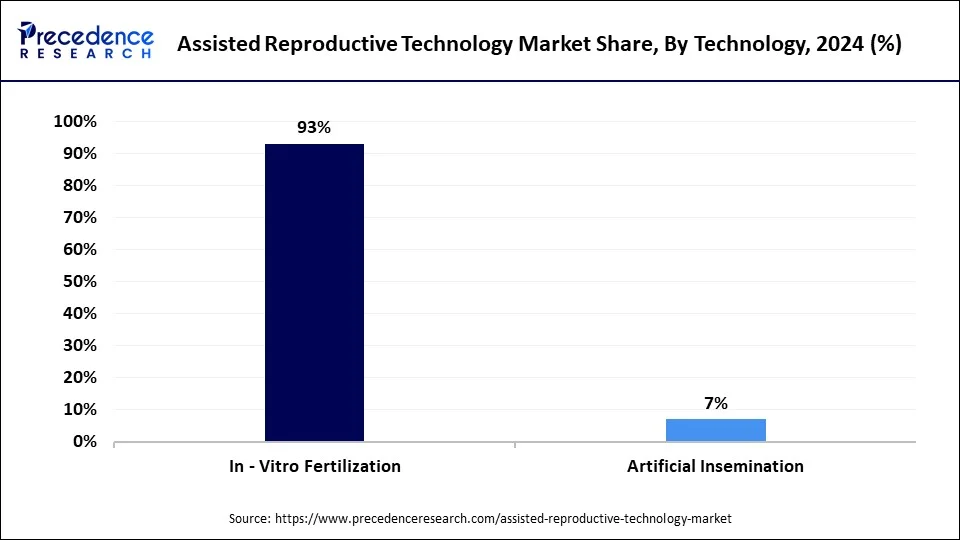
Moreover, artificial insemination also with the highest market growth with increasing CAGR and improving infrastructure may extend the market to a larger extent during the forecast period.
The IVF segment dominated the market and is expected to grow at the fastest rate during the forecast period. This is due to delays in childbearing to a point where age-related fertility decline contributes to the prevalence of infertility. The utilization of IVF is closely associated with its affordability and accessibility. The worldwide utilization of in vitro fertilization has increased dramatically over the past 4 decades. According to the CDC, nearly 390,000 IVF cycles were performed in the United States in 2023, marking more than a twofold increase since 2011, when 163,000 ART cycles were recorded.
End-User Insights
On the basis of end-user in segmentation of the assisted reproductive technology, the fertility clinic segment account for the fastest growing segment with the increasing prevalence of infertility disorder among women due to changing lifestyle, changing dietary intake, increased obesity, lack of exercise may be led to increase infertility and enhance demands for the treatment and medications for increasing the fertility with increasing the efficiency of the treatment.
The surgical center also growing with increasing demands and growing the market growth rate of assisted reproductive technology to a larger extent during the forecast period.
IVF centers segment held the largest share of the market and is anticipated to grow at the fastest rate during the forecast period. This is driven by ART regulation, growing infertility demand, and private sector growth, the rising number of procedures and the presence of doctors who specialize in assisted reproductive technologies.
Diagnosis Insights
The ovulation testing segment dominated the market in 2025. This is due to rising success rates of IVF technology, growing awareness regarding IVF procedures, and a trend toward delayed onset of pregnancy. Ovulation testing is used to track menstrual cycles and determine the most fertile days for conception.
The hysterosalpingography segment is expected to grow at the fastest rate during the forecast period. This is because Hysterosalpingography is a required diagnostic test performed before starting IVF to assess the uterine cavity and fallopian tubes. It helps doctors to understand any hidden issues that might affect fertilisation, implantation, or pregnancy success.
Regional Insights
What is the Europe Assisted Reproductive Technology Market Size?
The Europe assisted reproductive technology market size is evaluated at USD 14.48 billion in 2026 and is predicted to be worth around USD 33.70 billion by 2035, rising at a CAGR of 9.83% from 2026 to 2035.
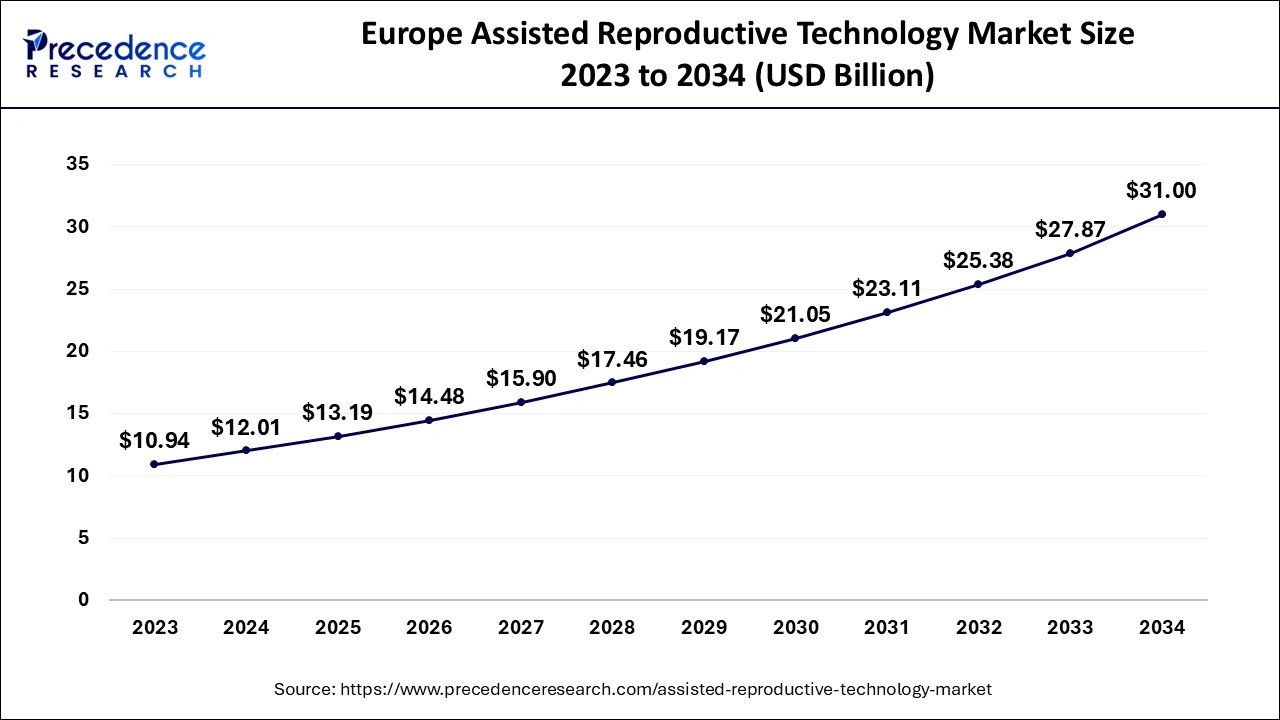
Europe dominated the market revenue in 2025. The market growth in the region is attributed to the increasing government supportive initiatives, rising technological advancements, increasing awareness related to fertility, and a growing number of infertility rates. In 2023, the total fertility rate in the Europe in 1.38 live births per women. 3.67 million children were born in Europe in 2023. The fertility rate for women aged between 25-29 years is the highest among all age groups. Assisted reproductive technology helps thousands of infertile couples to have children in Europe, which is expected to increase market demand.
Europe also with significant growth in assisted reproductive technology with increasing interest from the market players in developing technologies for treating infertility. North America, the Middle East, and Africa in the process to contribute for increasing the growth rate of assisted reproductive technology during the forecast period.
UK Market Trends
The demand for assisted reproductive technology is expected to grow in the UK due to the introduction of several new government-approved techniques aimed at preventing multiple births. In Germany, the government has implemented various policies to support the use of in vitro fertilization treatments.
Asia Pacific Assisted Reproductive Technology Market Trends
The Asia Pacific region is expected to grow at the fastest rate during the forecast period, due to increased research and development, government investment, and advancements in healthcare technologies and infrastructure. Rising disposable incomes among individuals are also contributing to the greater utilization of healthcare services, particularly in addressing infertility issues among women.
India Market Trends
The growth of the ART industry in India has been substantial. Infertility is a significant health concern, affecting approximately 15% of couples of reproductive age. The ART industry is rapidly expanding in India, with numerous clinics and service providers offering a wide range of solutions for individuals and couples facing infertility. Currently, India conducts approximately 300,000 to 350,000 IVF cycles annually.
North America Market Trends
North America is projected to experience notable growth. Factors driving this growth include rising disposable incomes, a greater adoption of fertility services, and increased usage of technologically advanced treatments. The U.S. and Canada are the leading countries fueling this market expansion. In the U.S., ART births account for 1-8% of all births.
U.S. Market Trends
Changing lifestyles, delayed pregnancies, and stress-related fertility issues are driving demand for ART procedures in the country. According to newly released data from the Society for Assisted Reproductive Technology (SART), fertility clinics in the U.S. reported performing 449,772 IVF treatment cycles in 2024, resulting in 97,549 live births and more than 100,000 babies born nationwide.
Middle East and Africa Market Trends
The assisted reproductive technology market in the Middle East and Africa is steadily expanding due to rising demand, advancing technologies, government support, and evolving social perceptions. Several countries in the MEA region are investing in healthcare infrastructure, particularly in urban areas, to attract medical tourism and enhance ART services. The increasing number of fertility clinics and strategic partnerships with international IVF service providers are further promoting growth in this sector.
UAE Market Trends
In the UAE, IVF services are notably cosmopolitan, catering to an international clientele drawn to Dubai as a thriving global city and emerging medical tourism hub. The UAE government funds ART for women aged 18 to 47 years, covering cryostorage costs for embryos or eggs for up to five years, with annual consent renewals required to continue freezing.
Latin America Assisted Reproductive Technology Market Trends
The expansion of access to assisted reproductive technologies, along with heightened public and private investment in reproductive health services, is driven by increasing infertility prevalence and demographic shifts. Growing awareness of fertility preservation across major economies in the region is further bolstering market growth.
Brazil Market Trends
The assisted reproductive technology industry in Brazil is experiencing robust expansion, driven by changing demographic trends and evolving societal attitudes toward assisted reproduction. Brazil has 193 assisted reproduction centers with the highest concentration in more industrialized regions like São Paulo (34.2%), Minas Gerais (11.9%), and Rio Grande do Sul (8.3%). These regions have a higher number of women in the workforce, which correlates with later motherhood and consequently higher rates of infertility, increasing the demand for ART services.
Key Market Players Insights
The key market players involved in the introduction of the newly developed technology in assisted reproductive technology with increasing efficiency of the treatment help to rise the market with increasing demands from patients with enhanced infertility. A large number of investments done by the key market players for introducing new technology and constant research and development in assisted reproductive technology. Which accelerates the market of assisted reproductive technology with a rising rate during the forecast period.
Assisted Reproductive Technology Market Companies
- Vitrolife AB
- Thermo Fisher Scientific, Inc
- The Cooper Companies, Inc (Cooper Surgical Inc.)
- Progyny Inc.
- Oxford Gene Technology
- Millendo Therapeutics, Inc
- Merck KGaA (EMD Serono, Inc)
- Genera Biomedx
- Fujifilm Holdings Corporation (Irvine Scientific Sales Company)
- Cook Medical Inc
- Ferring B.V.
- Bloom IVF Centre
- European Sperm Bank
- Microm U.K. Ltd
- Cosmos Biomedical Ltd
- Cryolab Ltd
Recent Developments
- In August 2026, Jinxin Fertility Group Ltd., a leading provider of assisted reproduction services, announced the launch of what it claims to be China's first doctor-facing artificial intelligence agent for assisted reproduction, implemented at a hospital in its home province of Sichuan. The Chengdu-based company intends to integrate this system into routine in-vitro fertilization workflows.
- In July 2026, Gaudium IVF and Women Health Limited officially inaugurated its AI-Powered Signature Labs to initiate a national expansion comprising 19 centers. This launch coincided with the commencement of clinical operations at its newly established hub in South Extension.
- In April 2026, Nova IVF Fertility, the fertility care branch of Asia Healthcare Holdings, acquired a majority stake in Craft Fertility Centre Private Limited, based in Kerala, for a valuation of $40 million.
- In March 2025, a leading pan-European private equity firm Astorg announced the launch of a global MedTech company, Nexpring Health dedicated to Assisted Reproductive Technology (“ART”).
- In April 2025, the Conceive fertility Foundation and the Wyatt Foundation announced the launch of 025 IVF grant program. The aim behind this launch was to raise awareness of infertility, offset treatment costs for patients who face financial barriers to care, and support research for more affordable fertility care options.
- In November 2024, SpOvum announced the launch of its advanced AI-powered platform, SpOvum ARTGPT. The aim behind this launch was to revolutionize patient interaction in the field of assisted reproductive technology (ART).
- In the year 2021, Cooper Surgical introduced a collaboration with Virtus Health and enhance the developed technologies in fertility and increasing research and development and making the availability of treatment for infertile couples.
- In the year 2021, Hamilton Thorne Ltd. developed GYNEMED GM501, which is utilized for in-vitro washing and techniques mentioned for the handling of oocytes and embryos by humans and got approval from the United States and Europe and is ready for marketing.
Segments Covered in the Report
By Product
- Instrument
- Laser systems
- Micromanipulator
- Cabinet
- Ovum aspiration pump
- Imaging systems
- Incubator
- Cryosystem
- Sperm separation system
- Others
- Accessory & Disposable
- Reagents & media
- Embryo culture media
- Ovum processing media
- Semen processing media
- Cryopreservation media
By Technology
- In-Vitro Fertilization (IVF)
- Fresh Donor
- Frozen Donor
- Fresh Non-Donor
- Frozen Non-Donor
- Artificial Insemination
- Intrauterine Insemination
- Intracervical Insemination
- Intravaginal Insemination
- Intratubal Insemination
By Diagnosis
- Ovulation Testing
- Hysterosalpingography
By End-User
- Ambulatory surgical centers
- Hospitals
- Clinics
- Diagnostic centers
- Gynecology Centers
- Feminist Health Centers
- IVF Centers
By Region
- North America
- Europe
- Asia-Pacific
- Latin America
- Middle East & Africa (MEA)
For inquiries regarding discounts, bulk purchases, or customization requests, please contact us at sales@precedenceresearch.com
Frequently Asked Questions





Ask For Sample
No cookie-cutter, only authentic analysis – take the 1st step to become a Precedence Research client
 Get a Sample
.webp)



 sales@precedenceresearch.com
 Schedule a Meeting
