



Biobanking Market Size, Key Companies, Company Production Capacity, Healthcare Infrastructure Growth, Product Utilization, Regulatory Compliance, Company Expansion Strategies, Company Investment Strategies, and Market Outlook
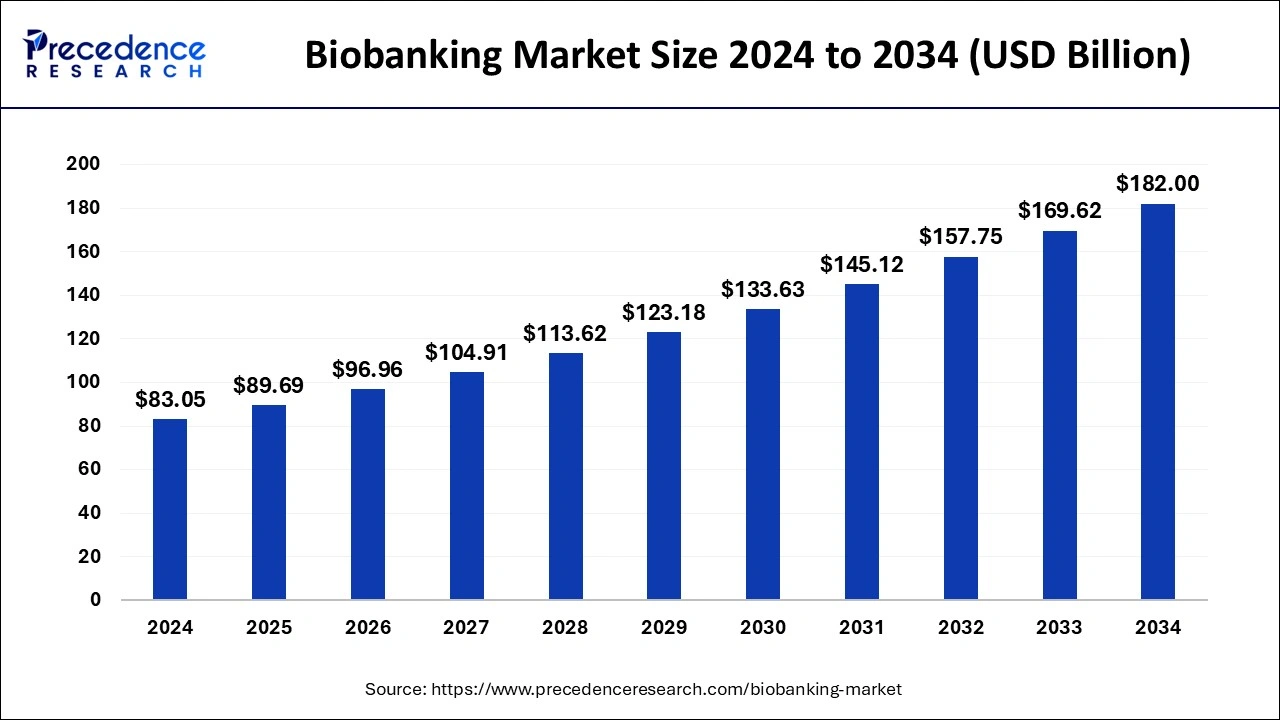
The European Biobanking Market is expected to grow from USD 96.96 billion in 2026 to USD 182.00 billion by 2034, registering a CAGR of 8.31% during the forecast period. Europe remains a leading region due to the presence of well-established biobanks across countries such as Denmark, Norway, and Sweden. Growth is supported by the increasing availability of biological samples and greater public participation in DNA and sample donation programs. Rising investments by pharmaceutical and biotechnology companies in research and development are further strengthening the industry. Additionally, the growing adoption of virtual biobanking technologies is improving sample storage, data management, accessibility, and research collaboration across the region.
Source: https://www.precedenceresearch.com/biobanking-market
 Get a Sample
 Table Of Content


What is the Biobanking Market Size?
The global biobanking market size was valued at USD 96.96 billion in 2026 and it is expected to hit over USD 182.00 billion by 2034 with a registered CAGR of 8.02% from 2025 to 2034. Biobanking market growth is driven by rising demand for personalized medicine, expanding genomic research, increasing clinical trials, regenerative medicine advancements, and government research funding.
Biobanking Market Key Takeaways
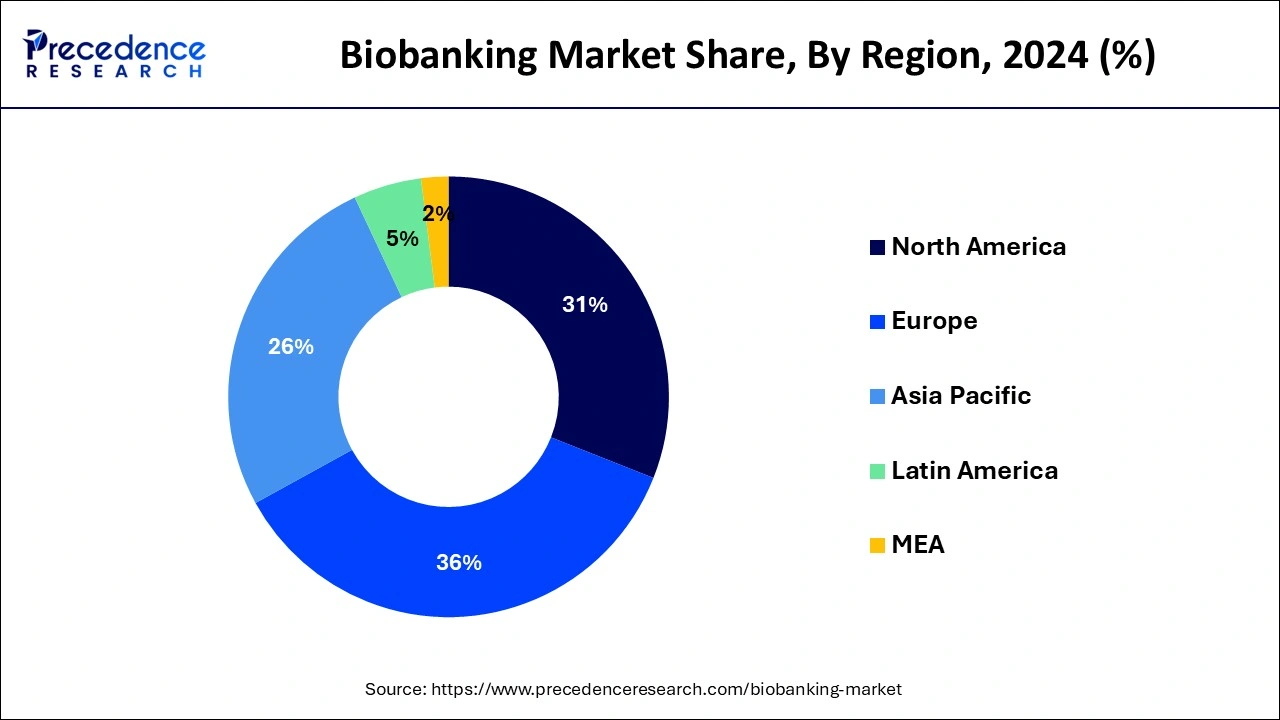
- Europe led the global market with the highest market share of 36% in 2025.
- Asia Pacific is expected to witness the highest growth rate during the forecast period.
- By product, the biobanking equipment segment dominated the market with a 45.60% share in 2025.
- By product, the laboratory information management systems (LIMS) segment is expected to grow at the highest CAGR of 8.90% in the forecasted period.
- By service, the biobanking & repository segment held a 38.20% market share in 2025.
- By service, the cold chain logistics segment is expected to grow at the highest CAGR of 9.10% over the forecast period.
- By biospecimen type, the human tissues segment led the market by holding a 42.50% share in the upcoming period.
- By biospecimen type, the stem cells segment is expected to grow at the highest CAGR of 9.40% in the forecasted period.
- By application, the drug discovery & clinical research segment dominated the market with a 36.90% share in 2025.
- By application, the therapeutics segment is expected to grow at the highest CAGR of 9.20% in the upcoming period.
- By end use, the pharmaceutical & biotechnology companies segment held a 34.50% market share in 2025.
- By end use, the CROs & CMOs segment is expected to grow at the highest CAGR of 9.00% in the forecasted period.
Market Overview
Advancing Healthcare Supports Biobanking Market Growth
Biobanks collect, process, preserve, store and distribute biological samples such as blood, tissue, cells, DNA, RNA, and biospecimens to be used in various research, clinical, and therapeutic applications. These biological samples play a critical role in developing precision medicine, drug development, disease diagnosis, and regenerative medicine. The biobanking industry has been growing steadily due to increased funding for biomedical research, a greater demand for personalized health care, and increased genomic and proteomic research. Biobanking is also expanding rapidly due to collaborating research institutions, pharmaceutical companies, and health care organizations.
Additionally, advances in cryopreservation technology, digital sample management systems, and automated sample storage solutions are making biobanks more efficient; providing better quality of biological material for research projects; and improving the ability of biobanks to preserve biological materials for a long-time period.
Smart Biobanking Powered by Artificial Intelligence
Artificial intelligence is changing the biobanking industry by making the way biological samples are collected, organized, analyzed and managed simpler and more efficient through the use of automation to enhance the way biological samples and associated clinical data are collected, organized, analyzed and manipulated. AI algorithms allow for the more accurate tracking of biological sample quality, provide greater automation of data processing, eliminate human error in the processing of data, and provide quicker and better quality research outcomes. In addition, machine learning provides a way to develop new biomarkers, predict disease and create more precise medicine through identifying patterns across large-scale datasets of information. AI provides quality control to biological samples through predictive analytics, improving the reliability of biological sample quality and improving biological sample storage.
- In February 2026, a new project called BIANCA was launched by the European Institute of Oncology (IEO), Go Reply, and Laife Reply to create the first digital biobank in Italy using AI to enable the digitalisation of histopathology workflows to assist pathologists with AI-enabled diagnostics.
Biobanking Market Growth Factors
The biobanking industry has evolved over time and is gaining rapid traction owing to the introduction of advanced technologies, automation technology, and data analytics, which has led to the rapid emergence of digital biobanks. The rising prevalence of numerous chronic diseases such as cancer, Alzheimer's, cardiovascular diseases, and respiratory diseases and the surging investments in drug development by pharmaceutical companies are the major factors that are significantly influencing the growth of the global biobanking market.
The most prominent drivers of the biobanking market include rising investments in genomic research studies, an increase in the trend of conservation of the cord blood stem cells of newborns, surging needs for drug development and drug discovery, and the significant increase in the corporate and government investments in the regenerative medicine research activities. The growing number of biobanks and the increasing number of human bio-samples are significantly contributing to the growth in the demand for the biobanking equipment.
Biobanking Market Trends
- Demand for Precision Medicine: The rising prevalence of chronic disorders potentiates the need for targeted therapeutics. The development of precision medicine requires data and biological samples from biobanks to predict, diagnose, and treat diseases safely.
- Increasing Investments: Government, private pharmaceutical companies, and philanthropic foundations provide funding for advanced biomedical research. This drives major medical breakthroughs, economic growth, and public health improvements.
- Technological Advancements: The integration of AI and ML technologies in biobanking facilitates sample cataloging, running high-throughput screenings, and analyzing complex multi-omic data faster. Advanced technologies also lead to digital health tracking and large-scale data sharing.
Market Scope
| Report Coverage | Details |
| Growth Rate from 2025 to 2034 | CAGR of 8.02% |
| Market Size in 2025 | USD 89.69 Billion |
| Market Size in 2026 | USD 96.96 Billion |
| Market Size by 2034 | USD 182.00 Billion |
| Base Year | 2025 |
| Forecast Period | 2025 to 2034 |
| Segments Covered | By Product, By Service, By Biospecimen Type, By Biobank, By Application, By Type of Biobank,By Ownership,By Storage |
| Regions Covered | North America, Europe, Asia-Pacific, Latin America, and Middle East & Africa |
Market Dynamics
Driver
Collaborative Research Initiative
Several stakeholders combine their resources, knowledge, samples, and data in a collaborative biobanking research project in order to answer certain research questions or objectives. Researchers may access a wider and more varied range of samples thanks to this collaborative method, which may produce more reliable and broadly applicable results. Participants give other initiative participants access to their biobank collections, including samples and data. As a result, researchers have access to more samples than they could gather on their own. Governance structures are commonly implemented in collaborative ventures to supervise data sharing, guarantee adherence to ethical principles and regulations, and handle matters concerning data ownership, privacy, and permission.
Restraint
Public Trust and Perception
To establish and preserve public confidence in biobanks, operational and governance transparency is crucial. It is essential to communicate clearly about the goals of biobanking, the procedures used to gather, store, and use samples and data, as well as the security measures in place to maintain confidentiality and privacy. Strong security measures must be in place to guard against unauthorized access, breaches, and misuse due to the sensitive nature of biological samples and the data they are associated with. Building relationships with the communities where samples are gathered promotes trust and guarantees that the biobanking procedure complies with local norms and values. Ensuring ethical conduct in biobanking activities and proving accountability need adherence to pertinent regulatory frameworks and standards.
Opportunity
Data Monetization and Commercialization
By providing licenses to researchers, pharmaceutical companies, and other stakeholders who need access to high-quality biological samples and related data for their research and development operations, biobanks can make money off of their data. In order to pool their data for joint research and business uses, biobanks frequently collaborate with universities, pharmaceutical companies, and other organizations. For an extra cost, biobanks can provide their customers with value-added services including quality control, sample processing, data analysis, and bioinformatics. These services increase the data's usefulness and give the biobank new sources of income. Biobanks may be the holders of significant data-related intellectual property rights, such as patents on new biomarkers or medicinal targets identified by data analysis.
Segments Insights
Product Insights
Which Product Segment Led the Biobanking Market in 2025?
The biobanking equipment segment dominated the market with a 45.60% share in 2025. The increasing establishment of biobanks worldwide has significantly boosted the demand for advanced equipment used in sample collection, processing, storage, transportation, and preservation. High capital investment required for purchasing and maintaining specialized biobanking equipment has further contributed to the segment's leading revenue share. In addition, ongoing advancements in automated storage systems and cryopreservation technologies continue to support market growth.
The laboratory information management systems (LIMS) segment is estimated to grow at the highest CAGR during the forecast period due to rising adoption of digital laboratory workflows and increasing need for secure data management across biobanks. Furthermore, the growing implementation of cloud-based LIMS platforms, integration with artificial intelligence and automation technologies, and expanding biobank research activities are expected to accelerate the growth of this segment.
Service Insights
The biobanking & repository segment held a 38.20% market share in 2024. This growth is attributable to the higher demand for disease-specific studies and the increased need for preserving biosamples for the development of precision medicine. The growth of the biobanking services is important for offering organized storage, management, and distribution of the samples.
The cold chain logistics segment is expected to grow at the highest CAGR of 9.10% over the forecast period. The growth of the segment can be credited to the increasing need for personalized medicine, along with the innovations in advanced therapies. Also, the use of AI and big data analytics optimizes logistics by enhancing specimen tracking and predicting storage needs.
Biospecimen Type Insight
The human tissues segment led the market by holding 42.50% share in 2024. The availability of a huge number of biobanks with increased availability of human tissue samples, facilities to store human tissues, and integration of advanced technology for the storage and retrieval of the stored specimens are the major factors that have led to the dominance of this segment.
The stem cells segment is expected to grow at the highest CAGR of 9.40% in 2024. The growth of the segment can be driven by the growing need for regenerative medicine and a surge in public awareness regarding the benefits of stem cells. Furthermore, advancements in stem cell technology preservation, processing, and storage are enhancing overall sample integrity and quality.
Application Insights
The drug discovery & clinical research segment dominated the market with a 36.90% share in 2024. The increased demand for biosamples for their application in drug tests and clinical research studies has fostered the growth of this segment in the global market. The rapid spread of the COVID-19 disease in 2020 has led to an increased demand for biosamples for the research and development of drugs for curing COVID-19.
The therapeutics segment is expected to grow at the highest CAGR of 9.20% in 2024. The growth of the segment can be linked to the increasing emphasis on precision medicine, coupled with the need for high-grade biological samples for chronic disease research. In addition, biobanks offer essential biological samples for all stages of clinical trials.
End-use Insights
The pharmaceutical & biotechnology companies segment held a 34.50% market share in 2024. The dominance of the segment is owing to the rising incidence of chronic diseases, which necessitates new treatment and growing demand for personalized medicine. Moreover, pharmaceutical and biotechnology companies are heavily investing in R&D, which directly fuels the demand for biobanking services.
The CROs & CMOs segment is expected to grow at the highest CAGR of 9.00% in 2024. The growth of the segment is due to the increasing demand for biosimilars and biologics, along with the rising R&D funding by pharmaceutical and biotechnology companies. Also, outsourcing research and production activities to CROs and CMOs can result in time and cost savings.
Regional Analysis
Why is Europe Leading the Biobanking Market?
The biobanking market in Europe reached a size of USD 29.90 billion in 2025 and is anticipated to be worth around USD 66.43 billion by 2034, poised to grow at a CAGR of 8.31% from 2025 to 2034. Europe was the leading market, constituting a market share of around 36% in 2025. The presence of well-established biobanks in European countries like Denmark, Norway, and Sweden has made significant contributions towards market growth. As per an article in Global Engage, around 40% of the people in Iceland have donated DNA that has been stored in the biobanks. Therefore, the rising supply of samples in Europe has led to the growth of the biobanking industry. The rising investments by the pharmaceutical companies in research and development and the increased adoption of virtual biobanking technologies in Europe have favoured the market growth in the past few years.
Europe Biobanking Market Size and Growth 2025 to 2034
The Europe biobanking market size reached USD 34.91 billion in 2026 and is anticipated to be worth around USD 66.43 billion by 2034, poised to grow at a CAGR of 8.21% from 2025 to 2034.
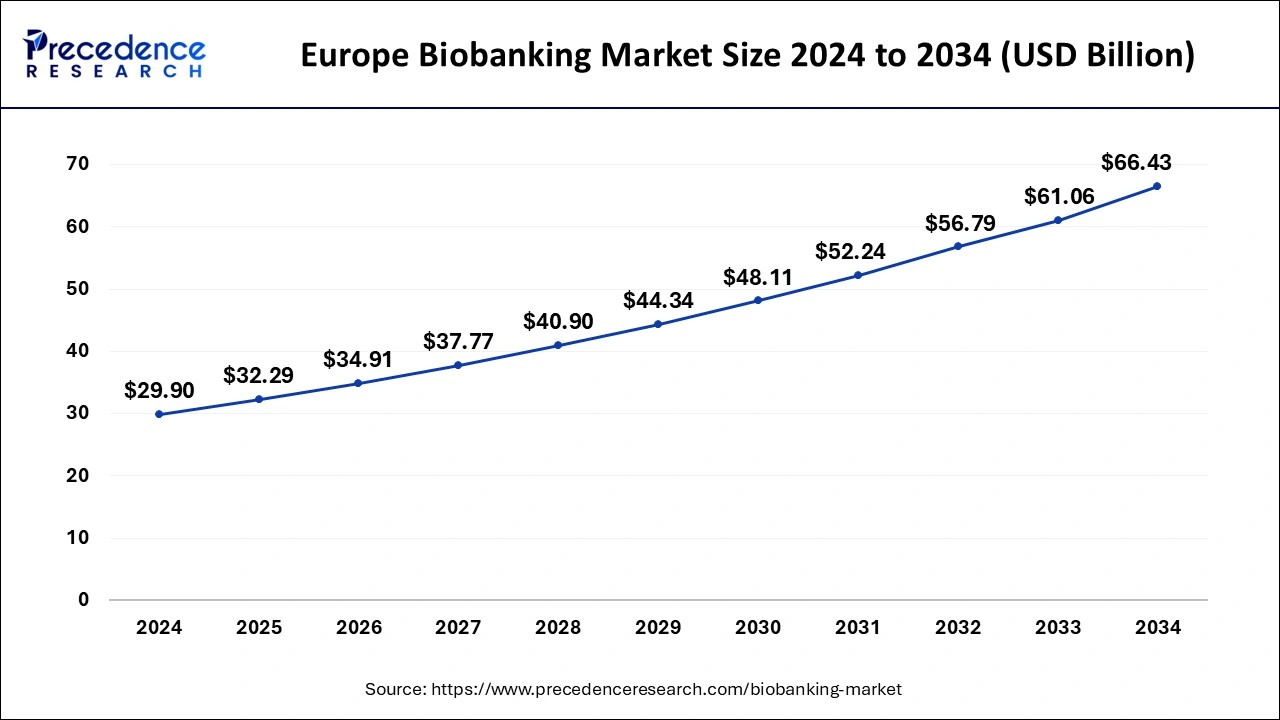
Europe was the leading biobanking market, constituting a market share of around 36% in 2025. The presence of well-established biobanks in European countries like Denmark, Norway, and Sweden has significant contributions towards market growth. As per an article of Global Engage, around 40% of the people in Iceland has donated DNA that has been stored in the biobanks. Therefore, the rising supply of samples in Europe has led to the growth of the biobanking industry. The rising investments by the pharmaceutical companies in the research and development and the increased adoption of the virtual biobanking technologies in Europe has favored the market growth in the past few years.
Germany Market Trends
Germany is at the forefront of Europe's biomedical research sector, with a well-established network of research universities and population biobanks. These contribute to Germany's approval of the use of biobanks in precision and translational medicine, and they are backed by continued funding from both private and public sources for biomedical research and development as well as joint efforts between hospitals, research agencies, and biotechnology companies to provide high-quality biobank services.
How is Asia Pacific Expected to Expand Rapidly in the Biobanking Market?
Asia Pacific is expected to witness the highest growth rate during the forecast period. This is attributable to the growing demand for cell samples and blood samples in academic research institutes for studies. The rising investments in the establishment of well-structured biobanking facilities in the region are driving the growth of the Asia Pacific market.
Asia Pacific is expected to witness the highest growth rate during the forecast period. This is attributable to the growing demand for cell samples and blood samples in the academic research institutes for studies. The rising investments in the establishment of well-structured biobanking facilities in the region are driving the growth of the Asia Pacific biobanking market.
China Market Trends
China is the largest biobanking country within the Asia Pacific region by a considerable margin. It has made significant investments in biotechnology, sequencing of DNA and RNA, and establishing a well-developed and sophisticated medical research infrastructure. There has also been a growth in collaborations between China's research organizations, its hospitals, and its pharmaceutical companies, bolstered by the government's support for innovation through funding the biobanking sector in China. These developments contribute to strengthening China's regional dominance in biobanking.
What are the Key Drivers of the Market in North America?
The North American region is growing steadily within the biobanking market as a result of increased investments made by businesses in the areas of precision medicine, genomic research, and a high degree of collaborative effort from both health care facilities and biopharma companies. The growth in research for biospecimens that can be used to discover new medications, relate to the study of cancers, or find treatments for rare diseases contributes to this growth as well. Further development of digitized data management and Artificial Intelligence also enhances the efficiency and accessibility of biobanks.
U.S. Market Trends
The U.S. market leads with an abundance of biomedical research projects being done, a well-established health care system that allows it to have high numbers of patients that can be used in research, and strong financial support for its genomic initiatives that are being completed. The collaboration between the academic community, the pharmaceutical industry, and the biotechnology industry to build out the collection, storage and usage of biospecimens continues to support and fortify research in each of these areas.
How Does the Canadian Government Support the Biobanking Market?
- The Government of Canada commits to improving the nation's capacity to produce “Made in Canada” vaccines, therapeutics, and other life-saving products.
- Through strong governance and effective collaboration with stakeholders in government agencies, industry, and academia, the government is building capacity to ensure that Canada's biomanufacturing and life sciences sector.
- The government is investing in research in existing and emerging areas to drive innovation, increase expertise, and improve pandemic readiness.
- The Biologics Manufacturing Centre is a key element in increasing Canada's domestic biomanufacturing capacity.
What are the Key Trends of the Biobanking Market in Latin America?
Latin America is expected to grow at a considerable CAGR in the upcoming period due to the growing awareness of blood donation and rapidly expanding cold chain infrastructure. Advances in genomic technologies and evolving regulatory landscapes contribute to market growth. In Latin America, biobank networks focus on population-specific genetics, improving the understanding of chronic diseases like diabetes and autoimmune disorders.
Brazil Market Trends
The Brazilian government has established suitable regulations for the biobank ecosystem. By addressing ethical, technical, and legal aspects, the regulatory framework leads to the development of large multicentric biobanks and international collaborations, which are translated into high-impact research.
Will the Middle East and Africa Grow in the Biobanking Market?
The Middle East and Africa region is expected to grow at a notable CAGR in the foreseeable future due to growing research activities and the rising adoption of advanced technologies. Government bodies launch initiatives and provide funding to conduct advanced research related to precision medicine, genomics, and advanced diagnostics. Countries like the UAE, Saudi Arabia, and South Africa are at the forefront of developing state-of-the-art facilities.
UAE Market Trends
The Ministry of Health and Prevention (MOHAP) is currently working on developing a National Policy for Promoting Personalized/Precision Medicine, supporting the development of novel precision medicines. Abu Dhabi Biobank initiative partnered with Human Life CORD Japan, Inc. to localize the development and clinical application of umbilical cord-derived stem cell therapies in Abu Dhabi.
Competitive Landscape
The biobanking market has major players, such as Thermo Fisher Scientific, Azenta, Inc., Eppendorf, & PHC Corporation, that emphasize high-throughput facilities, energy efficiency, & sample integrity. However, other firms, including Cryoport and BioLife Solutions, are specializing in temperature-sensitive transport, risk prevention, and maintaining a rigorous chain-of-custody for biological materials. Other giant leaders, like Becton, Dickinson and Company (BD), QIAGEN, Merck KGaA, & Greiner Bio-One, are dominating in blood/tissue collection tubes, cryovials, & RNA/DNA extraction kits.
Biobanking Market Companies
- Thermo Fisher Scientific Inc.
- Tecan Trading AG
- QIAGEN
- Hamilton Company
- Brooks Life Sciences
- TTP Labtech
- VWR International, LLC.
- Promega Corporation
- Worthington Industries
- BD
- Merck KGaA
- Biokryo GmbH
- Cell&Co BioServices
- RUCDR Infinite Biologics
- Modul-Bio
Recent Developments
- In February 2026, India launched its first government-supported national biobank for Lysosomal Storage Disorders (LSDs), integrating biological samples and clinical data from 530 patients to accelerate rare disease research, affordable diagnostics, and therapy development.
- In April 2026, Abu Dhabi inaugurated a state-of-the-art biobank developed by the Department of Health–Abu Dhabi and M42, linking biological samples with genomic and clinical data to advance early disease detection and personalized healthcare.
Segments Covered in the Report
By Product
- Biobanking Equipment
- Temperature Control Systems
- Freezers & Refrigerators
- Cryogenic Storage Systems
- Thawing Equipment
- Incubators & Centrifuges
- Alarms & Monitoring Systems
- Accessories & Other Equipment
- Temperature Control Systems
- Biobanking Consumables
- Laboratory Information Management Systems
By Service
- Biobanking & Repository
- Lab processing
- Qualification/ Validation
- Cold Chain Logistics
- Other Services
By Biospecimen Type
- Human Tissues
- Human Organs
- Stem Cells
- Adult Stem Cells
- Embryonic Stem Cells
- IPS Cells
- Other Stem Cells
- Other Biospecimens
By Biobanks Type
- Physical/Real Biobanks
- Tissue Biobanks
- Population Based Biobanks
- Genetic (DNA/RNA)
- Disease Based Biobanks
- Virtual Biobanks
By Application
- Therapeutics
- Drug Discovery & Clinical Research
- Clinical Diagnostics
- Other Applications
By Ownership
- University Owned
- National/Regional Agencies Owned
- Non-profit Organizations Owned
- Private Organization Owned
By End-use
- Pharmaceutical & Biotechnology Companies
- CROs & CMOs
- Academic & Research Institutes
- Hospitals
By Geography
- North America
- Europe
- Asia-Pacific
- Latin America
- Middle East & Africa (MEA)
For inquiries regarding discounts, bulk purchases, or customization requests, please contact us at sales@precedenceresearch.com
Frequently Asked Questions
Tags





Ask For Sample
No cookie-cutter, only authentic analysis – take the 1st step to become a Precedence Research client
 Get a Sample
.webp)



 sales@precedenceresearch.com
 Schedule a Meeting
