



Cloud Computing Market Size, Key Companies, Company Product Portfolio, Digital Transformation, Technology Investment, Adoption Rates, Customer Acquisition, Company Market Share, and Market Outlook
The cloud computing market is experiencing unprecedented growth driven by increasing enterprise digitalization, artificial intelligence integration, hybrid cloud adoption, and rising demand for scalable IT infrastructure. Organizations across sectors are utilizing cloud platforms to improve operational efficiency, enhance cybersecurity, support data-intensive applications, and accelerate innovation. With continuous advancements in AI-powered cloud services, edge computing, and sustainable data center technologies, cloud computing is emerging as the backbone of modern digital transformation, enabling businesses to build resilient, agile, and future-ready technology ecosystems.
Source: https://www.precedenceresearch.com/cloud-computing-market
 Get a Sample
 Table Of Content


What is the Cloud Computing Market Size?
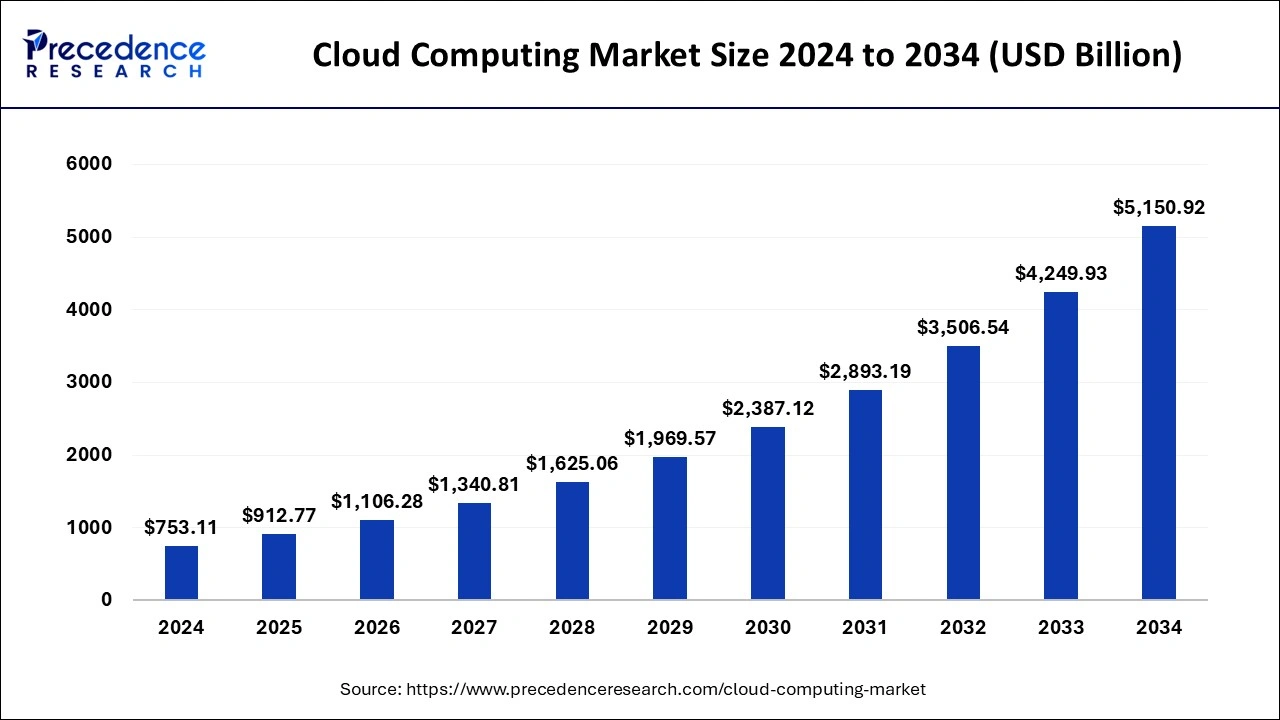
The global cloud computing market size was estimated at USD 912.77 billion in 2025 and is predicted to increase from USD 1,106.28 billion in 2026 to approximately USD 5,946.84 billion by 2035, expanding at a CAGR of 20.61% from 2026 to 2035. The market growth is accelerated by industrial modernization, strategic investment in a digital framework, and innovation in automated analytics and implementation of cloud computing for resilient operation.
Key Takeaways
- By region, North America led the cloud computing market by holding a major share in 2025.
- By region, Asia Pacific is expected to grow at the highest CAGR during the forecast period.
- By deployment, the private segment dominated the market with the largest share in 2025.
- By deployment, the hybrid segment is expected to grow at the fastest rate during the forecast period.
- By service, the software as a service (SaaS) segment dominated with the highest market share in 2025.
- By service, the platform as a service (PaaS) segment is expected to grow at the fastest CAGR during the forecast period.
- By end user, the BFSI segment dominated the market with the largest share in 2025.
- By end user, the healthcare segment is anticipated to experience the fastest growth during the forecast period.
- By organization size, the large enterprises segment dominated the market with the highest share in 2025.
- By organization size, the small and medium-sized enterprises (SMEs) segment is expected to grow with the highest CAGR during the forecast period.
- By workload, the storage, backup and disaster recovery segment led the market with a major share in 2025.
- By workload, the business analytics segment is anticipated to grow at the fastest rate during the forecast period.
Market Size and Forecast
- Market Size in 2025: USD 912.77 Billion
- Market Size in 2026: USD 1,106.28 Billion
- Forecasted Market Size by 2035: USD 5,946.84 Billion
- CAGR (2026 to 2035): 20.61%
- Largest Market in 2025: North America
- Fastest Growing Market: Asia Pacific
Market Overview
The cloud computing market's expansion is supported by global digital transformation. The major organizations are transitioning toward scalable, flexible computing infrastructure integrated by AI and large data analytics that mandate substantial computing power and a compliant storage system. The rising focus on enhanced cybersecurity in cloud platforms is making cloud computing important to modern operations. Diversified end-user companies are transitioning from fixed on-premises computer hardware to robust digital ecosystems, enabling pay-per-use operational costs.
Decentralized machine learning and data mining frameworks accelerate the shift to cloud computing, as these tasks require substantial processing power and elastic memory. Market-leading service administrators build networks that combine public and private clouds by reducing reliance on a single vendor and system costs, and maintaining operational continuity during network problems. The emerging trend of smart devices forces processing to the competitive edge for near-instant responses and end-user authentication. As cloud infrastructure is upgraded for complex workloads, interconnected systems form the pillar of cloud computing for global commerce.
Role of Artificial Intelligence for Cloud Computing
The digital shift will take on a new dimension over the next ten years as businesses use AI systems more and more to improve daily interactions. Automating tasks, decreasing human error, increasing productivity, applying cost-cutting strategies, and boosting efficiency are all made possible by cloud-based AI.
Cloud computing and AI algorithms work together to analyze and organize large data volumes, creating useful blueprints for upcoming migrations and changes. The incorporation of AI into cloud computing facilitates adaptability, flexible approaches, and safe systems, enabling enterprises to expand quickly and economically with strong AI solutions.
How are Governments Initiatives Supporting the Cloud Computing Sector?
The government adopted cloud platforms to provide services like Aadhaar authentication, UPI transactions, DigiLocker document storage, and telemedicine (eSanjeevani). Through strategic investment, a scalable cloud infrastructure ensures systems such as UPI operate reliably and consistently. The government cloud infrastructure complies with MeitY standards, ensuring secure, compliant storage and processing of delicate data. Platforms like UMANG and MeriPehchaan SSO simplify citizen interactions with government and public services
- In February 2026, the Union Budget 2026–27 announced a tax holiday until 2047 for qualifying foreign cloud service providers operating via India-based data centers, bolstering India's role as a global digital infrastructure hub for economic growth.
- In January 2025, Microsoft and CEO Satya Nadella announced a US $3 billion investment in India over two years for cloud, data centers and AI infrastructure. The goal is to boost AI innovation and support Prime Minister Narendra Modi's vision of transforming India into a developed country (Viksit Bharat) by 2047.
Cloud Computing Market Trends
- Hyper-Scale Modification Toward Customized Internal Processing System: Major leading companies are replacing standard commercial processors to develop trademarked tensor-optimized silicon constructions. The internal processing system is designed to efficiently perform intensive predictive calculations and hyper-scale power models.
- Complete Evolution to On-Demand, Ephemeral Processing Units: Software development shift towards event-driven code orchestration. execution of ephemeral processing units for precise calculations and then terminates immediately upon completion.
- Proactive Integration of Next-Generation Algorithmic Solution: To protect corporate communications and government databases from emerging cryptographic threats, the integration of advanced mathematical security layers that are resistant to interpretation by next-generation supercomputers and quantum devices.
- Rising Demand for Automated Self-Correcting Telemetry: Computing hubs are employing predictive machine learning systems for real-time monitoring of server health, automatic rerouting of hardware by balancing internal security threats, and ensuring instant, zero-delay data responses.
- Emerging Fluid Cross-Provider Operating Outlines: Global IT companies are adopting sophisticated software translation layers to integrate diverse public systems and internal networks into a unified computing mesh. This allows live projects to optimize for varying pricing models and regional compliance requirements.
Cloud Computing Market Growth Factors
- Growing use in different industries: Cloud computation is enabling enterprises to sustain their business functions amid the rising adoption of work the work-from-home model. Cloud computing technology enables enterprises to efficiently store, access, and manage critical data.
- Rising adoption of various gadgets: With the rising adoption of smartphones, laptops, and the internet, the need to store and process huge volumes of data has significantly increased, enabling enterprises to offer customer-centric services to their customers and clients.
- Growing focus on customer services and satisfaction: The rising focus on customer satisfaction, the increasing need for controlling operational expenditure, and the need for controlling capital expenditure are some of the most prominent factors that are significantly driving the growth of the global cloud computing market.
- Need for data security: Data security, fulfilling compliance requirements, and quick data recovery are major factors driving the demand for cloud computing services worldwide.
- Usage of OTT & online communication platforms: The rising demand for the various (OTT) platforms such as Amazon Prime, Netflix, Disney+Hotstar, and Apple TV, along with the increased adoption of online communication platforms like Microsoft Teams, Google Meet, Zoom, and Skype, are the major factors that have contributed significantly towards the growth of the cloud computing market in the past few years.
- Rapid digitalization: Rapid digitization has compelled various organizations to digitize and modernize their infrastructural landscape, boosting cost efficiency and agility.
- Investments in telecommunication & IT infrastructure: Furthermore, the rising investments in the development of strong telecommunications and IT infrastructure are expected to further fuel the growth of the global cloud computing market during the forecast period.
Cloud Computing Market Outlook
- Industry Growth Overview: Cloud computing will continue to grow rapidly as businesses transfer workloads from on-premises systems to the Cloud. The greater use of AI, big data, and IoT by many different industries will also drive up the number of users of the Cloud.
- Sustainability Trends: Cloud service providers are increasingly taking sustainability into account when planning their businesses. Many cloud providers have invested heavily in sustainable energy through the use of renewable power sources and carbon-neutral data centers.
- Global Expansion: Cloud service providers are opening new regional data centers to better serve customers' needs by decreasing latency, compliance risks, and building customer confidence. Additionally, many emerging economies lack sufficient infrastructure to support their population's growing needs for more access to technology; therefore, many Cloud providers will be strategically located in these regions.
- Startup Ecosystem: The exploding startup ecosystem is taking advantage of the Cloud platform to create new product offerings through rapid innovation and cost efficiency, while also enabling entrepreneurs to reach a global customer base through SaaS, fintech, and AI business models worldwide.
Market Report Coverage and Key Metrics
| Report Coverage | Details |
| Market Size in 2025 | USD 912.77 Billion |
| Market Size in 2026 | USD 1,106.28 Billion |
| Market Size in 2035 | USD 5,946.84 Billion |
| Growth Rate from 2026 to 2035 | CAGR of 20.61% |
| Dominating Region | North America |
| Fastest Growing Region | Asia Pacific |
| Base Year | 2025 |
| Forecast Period | 2026 to 2035 |
| Segments Covered | Deployment, Service, End User, Organization Size, Workload, and Region |
| Regions Covered | North America, Europe, Asia-Pacific, Latin America, and Middle East & Africa |
Market Dynamics
Driver
Need for Virtual Infrastructure
The increasing adoption of virtualized infrastructure across industries is a major driver of the cloud computing market. Enterprises are shifting away from traditional on-premise infrastructure due to high capital costs, complex hardware management, maintenance requirements, and limited scalability. Cloud platforms provide flexible computing resources, automated infrastructure management, and access to advanced technologies such as artificial intelligence (AI), machine learning, and big data analytics.
Organizations are increasingly adopting cloud-based solutions to modernize IT operations, improve workflow automation, and support data-intensive applications. Leading cloud service providers are enabling businesses to build scalable digital ecosystems, accelerating cloud migration across industries and contributing to overall market growth.
Restraint
Data Security Concerns
Data security concerns, regulatory compliance requirements, and data residency laws remain key challenges affecting cloud computing adoption. Increasing government regulations regarding data storage, privacy, and cross-border data transfers are creating complexities for global enterprises and cloud service providers. To comply with regional regulations, providers are required to invest in localized data centers and infrastructure, increasing operational costs. These regulatory challenges can slow cloud deployment, reduce flexibility, and create barriers for organizations operating across multiple regions.
Opportunity
Integration of Advanced Technologies
The growing integration of cloud computing with edge computing, artificial intelligence, and Internet of Things (IoT) technologies presents significant growth opportunities for the market. Distributed cloud architectures enable real-time data processing closer to the source, supporting applications such as smart manufacturing, autonomous systems, connected vehicles, energy management, and healthcare monitoring.
The expansion of edge-enabled cloud solutions allows organizations to process large volumes of data with reduced latency, improving operational efficiency and enabling real-time decision-making. As industries continue adopting automation, smart infrastructure, and digital transformation strategies, cloud computing is expected to become a critical foundation for next-generation enterprise technologies.
Segments Insights
Deployment Insights
Why did the Private Deployment Segment Dominate the Cloud Computing Market?
The private segment dominated the market with the largest share in 2025, owing to increasing demand from organizations requiring enhanced security, greater control, and customized cloud environments. Private cloud infrastructure enables enterprises to maintain dedicated computing resources while supporting scalability, performance optimization, and compliance requirements.
Large organizations, particularly those handling sensitive data and critical workloads, prefer private cloud solutions due to improved data governance, cybersecurity capabilities, and operational control. The ability to customize infrastructure according to business requirements has strengthened the adoption of private cloud deployment across highly regulated industries.
The hybrid segment is expected to grow at the fastest rate during the forecast period, as hybrid cloud models allow organizations to combine private infrastructure with public cloud resources, enabling flexibility, scalability, and cost optimization. Businesses are increasingly adopting hybrid environments to maintain sensitive workloads internally while using public cloud platforms for variable workloads and peak demand management. This approach supports digital transformation while reducing dependency on traditional IT infrastructure.
Service Insights
How did the SaaS Segment Lead the Cloud Computing Market?
The software as a service (SaaS) segment led the market in 2025 by holding the largest share. This is because SaaS has become the preferred software delivery model as enterprises increasingly shift from traditional software installations toward subscription-based cloud applications. SaaS solutions provide businesses with instant access to applications through web-based platforms while reducing upfront infrastructure costs. Increasing adoption of cloud-based collaboration tools, enterprise resource planning systems, customer relationship management platforms, and communication solutions has further strengthened segment growth. SaaS also enables automatic updates, remote accessibility, and cross-device compatibility, supporting modern workplace requirements.
The platform as a service (PaaS) segment is expected to grow at the fastest rate during the forecast period, as it enables developers to build, test, and deploy applications without managing underlying hardware and infrastructure. Increasing adoption of artificial intelligence, machine learning, application modernization, and cloud-native development is driving demand for PaaS solutions. The platform supports faster application development, automated scaling, and efficient management of complex digital workloads.
End User Insights
What Made BFSI the Leading Segment in the Market?
The BFSI segment led the cloud computing market in 2025 with a major share in 2025. This is mainly due to the increasing adoption of cloud platforms for digital banking, fraud detection, risk management, and financial analytics. Financial institutions have transitioned from traditional IT infrastructure to cloud-based systems to improve operational efficiency, enable real-time data processing, and deliver personalized customer experiences. Cloud computing also supports regulatory compliance, cybersecurity improvements, and faster innovation, helping financial organizations compete with emerging fintech companies.
The healthcare segment is expected to grow at a significant rate during the forecast period. This is because healthcare organizations are increasingly adopting cloud solutions for electronic health records, medical imaging storage, remote healthcare services, and advanced analytics. Cloud platforms enable secure data sharing, improve accessibility of patient information, and support AI-driven healthcare applications while reducing infrastructure costs.
Organization Size Insights
Large Enterprises Held the Largest Share of the Market in 2025
The large enterprises segment dominated the cloud computing market by holding the largest share in 2025, driven by significant investments in digital transformation, advanced IT infrastructure, and multi-cloud strategies. Large organizations require scalable and secure cloud environments to manage complex operations, global workflows, analytics platforms, and high-volume workloads. Large enterprises benefit from cloud solutions through improved operational efficiency, enhanced security management, automated compliance, and continuous system availability.
The small and medium-sized enterprises (SMEs) segment is expected to register the fastest growth during the forecast period. Cloud computing enables SMEs to access advanced technologies without significant investments in physical infrastructure or specialized IT teams. Flexible pricing models and pay-as-you-go services allow smaller businesses to scale resources based on demand, supporting innovation, application development, and global expansion.
Workload Insights
Which Workload Segment Held the Largest Share in the Cloud Computing Market?
The storage, backup, and disaster recovery segment held the largest share of the market in 2025. This is because organizations increasingly rely on cloud platforms for secure data storage, automated backups, and business continuity solutions. Cloud-based disaster recovery enables rapid system restoration during cyberattacks, hardware failures, or operational disruptions. The ability to store data efficiently through automated management and scalable cloud infrastructure has strengthened adoption across industries.
The business analytics segment is expected to grow at the fastest rate during the forecast period, as enterprises are increasingly shifting analytics workloads to cloud platforms to access advanced data processing, artificial intelligence, machine learning, and real-time visualization tools. Cloud-based analytics solutions allow organizations to analyze customer behavior, operational performance, and supply chain data while reducing infrastructure costs. The growing demand for predictive insights and data-driven decision-making is expected to accelerate the adoption of cloud analytics solutions.
Market Regional Analysis: North America, Europe, Asia-Pacific
Why did North America Dominate the Cloud Computing Market?
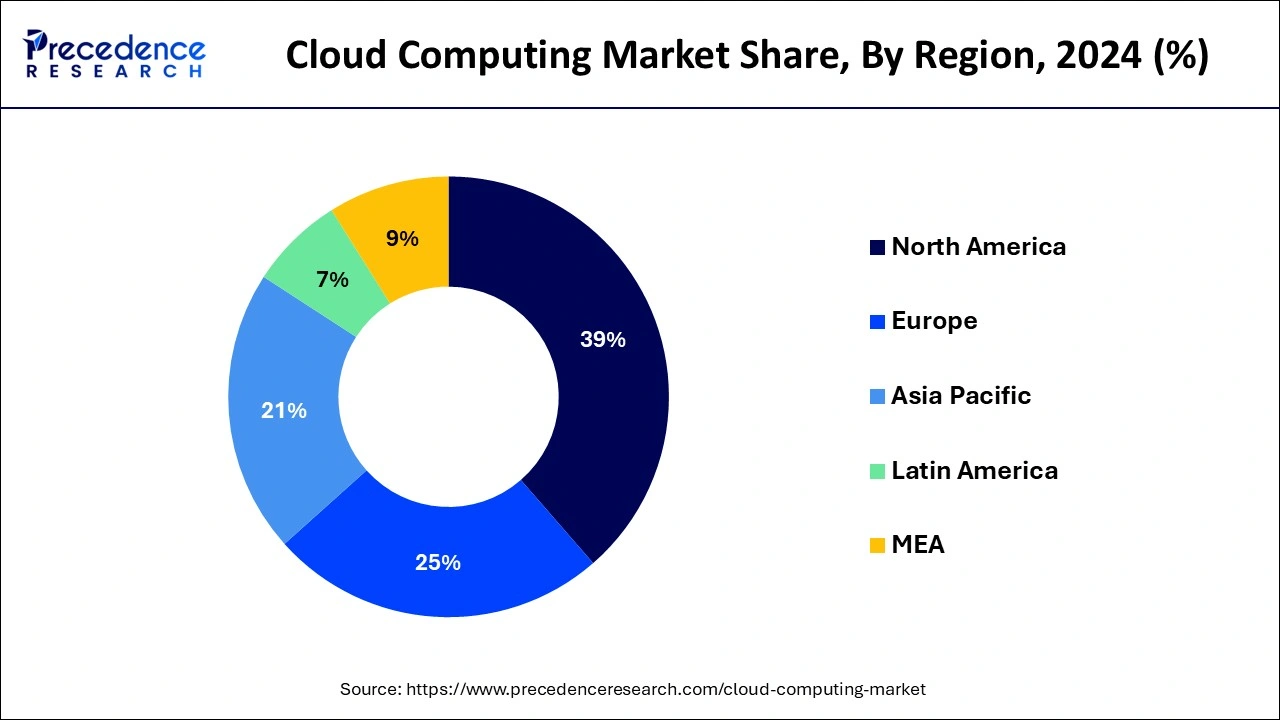
North America dominated the cloud computing market while holding the largest share in 2025 due to its advanced digital infrastructure, strong presence of leading cloud service providers, and high adoption of emerging technologies. The region serves as a major hub for cloud innovation, supporting advancements in artificial intelligence (AI), machine learning, automation, and enterprise digital transformation.
The presence of major technology companies, extensive data center networks, and strong research and development investments has accelerated cloud adoption across industries. Enterprises in North America are increasingly migrating workloads to cloud platforms to improve scalability, optimize operational efficiency, and support advanced analytics and automation initiatives.
What is the U.S. Cloud Computing Market Size?
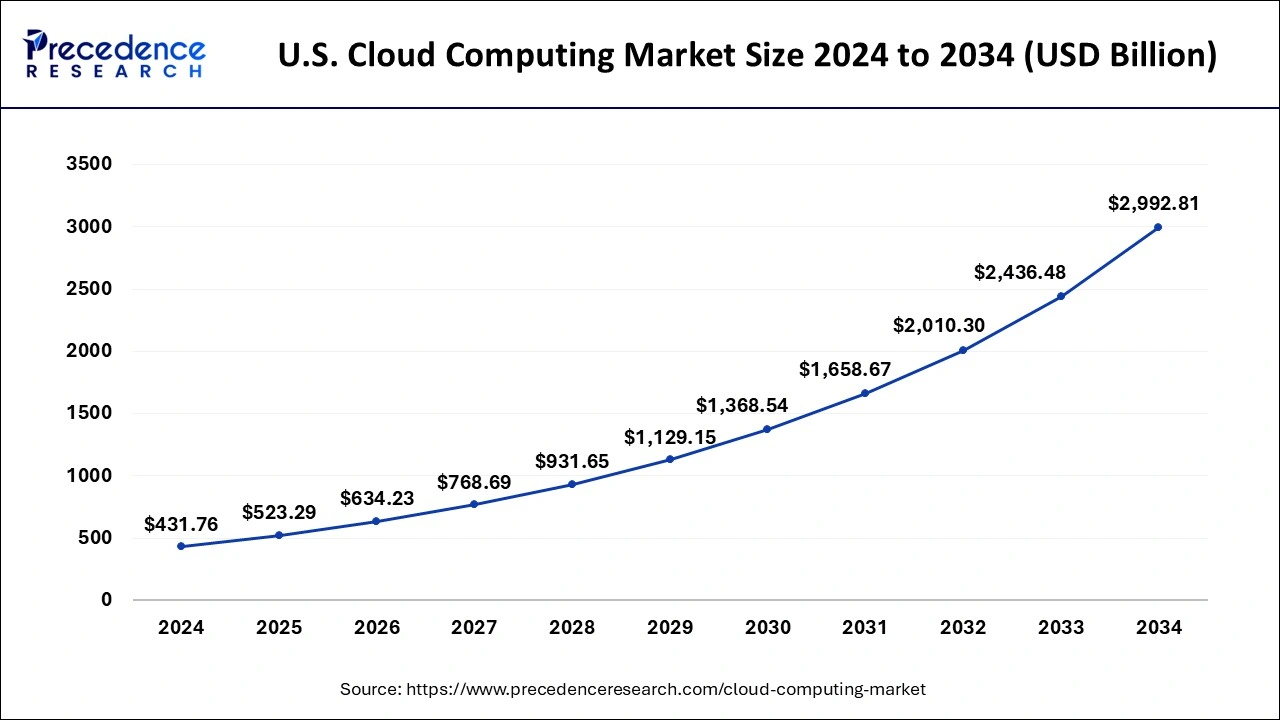
The U.S. cloud computing market size is evaluated at USD 523.29 billion in 2025 and is projected to be worth around USD 3,462.37 billion by 2035, growing at a CAGR of 20.80% from 2026 to 2035.
U.S. Market Trends
The U.S. is the largest contributor to the North American cloud computing market. The growth of the market in the country is driven by rapid adoption of generative AI, large-scale data processing, and advanced cloud infrastructure. Organizations are increasingly using cloud platforms to access high-performance computing resources, AI capabilities, and scalable digital solutions. The U.S. market is characterized by strong investments in hyperscale data centers, cloud-native applications, and AI-driven services, making cloud computing a critical component of enterprise technology strategies.
Europe: The Second-Largest Market
Europe is considered the second-largest market for cloud computing and is expected to grow at a significant CAGR during the forecast period. This is mainly due to the increasing digital transformation initiatives, strict data protection regulations, and rising adoption of cloud-based solutions across industries. The region's focus on data sovereignty and regulatory compliance, particularly through frameworks such as GDPR, is encouraging organizations and cloud providers to develop localized cloud infrastructure. Enterprises are increasingly adopting hybrid and multi-cloud strategies to balance flexibility, security, and compliance requirements. Additionally, Europe's commitment to sustainability is accelerating investments in energy-efficient data centers, renewable energy integration, and advanced cooling technologies.
Germany Market Trends
Germany is a key contributor to the European cloud computing market, supported by Industry 4.0 initiatives and increasing enterprise digitalization. The country's strong industrial base, particularly in automotive, manufacturing, and chemicals, is driving demand for cloud-enabled solutions such as predictive maintenance, industrial IoT, automation, and real-time analytics. German organizations are increasingly adopting secure hybrid cloud models to maintain compliance with strict data protection requirements while improving operational efficiency.
Asia Pacific: The Fastest-Growing Region
Asia Pacific is expected to grow at the fastest rate in the coming years due to increasing digitalization, expanding internet penetration, government-led technology initiatives, and rising adoption across industries such as e-commerce, finance, healthcare, and telecommunications. The growing demand for low-latency services and real-time data processing is encouraging investments in regional data centers and edge computing infrastructure. The expansion of mobile applications, online services, and digital platforms is further increasing cloud adoption across emerging economies.
China Market Trends
China represents one of the largest cloud computing markets in Asia Pacific, supported by government-backed digital transformation programs, smart city initiatives, and industrial automation projects. The country's focus on artificial intelligence, cloud-based manufacturing, digital infrastructure, and connected technologies is increasing demand for large-scale cloud platforms. Regulatory requirements have also encouraged the development of localized cloud ecosystems and domestic data infrastructure.
What Drives the Latin America Cloud Computing Market?
The Latin American market is growing due to increasing enterprise adoption of digital technologies, cost optimization requirements, and the shift from traditional IT infrastructure toward cloud-based solutions. Businesses across banking, retail, telecommunications, and other sectors are adopting cloud platforms to improve flexibility, reduce infrastructure costs, and support digital services. Investments in data centers, network connectivity, and submarine cable infrastructure are further improving regional cloud capabilities.
Brazil Market Trends
Brazil is leading the cloud computing market in Latin America, driven by increasing adoption among financial institutions, retailers, and telecommunications companies. Organizations are shifting toward cloud-based infrastructure to reduce operational expenses and improve scalability. Growing investments from global technology companies and increasing demand for digital banking, mobile applications, and analytics solutions are expected to support further cloud market expansion in Brazil.
Why is the Middle East & Africa Cloud Computing Market Growing?
The Middle East & Africa cloud computing market is expanding due to government-led digital transformation initiatives, smart city development, and increasing investments in digital infrastructure. Countries across the region are focusing on modernizing public services, expanding connectivity, and adopting cloud platforms to support economic diversification. The growth of data centers, improved internet infrastructure, and adoption of cloud-based enterprise solutions are creating new market opportunities.
UAE Market Trends
The UAE is emerging as a major cloud computing hub in the Middle East, supported by government digital strategies, smart city initiatives, and partnerships with global cloud providers. Investments in local data centers, secure cloud infrastructure, artificial intelligence, and automated services are strengthening the UAE's position as a regional technology center. Cloud adoption is increasing across sectors such as government services, transportation, finance, and real estate.
Government Initiatives in the Cloud Computing Market
China
- In October 2025, the China Academy of Information and Communications Technology (CAICT) reported that China has reached a highly momentous growth in the cloud computing market. This success is fueled by China's efforts to establish a comprehensive and multi-layered policy and regulatory system for cloud computing. (Source: https://practiceguides.chambers.com)
United States
- In February 2026, research studies reported that the Federal Government has taken essential steps toward a new era of IT modernization. It has introduced a series of new policy initiatives, which focus mainly on security, AI, and updated acquisition. It will reshape government IT towards the mission of offering better services with enhanced efficiency for the American people. (Source: https://news.broadcom.com)
Germany
- In April 2026, the German Government adopted the national data center strategy and is committed to elevating data centers to critical infrastructure for economic security and digital transformation. This new strategy will target a double increase of overall capacity and a fourfold increase in high-performance computing capacity and AI by 2030. (Source: https://www.morganlewis.com)
Brazil
- In July 2026, research insights proclaimed that Brazil's digital agenda drives investment, innovation, and opportunity. On the other hand, Brazil is positioning itself to become a leading digital economy of Latin America by 2030. These efforts are supported by rapid investment in AI and digital infrastructure and ambitious national strategies. (Source: https://isimarkets.com)
Saudi Arabia
- In April 2026, research findings stated that Saudi Arabia is transforming into a confident, mature market, shaped by national transformation projects, economic stability, and a strengthened supply of professional and technical talent. Organisations across industries, from manufacturing and digital technology to finance, HR, and project management, are planning to expand massively. They also aim to follow a discipline in allocating compensation budgets and hiring for high-demand roles. (Source: https://gulfbusiness.com)
Investments in the Cloud Computing Market
- In June 2026, Saudi Arabia made investments worth more than SR31.9 billion during 2025. These were made in communications and information technology services and aim to advance digital government services. (Source: https://saudigazette.com)
- In December 2025, Adobe Inc. reported that it has reached record revenue of $6.19 billion in the fourth quarter of its first year 2025 and $2.26 billion in operating income in the fourth quarter. The company is progressing as a global technology leader by delivering enhanced productivity and creativity for people and businesses. (Source: https://www.adobe.com)
- In July 2025, Oracle Corporation planned the investment of U.S. $2 billion in AI and cloud infrastructure in Germany. This investment will expand the company's footprint in Germany. It will also enable public and private organizations in Germany to take advantage of Oracle's cloud and AI services. (Source: https://www.oracle.com)
Collaborations in the Cloud Computing Market
- In April 2026, Microsoft strengthened its commitment to Japan with a $10 billion investment in cybersecurity, AI infrastructure, and workforce. The commitments include collaboration with domestic partners to strengthen public-private cybersecurity partnerships with national institutions of Japan, and achieve many other goals. (Source: https://news.microsoft.com)
- In October 2025, Oracle announced its collaboration with Microsoft to enhance supply chain efficiency. It will help manufacturers develop a blueprint to automate key supply chain processes and improve data-driven decision-making. (Source: https://www.oracle.com)
- In October 2025, SoftBank Corp. announced that it has accelerated Japan's AI and sovereign cloud future with Oracle Alloy, which is a complete cloud infrastructure platform. It aims to provide compliant, secure, and scalable sovereign cloud and AI services to organizations in Japan. (Source: https://www.oracle.com)
Supply Chain Analysis
- Infrastructure Providers & Data Centers: The infrastructure provider heavily invests in servers, networking hardware, and energy-efficient buildings to deliver a secure, scalable, and reliable cloud computing service for customers.
- Platform & Software Service Provider: Cloud platform vendors provide their customers with platforms for cloud applications (SaaS) and AI-powered tools designed to enhance business processes and develop innovative solutions.
- System Integrators & End Users: Cloud integration consultants and enterprises develop personalized solutions that offer several functionalities to meet the specific needs of different industries. Subsequently, this drives demand for cloud computing services in sectors such as healthcare, financial services, and retail.
Market Competitive Landscape: Leading Companies and Strategies
The cloud computing market is highly competitive, with major technology companies competing through infrastructure expansion, artificial intelligence integration, hybrid cloud capabilities, cybersecurity solutions, and industry-specific cloud platforms. Market participants are focusing on strengthening their cloud ecosystems, improving scalability, enhancing data security, and developing advanced solutions to support enterprise digital transformation.
Leading cloud service providers are investing heavily in hyperscale data centers, AI-powered cloud services, edge computing, and automation technologies to meet the growing demand for flexible and high-performance computing infrastructure. Strategic partnerships, acquisitions, and collaborations with software developers, enterprises, and technology providers are becoming key strategies for expanding market presence.
Top Companies in the Cloud Computing Market and Their Offerings
- Adobe Inc.: Adobe Creative Cloud, CX Enterprise, Adobe Document Cloud, cross-cloud infrastructure, and strategic frameworks.
- Alibaba Group Holding Limited: Foundation models and applications, enterprise agentic AI ecosystem, and AI-optimized cloud infrastructure.
- Amazon.com Inc.: AI and ML, compute and custom silicon, storage and database systems, core cloud infrastructure and tooling, governance, security, and support.
- Google LLC: AI models and developer frameworks, hardware and AI compute infrastructure, hybrid cloud and security, storage, operations, and FinOps, and ecosystem expansion.
- International Business Machines Corporation: Hybrid cloud and infrastructure automation platforms, cloud AI infrastructure, data streaming, database cloud services, specialized hardware as-a-service, digital sovereignty, FinOps, and enterprise applications.
Cloud Computing Market Companies
- Adobe Inc.
- Alibaba Group Holding Limited
- Amazon.com Inc.
- Google LLC
- International Business Machines Corporation
- Microsoft Corporation
- Oracle Corporation
- Salesforce.com Inc.
- SAP SE
- Workday, Inc.
Recent Developments
- In June 2026, Apple officially enhanced its enterprise data architecture by integrating its Private Cloud Compute framework through a partnership with Google and NVIDIA. This collaboration enables Apple to utilize Google's extensive hyper-scale network infrastructure and Apple's intelligence workload to achieve strict data privacy standards for its hardware users. (Source: https://www.macrumors.com)
- In April 2026, Tech vendor Bahwan CyberTek officially introduced CloudXcel, an AI-powered cloud engineering platform. This dedicated portal offers automated cloud governance, FinOps cost management, and structural architecture validation to simplify cloud management. (Source: https://datacenters.economictimes.indiatimes.com)
- In January 2025, Microsoft chairman and CEO Satya Nadella said during his trip to India that the firm intends to invest US $3 billion in cloud and AI infrastructure and training in India over the next two years, including the construction of new data centers. In order to realize Hon. Prime Minister Narendra Modi's goal of making India a developed country (Viksit Bharat) by 2047, this investment intends to speed up AI innovation in India.
- In January 2025, the Asia Pacific (Thailand) Region of Amazon Web Services, Inc. (AWS), a subsidiary of Amazon.com, Inc., has been launched. Developers, startups, entrepreneurs, and businesses, along with government, educational, and charitable institutions, will now have more options when it comes to using AWS data centers in Thailand to operate their apps and provide end users with services. AWS intends to invest over $5 billion in Thailand as part of its long-term commitment.
Segments Covered in the Report
By Deployment
- Private
- Hybrid
- Public
By Service
- Software as a Service (SaaS)
- Customer Relationship Management (CRM)
- Enterprise Resource Management (ERM)
- Human Capital Management (HCM)
- Content Management
- Collaboration and Productive Suites
- Supply Chain Management (SCM)
- Others (Business Intelligence (BI) and Analytics, PPM and operations and manufacturing applications)
- Infrastructure as a Service (IaaS)
- Primary Storage
- Disaster Recovery and Backup
- Archiving
- Compute
- Platform as a Service (PaaS)
- Application Development and Platforms
- Application Testing and Quality
- Analytics and Reporting
- Integration and Orchestration
- Data Management
By End User
- IT and Telecom
- BFSI
- Manufacturing
- Healthcare
- Retail and Consumer Goods
- Media and Entertainment
- Energy and Utilities
- Government and Public Sector
- Others
By Organization Size
- Small and Medium-sized Enterprises (SMEs)
- Large Enterprises
By Workload
- Storage, Backup, and Disaster Recovery
- Application Development and Testing
- Database Management
- Business Analytics
- Integration and Orchestration
- Enterprise Resource Management
- Collaboration and Content Management
By Region
- North America
- Europe
- Asia-Pacific
- Latin America
- Middle East & Africa
For inquiries regarding discounts, bulk purchases, or customization requests, please contact us at sales@precedenceresearch.com
Frequently Asked Questions





Ask For Sample
No cookie-cutter, only authentic analysis – take the 1st step to become a Precedence Research client
 Get a Sample




 sales@precedenceresearch.com
 Schedule a Meeting
