



Quantum Computing Market Size, Key Companies, Company Market Share, User Adoption, Technology Deployment, Revenue Growth, Competitive Positioning, and Demand Forecast
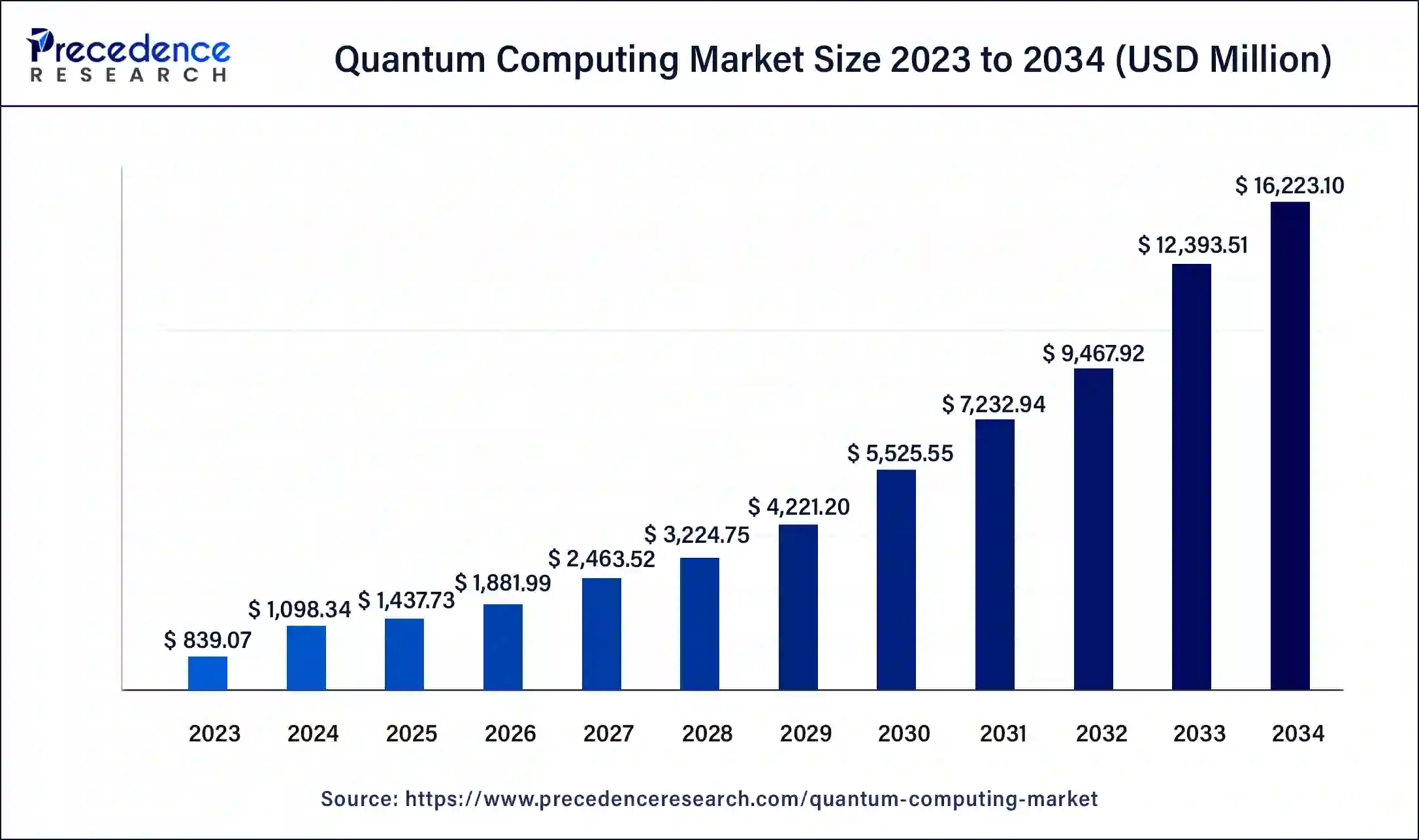
The global quantum computing market is valued at USD 1.88 billion in 2026 and is projected to reach approximately USD 19.44 billion by 2035, expanding at a CAGR of 29.73% during the forecast period. The quantum computing market growth is driven by increasing investments in quantum research and development, rising demand for high-performance computing, growing enterprise adoption across key industries, advancements in quantum hardware and software, increasing cloud-based quantum computing adoption, and expanding government support for quantum technology.
Source: https://www.precedenceresearch.com/quantum-computing-market
 Get a Sample
 Table Of Content


What is the Quantum Computing Market Size?
The global quantum computing market size is valued at USD 1.44 billion in 2025 and is predicted to increase from USD 1.88 billion in 2026 to approximately USD 19.44 billion by 2035, expanding at a CAGR of 29.73% from 2026 to 2035. The market is growing due to increasing investments in quantum research, rising demand for high-performance computing, and expanding applications across healthcare, finance, cybersecurity, and pharmaceuticals. The quantum computing market is driven by advancements in quantum technologies, rising investments, and growing demand for high-performance computing solutions.
Quantum Computing Market Key Takeaways
- By Region, North America accounted for the largest revenue share of the quantum computing market in 2025.
- By Region, Asia Pacific is expected to grow at the fastest CAGR in the market during the forecast period.
- By application, the optimization segment registered its dominance over the global market in 2025.
- By application, the machine learning segment is expected to witness the fastest growth in the market with a CAGR over the forecast period.
- By end use, the BFSI segment dominated the global market in 2025.
- By end use, the healthcare and pharmaceuticals segment is expected to gain the highest market share with a CAGR between 2026 and 2035.
- By offering type, the systems segment held the largest revenue in the market in 2025.
- By offering type, the consulting solutions segment is expected to show the fastest growth with a CAGR over the forecast period.
Quantum Computing Market Overview
The quantum computing market is experiencing rapid growth due to increasing investments from governments and corporate entities, continual breakthroughs in quantum hardware and software, and rising demand for addressing complex computational problems beyond the capabilities of classical computers. Quantum computing is being used more and more by sectors like healthcare, pharmaceuticals, baking, aerospace, and cybersecurity to speed up drug discovery, improve encryption, optimize financial modeling, and increase operational efficiency. Innovation and commercialization are being accelerated by expanding partnerships between tech firms, academic institutions, and cloud service providers. Additionally, throughout the projected period, the market is anticipated to see considerable development possibilities due to the increasing availability of cloud-based quantum platforms and the integration of artificial intelligence with quantum computing.
AI in the Market
Artificial Intelligence integrates with quantum computing by intervention with hardware reliability, algorithmic optimization, and computational efficiency. The AI models calibrate the processors, lessen the noise, and provide error correction to maintain a stable quantum system. Reinforcement learning helps design quantum algorithms that respect the hardware constraints better. AI gets accelerated by quantum computing in training complex models faster, dealing with high-dimensional data, and executing higher-level AI simulations. This synergy leads to a drastic improvement in prediction accuracy, optimizations of large-scale systems, and the opening of a new view of algorithmic design processes that ultimately provide transformative solutions in research, finance, and logistics.
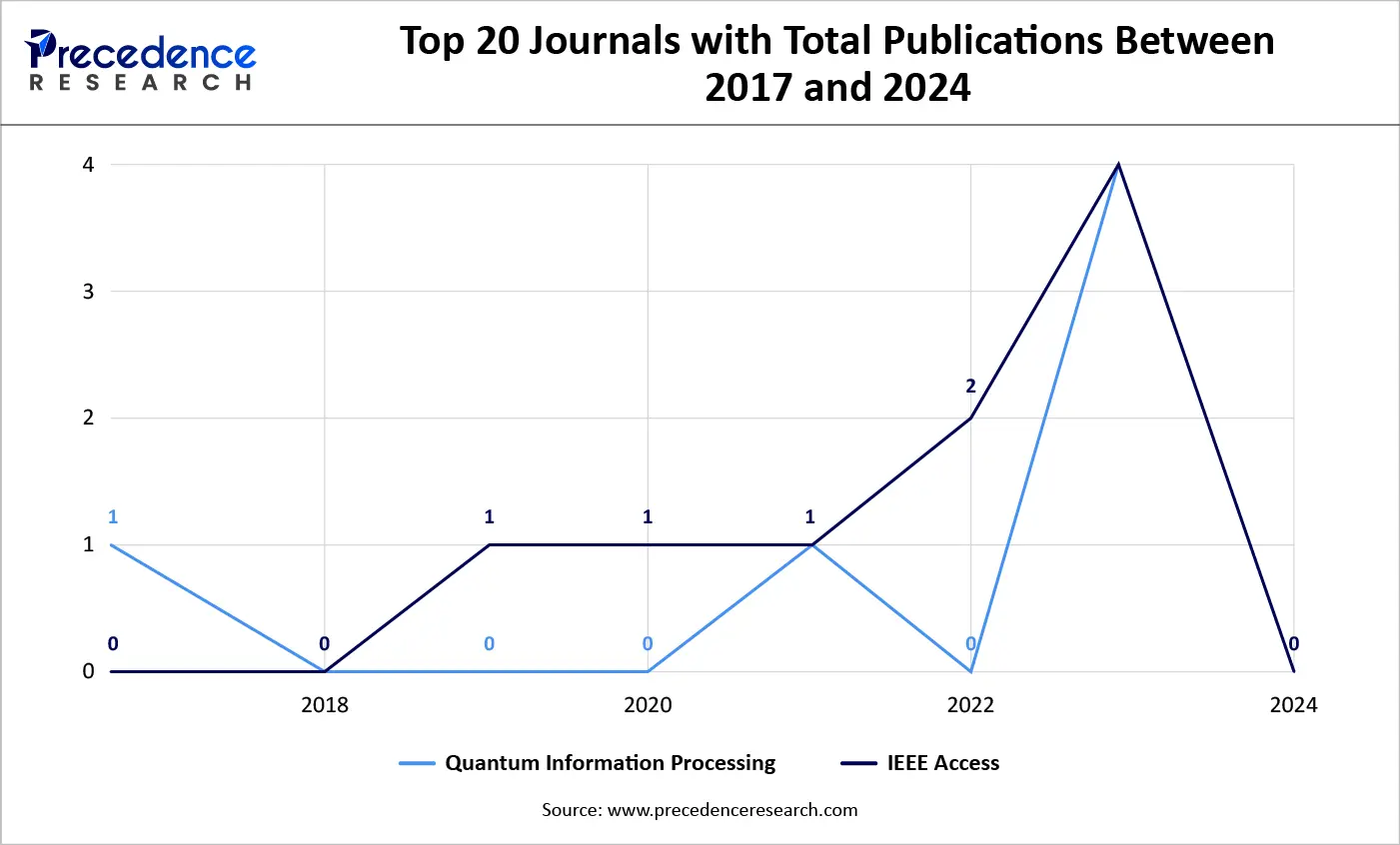
The chart shows that between 2017 and 2024, publications on quantum computing applied to business and related domains are concentrated in a small set of technically oriented journals, with Quantum Information Processing and IEEE Access appearing as recurring outlets in recent years. Beyond the counts, this pattern reflects how research on quantum computing for market research and business problems is still anchored in physics, engineering, and systems journals rather than mainstream marketing or management outlets. The literature you provided confirms this gap. Most highly cited work focuses on foundational issues such as NISQ architectures, error mitigation, algorithm design, and quantum machine learning, with only indirect links to market research applications.
Studies highlight that quantum computing's relevance to marketing lies less in immediate deployment and more in its future ability to process unstructured digital ecosystem data, model probabilistic consumer behavior, and optimize complex attribution and decision problems that classical methods struggle with. The dominance of US- and China-linked research clusters, alongside emerging contributions from the UK, India, Canada, and Australia, further indicates that institutional capacity and national research programs are shaping where this knowledge is produced. For market research, this suggests a long lead time where conceptual and computational advances will precede practical tools, reinforcing the need for interdisciplinary translation rather than direct adoption.
Major Key Trends in Quantum Computing Market
- Growing Promise of Cloud Quantum Computing: Cloud platforms are making quantum computing more available and accessible, allowing businesses and researchers to test and experiment with quantum computing without having to invest in costly infrastructure.
- Increasing Adoption in Industries: Quantum solutions provide benefits for certain industries, such as healthcare, finance, cybersecurity, and logistics, to streamline their more complex processes and enhance their decision-making capabilities.
- Progress in Quantum Software: The development of quantum processors, quantum error correction, and qubit technology is laying the groundwork for actual and viable quantum computers.
Strategic Growth Opportunities
- High Growth Commercial Opportunities: The quantum computing market could be huge, encompassing a variety of industries such as healthcare, financial services, cybersecurity, and optimization applications. More and more opportunities are becoming possible for companies to adopt more sophisticated computing solutions.
- Emerging Technology Opportunities: New technology opportunities are emerging through the development of quantum hardware, the error correction needed for errors to be corrected, quantum algorithms, and hybrid computing models. As long as there are continuous innovations, it is expected that the use of quantum information in applications will be accelerated, and scalability will improve.
- Geographic Expansion Opportunities: Businesses are moving to areas where the government supports them well, and where there is investment in research and the technology infrastructure. Emerging markets are taking advantage of growing use of quantum solutions across industries.
- White Space Analysis: Logistics, energy, climate modelling, etc. are the sectors where there are opportunities to be tapped. Production of quantum solutions specific to a particular industry will be helpful for companies to be able to enter the market.
Future Outlook and Strategic Recommendations
- Long-Term Industry Outlook: As technologies prove to be mature and commercial applications gain traction, the market for quantum computing is projected to expand substantially. Green investing and long-term investment in research and infrastructure will help promote markets in the longer-term.
- Emerging Business Models: It is expected that Quantum-as-a-service platforms, cloud-based access, and collaborative research models will be able to take hold. The methods will allow organizations to have access to quantum capability without any significant investment in infrastructure.
- Strategic Recommendations for Stakeholders: Partnerships and employment to develop workforces and investment in scalable quantum technology are recommended for stakeholders. Competitive growth will require building solutions that are different to the build of other industries, and strengthening quantum ecosystems.
Market Scope
| Report Coverage | Details |
| Market Size in 2025 | USD 1.44 Billion |
| Market Size in 2026 | USD 1.88 Billion |
| Market Size by 2035 | USD 19.44 Billion |
| Growth Rate from 2026 to 2035 | CAGR of 29.73% |
| Base Year | 2025 |
| Forecast Period | 2026 to 2035 |
| Segments Covered | Application, End Use, Offering Type and Region |
| Regions Covered | North America, Europe, Asia-Pacific, Latin America, and Middle East & Africa |
Market Dynamics
Drivers
Rising digitization to drive growth despite pandemic
- The COVID-19 epidemic has boosted the expansion of the quantum computing market as a result of increased digitalization across several industries. Leading businesses across a range of industries have also embraced contemporary technology to streamline operations and make work easier. In addition, the businesses adopted a culture of remote and work-from-home employment. These elements supported market expansion and growth during the epidemic.
The global increase in the number of cyber attacks
- Since it is one of the cutting-edge platforms that provide security to applications and software systems, keeping them secure from cyber-attacks like ransomware, phishing attacks, and others, the quantum computing sector is seeing tremendous growth mostly owing to increasing cyber threats. Additionally, a variety of approaches to applying quantum computing to cybersecurity are being developed by the businesses involved in the quantum computing sector. For instance, Cambridge Quantum Computing and the National Physical Laboratory recently established a cooperation that would develop quantum computing. The main objective of the alliance is to use quantum computers for network, cyber security, Artificial Intelligence, modeling, traffic, drug research, and optimization.
Challenges
Lack of highly skilled employees
- Utilizing quantum computers for cybersecurity, drug research, AI, modeling, traffic, network, and optimization is the core goal of the partnership. The demand for quantum computing services may rise as a result of these developments in the market.
Opportunities
Need for quantum computing in multiple industries
- The growing demand across a range of end-use industries, including defense, BFSI, and others, is what propels the worldwide quantum computing market. Rapid technical breakthroughs and an increasing reliance by different industries on sophisticated computing technologies to address complicated issues that even the most powerful supercomputers of today can't handle are supporting market growth. The industry is expanding rapidly as a result of the flourishing sectors in emerging nations, including, among others, the chemical, energy, and pharmaceutical industries. The government's increasing expenditures in quantum computing technology to create cutting-edge solutions and broaden their quantum computing knowledge base are projected to give the market growth more impetus throughout the course of the projection year.
Segmental Insights
By Application
Why the Optimization Segment Led the Market in 2025?
The optimization segment dominated the quantum computing market in 2025 due to its widespread application in resolving challenging optimization issues in supply chain management, manufacturing, finance, and logistics. Compared to traditional computing approaches, quantum computing allows forms to evaluate massive datasets and find the best solutions considerably more quickly, increasing operational efficiency and cutting expenses. Businesses can also use the technology to optimize route scheduling, production planning, and resource allocation. This segment's dominance is further strengthened by the growing desire for quicker and more precise decision-making.
The machine learning segment is expected to witness the fastest growth due to the rising usage of AI-driven applications and the requirement for speedier model training and data processing. By speeding up calculations and enhancing the handling of complicated datasets, quantum computing improves machine learning methods. Increasing expenditures in AI research and intelligent automation are further aiding industry growth. It is anticipated that the combination of quantum computing and sophisticated AI models would open up new possibilities in a number of industries.
The biomedical simulations segment is projected to grow at a notable pace driven by increasing use for complex molecule modelling and drug discovery purposes. Quantum tech helps to analyse biological data in a faster manner, and the accuracy of simulating such data is increased. Investments in healthcare research and Precision Medicine drive the growth in the segment. Pharmaceutical companies are seeking quantum solutions to speed up the therapeutic development process. Traditional simulation methods are overcome with advanced computing.
The financial services segment is expected to witness steady growth during the forecast period attributed to the rising demand for advanced analytics and risk management solutions during the forecast period. Quantum computing enhances investment strategies, fraud detection, and financial modeling. Financial companies and banks are aiding research and development in quantum computing to enhance computing performance. The technology allows a shorter lag time to complete complex financial calculations. The sector is increasingly embracing digital transformation efforts, benefiting from this push.
By End Use
What Made the BFSI Segment Dominant in the Market in 2025?
The BFSI segment held the largest market share in 2025 owing to the increasing application of quantum computing in financial modeling, risk analysis, fraud detection, and portfolio optimization. To enhance decision-making and obtain a competitive edge, financial institutions are investing in quantum technology. Additionally, the system provides sophisticated encryption methods for financial data and safe transaction processing. Rising digital banking use and increased computing requirements continue to fuel demand within the BFSI sector.
The healthcare & pharmaceutical segment is projected to grow at the fastest rate during the forecast period due to growing use in precision medicine, genomics, drug development, and molecular simulation. Complex biological research and pharmaceutical development take a lot less time thanks to quantum computing. Adoption is being accelerated by increasing investments in biotechnology research and personalized medicine. Additionally, the technique is assisting researchers in more effectively identifying interesting drug candidates and improving disease models.
The chemicals segment is expected to grow steadily. Quantum computers allow one to precisely analyze molecules and enhance chemical formulation. Companies take advantage of quantum technologies to fasten R&D tasks. The technology enables the development of innovative materials, catalysts, and sustainable chemical solutions. New opportunities are being afforded due to increased investments in computational chemistry.
The defence segment is projected to witness stable growth during the forecast period as there is an evident requirement for advanced computing in strategic and security applications. Within the defence context, there is a potential to use quantum computing to aid in cryptography, optimization, and the analysis of complex data. Governments are spending money on quantum research to improve technological skills. The benefits of the technology are possible secure communications and mission planning.
By Offering Type
Why the Systems Offering Type Led the Market in 2025?
The systems segment dominated the market in 2025, while businesses are making investments in integrated computing systems, quantum gear, and processors to increase quantum capabilities. Commercial implementation across industries is being supported by ongoing developments in quantum hardware. Prominent tech firms are concentrating on creating quantum processors that are more reliable and scalable. Growing investments in quantum processors that are more reliable and scalable. Growing investments in quantum infrastructure are bolstering the systems segments' expansion.
The consulting solutions segment is anticipated to grow rapidly during the forecast period as businesses look for professional advice on staff development, quantum strategy, and execution. The need for specialized consulting services is being driven by growing awareness of the business possibilities of quantum computing. Organizations are leaning on consulting firms to identify use cases and design quantum adoption roadmaps. Growing skill gaps in quantum technologies are also contributing to the rise of consulting services.
Regional Insights
Which Factors Supported the Dominance of the Market in North America in 2025?
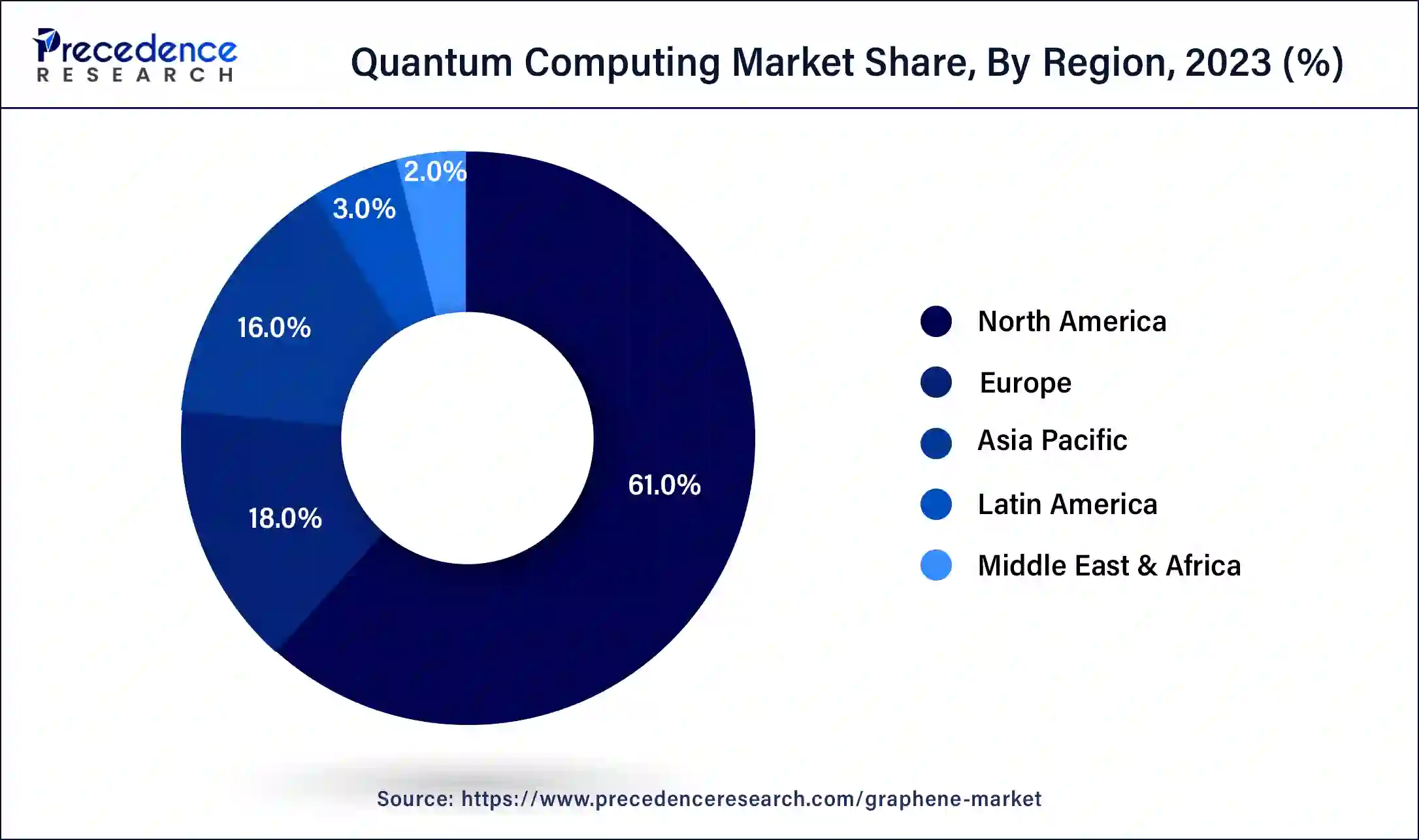
North America dominated the quantum computing market due to significant R&D expenditures, robust government backing, and the existence of top quantum technology firms and academic institutions. The region's market leadership is further strengthened by early adoption across industries. Additionally, the area gains from growing venture capital investments and a robust cloud computing environment. It is anticipated that ongoing research and commercialization initiatives will maintain its leading position over the course of the projected period.
U.S. Quantum Computing Market Size and Growth 2026 to 2035
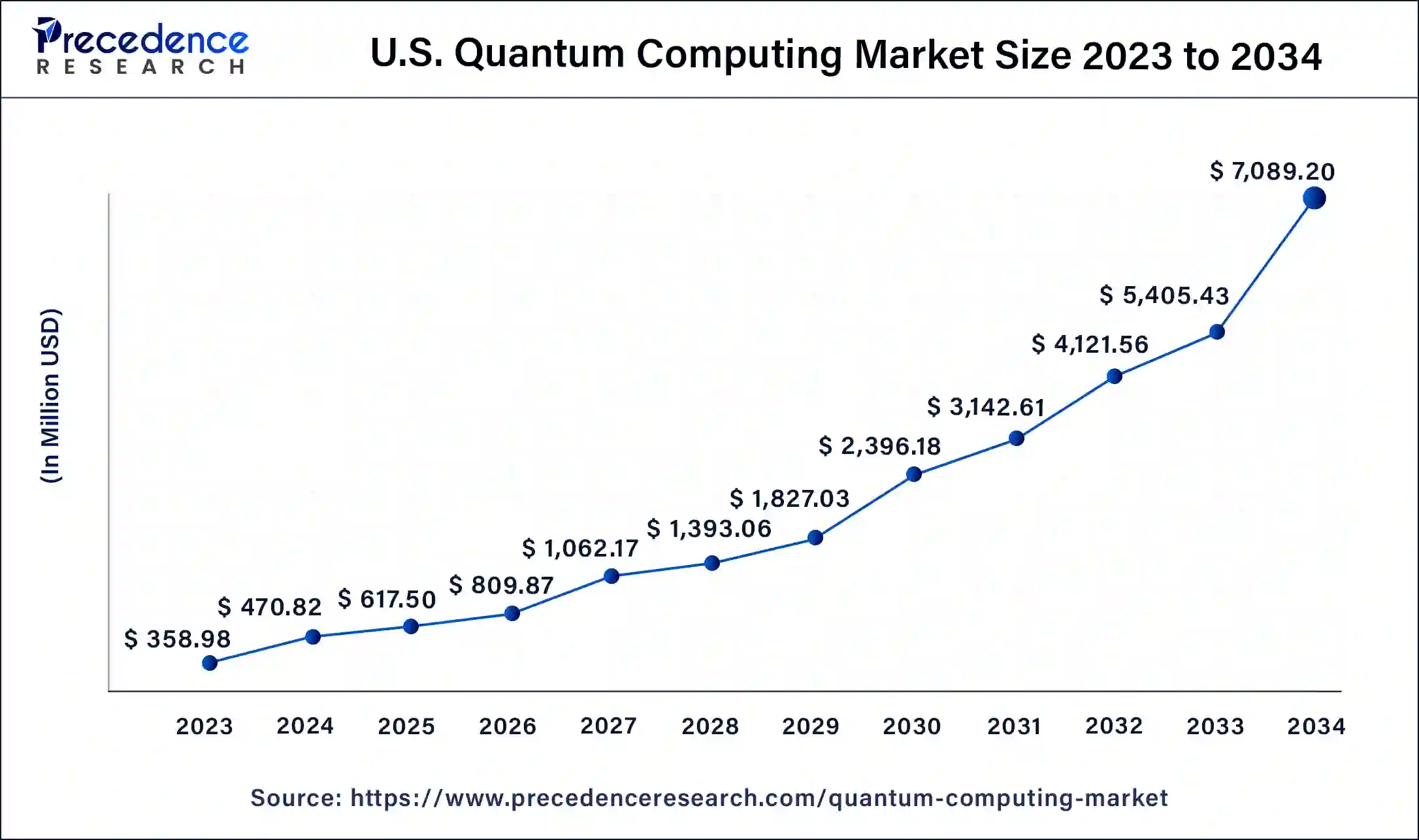
The U.S. quantum computing market size was estimated at USD 809.87 million in 2026 and is predicted to be worth around USD 8,506.37 million by 2035, at a CAGR of 29.99% from 2026 to 2035.
The U.S. Market Trends
The U.S. quantum computing market is experiencing rapid expansion driven by massive federal funding, advanced research initiatives, and an influx of private capital. Led by major technology giants such as IBM, Google, Microsoft, and Amazon, the ecosystem is scaling through cloud-access platforms. Increasing adoption in finance, pharmaceuticals, and national security propels domestic development toward practical, large-scale commercial utility.
Which Region is Expected to Grow at the Fastest CAGR During 2026-2035?
Asia Pacific is expected to register the fastest growth owing to increased government initiatives, rising funding in quantum research, expanding technology infrastructure, and rising usage of sophisticated computing technologies in South Korea, China, Japan, and India. Growing research partnerships and quick digital transformation are propelling market expansion. Quantum innovation is being supported by growing investments from local technology firms and academic institutions. In the upcoming years, the region's position is anticipated to be strengthened by supportive government policies and financial initiatives.
China Market Trends
China's quantum computing market is expanding rapidly due to massive state backing and the rapid commercialization of domestic hardware. The government has designated quantum tech as a vital priority, investing heavily in research hubs like Hefei. This state-driven model bridges academic research and industry, accelerating the transition of laboratory prototypes into real-world applications across cryptography, materials science, and artificial intelligence.
The rapid use of quantum computing technologies across a variety of industries in the Europe area, including healthcare, chemicals, utilities, and pharmaceuticals, is one of the major drivers of the Europe quantum market's rapid expansion. Additionally, its increased use in industries including medicine development and discovery, cryptography, cyber security, and the military industry is projected to increase demand for quantum computing services, which would eventually speed up the expansion of the quantum computing market during the study period.
Quantum computing technology is being widely adopted in this area as a result of the significantly growing presence of many consumers with an Asia Pacific base and outstanding companies in this industry. China has been the top investor in quantum computing in the APAC area as governments have begun committing and paying for the development of the technology. For instance, China developed national policies in 2016 to achieve self-sufficiency in quantum computing technology. A research center for quantum computing was built with more than US$ 13 billion from the Chinese government and is scheduled to launch in the year 2021. Additionally, the investment portfolio in R&D and strategic alliances will benefit the local market. For instance, in December 2019, D-Wave Systems joined up with Japan's NEC to create quantum applications and hybrid HPC to explore the potential of both D-quantum Wave's systems and NEC's high-performance computers. Such alliances could accelerate market expansion during the study period.
Europe is observed to grow at a considerable growth rate in the upcoming?period, driven by strong government support, significant academic investigation, and collaborative efforts between the public and private sectors. Initiatives like the European Commission's Quantum Flagship are promoting long-term advancements, while alliances with major technology firms are facilitating real-world applications across various industries. Nations including Germany, France, and the Netherlands are channeling investments into quantum research centers and the necessary infrastructure. Furthermore, the emphasis on cultivating a skilled labor force and fostering global partnerships is enabling Europe to construct a robust quantum ecosystem that aids both research and the commercialization of quantum technologies.
Germany occupies a central position in Europe's quantum computing scene. The country's strategic framework highlights hardware development, quantum networks, and integration with industry. Key institutions such as Forschungszentrum Jülich and Fraunhofer play significant roles, and collaborations with IBM and Google are promoting the real-world implementation of quantum solutions. Additionally, government programs have resulted in the establishment of specialized quantum computing facilities, underscoring Germany's objective to emerge as a global leader in quantum research and innovation.
Key Trends in the Quantum Computing Market in Latin America
Latin America is expected to witness significant growth in the market with a number of investments in digital transformation and emerging technologies. In the region, they are looking into quantum computing, particularly in the field of research, finance, healthcare, and industry. Organizations are increasingly turning to quantum programmes for more sophisticated computing capabilities. As more people understand the benefits of quantum, more people adopt it across industries.
Brazil Market Trends
Brazil quantum computing market is anticipated to grow significantly due to increasing investments in technology innovation and research activities. The country is developing quantum capabilities through collaborations between academic institutions and industry players. The finance, healthcare, and industrial sectors are seeing increased demand for advanced computing solutions, aiding adoption. Technological development is being stimulated by government programs, stimulating market development. Brazilian groups are investigating the applicability of their quantum projects to problems in optimization and simulation.
Growth of the Middle East and Africa in the Quantum Computing Market
The Middle East and Africa region is expected to witness significant growth in the market with the increased emphasis on digital transformation and the adoption of new sophisticated technology. Research programs in quantum computing are being funded by governments. Applications in the energy, financial services, healthcare, and cybersecurity sectors are being explored. The quantum “ecosystem” is moving swiftly, fueled by growing technology partnerships. Support for innovation hubs and research centers is encouraging uptake.
Saudi Arabia Market Trends
Saudi Arabia market is anticipated to grow significantly due to increasing investments in AI, advanced technologies, and digital transformation initiatives. The nation puts emphasis on creating a robust tech ecosystem through research and tie-ups. Possible applications are considered to be in the domain of energy, finance, or security. Emerging technologies are being adopted as part of government efforts to promote innovation. Partnerships with the giant technology firms are driving quantum advances.
Government Initiatives
- United States: The U.S. Department of Commerce made announcements of nearly $2.013 billion of planned incentives for quantum computing businesses, hardware development, and manufacturing capabilities in quantum.
- India: The Union government furthered its efforts to build a quantum computing and quantum communication, sensing, and materials ecosystem, including quantum projects, with an investment of ₹6,003.65 crore under the National Quantum Mission (NQM).
- Japan: Japan took a key step in further developing quantum technology cooperation with India by signing a Letter of Intent for advancing research, commercialization, and industrial cooperation, and for building a quantum science workforce.
Value Cain Analysis
- Inbound Logistics: Inbound logistics in quantum computing is the sourcing, procurement, and management of specialized parts for building quantum computers.
Key Players: AGC Inc., Nippon Electric Glass - Procurement: Procurement in quantum computing is the purchase of specialized hardware or software, usually provided through cloud access, without an outright sale.
Key Players: Oculus (Meta) and NVIDIA - Technology Development: Technology development in quantum computing considers the research design and engineering of hardware and software through the quantum-mechanical principle.
Key Players: NVIDIA, Samsung, LG, and Sony - Operations: Operations for quantum computing involve giving final practical execution to the quantum algorithms on the hardware for calculating.
Key Players: Samsung, Sony, Panasonic
Competitive Landscape
Leading tech firms are concentrating on developing quantum hardware, software, cloud-based quantum services, and strategic alliances to bolster their market positions in the fiercely competitive quantum computing sector. Major players such as IBM, Google, Microsoft, Intel Corporation, D-Wave Quantum Inc., IonQ, Riggetti Computing Inc., Quantinuum, Amazon Web Services, and Xanadu are investing heavily in research and development, expanding quantum cloud platforms, and collaborating with research institutions and enterprises to accelerate commercialization. The global quantum computing industry is becoming more competitive and innovative due to ongoing technological developments, expanding government support, and rising enterprise use.
Quantum Computing Market Companies
- IBM Corporation (New York, U.S.)
- D-Wave Systems Inc. (Burnaby, Canada)
- Cambridge Quantum Computing Ltd. (Cambridge, U.K.)
- Intel Corporation (California, U.S.)
- Rigetti & Co, Inc. (California, U.S.)
- Google LLC (California, U.S.)
- Quantica Computacao (Tamil Nadu, India)
- Zapata Computing (Massachusetts, U.S.)
- XANADU (Toronto, Canada)
- Accenture Plc. (Dublin, Ireland)
- Recent Developments
In May 2026, IBM, GlobalFoundries, D-Wave Quantum, Rigetti Computing, and other quantum firms. The U.S. government announced a USD 2 billion investment in nine quantum computing companies under the CHIPS and Science Act. The initiative includes funding for quantum chip manufacturing, hardware development, and domestic quantum infrastructure to strengthen U.S. leadership in quantum technologies. - In May 2026, IBM announced plans to invest more than USD 10 billion in quantum computing over the next five years to develop a large-scale fault-tolerant quantum computer by 2029. The investment will support quantum hardware development, manufacturing expansion, research, and ecosystem partnerships.
- In May 2025,? D-Wave installed its Advantage quantum system at Germany's Jülich Supercomputing Centre, marking its entry into the European market. This development enables researchers to investigate quantum annealing for both industrial and scientific challenges. The collaboration signifies the increasing demand within Europe for applicable quantum computing tools and accessibility.
- In May 2025, Cisco introduced a prototype chip for interconnecting quantum systems while launching a quantum networking laboratory in California. Although based in the U.S., this initiative involves European partners and promotes the development of the quantum internet. The project enhances the foundational framework for connecting quantum processors globally, potentially influencing cross-continental communication.
- In May 2025, Spain's CIC nanoGUNE has commenced the construction of Torre Cuántica, a dedicated facility for quantum research in San Sebastián. The center will concentrate on silicon-based quantum processors and high-precision equipment. Supported by regional and national funding, this initiative strengthens Spain's emerging role in Europe's quantum research ecosystem.
- Classic and NTT Data collaborated to build algorithms for credit risk analysis in December 2021. In addition, classic software will allow end users to set algorithms that are targeted at different quantum hardware platforms, which will in the future provide a possible lender with a more precise or quick answer.
- In November 2021, Q-CTRL, a company that offers quantum control systems, announced a $ 25 million Series B fundraising round, sponsored by Airbus Ventures. The business will be able to create new data as a service market employing quantum sensors for acceleration, magnetic fields, and gravity thanks to this breakthrough.
- In September 2025, IBM plans to launch its quantum computer in Amaravati, India, by March 2026, alongside India's first quantum computing valley in Andhra Pradesh.
https://timesofindia.indiatimes.com - In September 2025, Japan installed its first quantum computer, built with Japanese components, at the University of Osaka's Center for Quantum Information and Quantum Biology (QIQB).
https://www.livescience.com
Segment Covered in the Report
By Application
- Machine Learning
- Optimization
- Biomedical Simulations
- Financial Services
- Electronic Material Discovery
- Other (Traffic Optimization, Weather Forecasting, and others.)
By End Use
- Healthcare and Pharmaceuticals
- Chemicals
- Defence
- BFSI
- Energy and Power
- Others
By Offering Type
- Consulting Solutions
- Systems
By Region
- North America
- Europe
- Asia-Pacific
- Latin America
- Middle East & Africa (MEA)
For inquiries regarding discounts, bulk purchases, or customization requests, please contact us at sales@precedenceresearch.com
Frequently Asked Questions
Tags





Ask For Sample
No cookie-cutter, only authentic analysis – take the 1st step to become a Precedence Research client
 Get a Sample




 sales@precedenceresearch.com
 Schedule a Meeting
