Bicycle Industry Trends and Market Outlook: AI-Powered Safety, E-Bikes, and Sustainable Growth
The global bicycle industry is evolving rapidly with the integration of artificial intelligence, smart connectivity features, and high-performance electric bicycles. Growing demand for low-carbon transportation and healthy lifestyles continues to create long-term growth opportunities across developed and emerging markets.
 Get a Sample
 Table Of Content


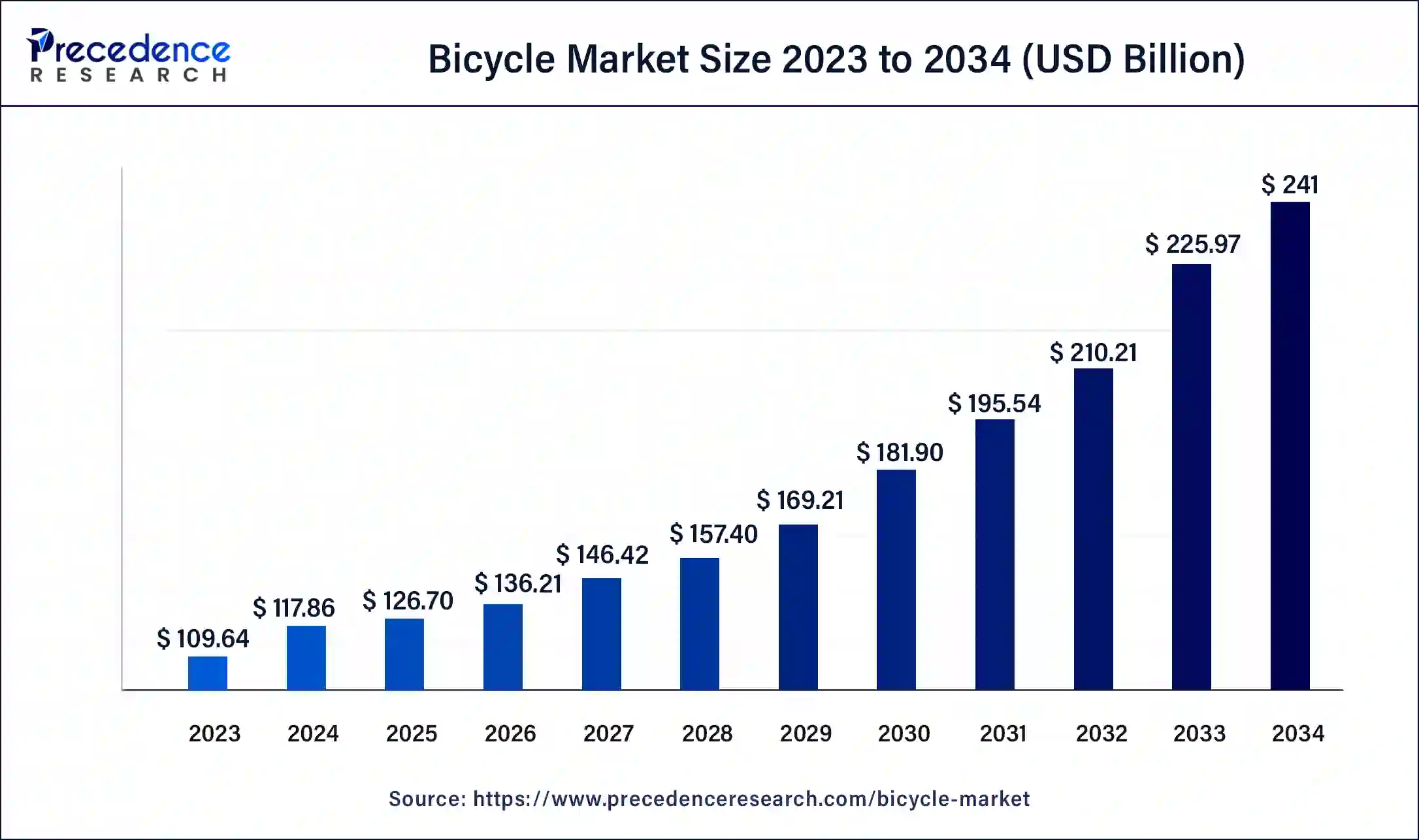
The global bicycle market size was valued at USD 126.7 billion in 2025, calculated at USD 136.21 billion in 2026, and is expected to reach around USD 256.51 billion by 2035, expanding at a CAGR of 7.31% from 2026 to 2035. The market is mainly driven by the growing adoption of e-bikes and government policies promoting low-carbon vehicles.
Key Takeaway
- By region, Asia Pacific led the bicycle market in 2025 with a 31.27 share.
- By region, Europe is expected to grow at the fastest CAGR of 10.5 % between 2026 and 2035.
- By product, the road bicycle segment dominated the market with a 41% share in 2025.
- By product, the cargo bikes segment is expected to grow at the fastest rate during the forecast period 2026 to 2035.
- By technology, the conventional segment dominated the market with an 82% share in 2025.
- By technology, the electric bicycle segment is expected to grow at a CAGR of 10.3% during the projection period.
- By distribution channel, the offline segment dominated the market by holding a 52% share in 2025.
- By distribution channel, the online segment is predicted to grow at a significant rate between 2026 and 2035.
- By price, the mid range segment dominated the market in 2025.
- By price, the premium segment is expected to grow at the fastest rate in the coming years.
Market Overview
The global bicycle market refers to the industry involved in the manufacturing, distribution, and sales of bicycles and related products, including traditional bicycles, electric bicycles (e-bikes), mountain bikes, road bikes, hybrid bikes, cargo bikes, and connected smart bicycles. The market is experiencing steady growth, driven by increasing health awareness, rising adoption of e-bikes, and growing demand for sustainable transportation solutions across all age groups. Urbanization and the development of smart cities are encouraging the use of bicycles as an efficient, eco-friendly, and cost-effective mode of transportation.
Additionally, government initiatives promoting zero-emission mobility, cycling infrastructure development, and active commuting are supporting market expansion. Technological advancements such as GPS tracking, smart locks, connected mobility platforms, and smartphone integration are further enhancing user experience and strengthening consumer adoption worldwide.
How is AI Improving Riders' Safety?
Artificial intelligence (AI) is transforming the bicycle market by improving rider safety, comfort, performance, and connectivity. AI-enabled e-bikes can analyze rider behavior, terrain conditions, battery performance, and riding patterns to optimize power assistance and enhance the overall cycling experience. Advanced sensor systems and machine learning algorithms help improve navigation, predictive maintenance, theft prevention, and battery management, increasing operational efficiency and reliability. Furthermore, AI-powered radar and collision-detection technologies act as intelligent riding assistants by alerting cyclists to potential hazards, nearby vehicles, and unsafe overtaking situations. Manufacturers are also leveraging AI-driven simulations and digital design tools to optimize bicycle aerodynamics, material selection, frame design, and manufacturing processes.
Bicycle Market Trends
- Electric Bicycles Dominance - The growing popularity of electric bicycles is reshaping the industry as consumers increasingly seek convenient, economical, and environmentally friendly transportation options.
- High Investments - Governments and local authorities are investing in cycling infrastructure, including dedicated bike lanes, bicycle parking facilities, and cycling-friendly urban development projects.
- Tech integration - Smart bicycles equipped with GPS navigation, theft-tracking systems, fitness monitoring features, and mobile connectivity are gaining traction among tech-savvy consumers.
- Health-conscious population - Rising health and wellness awareness is encouraging individuals to adopt cycling as a regular fitness activity, supporting demand across various age groups.
- Rising traffic tension - Increasing urban traffic congestion is prompting commuters to choose bicycles as a practical and time-saving alternative for short-distance travel.
- Manufacturers' efforts - Manufacturers are introducing lightweight bicycles made from advanced materials such as carbon fiber and aluminum to improve performance and rider comfort.
- Sports and government programs - The demand for premium and performance-oriented bicycles is growing as consumers show greater interest in recreational cycling, racing, and adventure sports. Bicycle-sharing programs are expanding in cities worldwide, making cycling more accessible and encouraging sustainable transportation habits.
Bicycle Market Growth Factors
The rising preferences among the consumers for bicycle as a form of leisure are expected to boost the growth of the global bicycle market. Bicycles are a convenient form of exercise and it is highly demanded among the consumers to ensure active and healthy lifestyle, obesity free life, and free from various diseases. The rising awareness among the population regarding the health benefits of riding bicycle is boosting the demand for bicycles across the globe. Moreover, the dockless bicycle sharing systems are gaining a rapid traction among the population which is expected to boost the growth of the global bicycle market. The bicycle sharing systems provide users to locate nearby bicycle and unlock electronically. The dockless bicycle sharing systems has originated in Europe and is gaining rapid popularity in developing regions like Asia Pacific. The proliferation of digital technologies and rising penetration of internet and smartphones across the globe has led to the advancements in mobile application development and the GPS systems which plays a significant role in the development of the dockless bike cycle sharing system. The rising investments by various companies in the bicycle sharing systems in various regions are expected to drive the growth of the bicycle market.
The events like Ronde van Vlaanderenare and Tour de France are spreading awareness regarding the benefits of bicycling among the people. Consumers are increasingly adopting bicycles as a regular form of exercises to fight against obesity. The rising incidences of obesity across the globe are a prominent factor behind the rising demand for the bicycles. According to the World Health Organization, over 1.9 billion adults aged 18 years or above were overweight in 2016. About 650 million out of it were obese. Therefore, a significant rise in the obesity in the global population is expected to boost the demand for the bicycles in the upcoming future.
Market Outlook
- Market Growth Overview: The bicycle market is experiencing steady growth, driven by rising environmental awareness, increasing health and fitness consciousness, and a shift toward sustainable transportation. Government support for cycling infrastructure and the growing popularity of recreational and commuting bicycles are key growth factors.
- Global Expansion: The market is expanding globally as urban congestion, fuel cost concerns, and climate goals encourage bicycle adoption. Emerging regions such as Asia-Pacific, Latin America, and the Middle East & Africa offer strong opportunities due to rapid urbanization, expanding middle-class populations, and increased investment in cycling infrastructure.
- Major Investors: Major investors include global bicycle manufacturers, sports and mobility companies, and private equity firms focused on sustainable transportation. Their investments support product innovation, expansion of production capacity, development of e-bikes, and strengthening of distribution and retail networks worldwide.
Market Report Coverage and Key Metrics
| Report Coverage | Details |
| Bicycle Market Size in 2025 | USD 126.7 Billion |
| Bicycle Market Size in 2026 | USD 136.21 Billion |
| Bicycle Market Size by 2035 | USD 256.51 Billion |
| Growth Rate from 2026 to 2035 | CAGR of 7.31% |
| Base Year | 2025 |
| Forecast Period | 2026 to 2035 |
| Segments Covered | Product, Technology, Distribution Channel, End User, Price, and Region |
| Region Covered | North America, Europe, Asia-Pacific, Latin America, and Middle East & Africa |
Market Dynamics
Driver
Sustainability and Growing Health-Conscious Population
The bicycle market is driven by the increasing consumer preference for sustainable, affordable, and health-oriented transportation solutions. Rising fuel prices, growing environmental awareness, and concerns regarding carbon emissions are encouraging individuals to adopt bicycles for daily commuting, fitness, and recreational activities. In addition, governments across several countries are promoting cycling adoption through investments in cycling lanes, urban mobility programs, subsidies, and awareness campaigns, which are supporting market growth.
Restraint
Infrastructure Limitations and Competition from Alternative Mobility Solutions
The market faces challenges due to the increasing availability of alternative transportation options, including electric scooters, motorcycles, ride-sharing services, and public transportation. These alternatives often provide higher speed, greater convenience, and better suitability for longer-distance travel, affecting bicycle adoption among certain consumer groups. Furthermore, inadequate cycling infrastructure, limited dedicated bike lanes, poor road conditions, and safety concerns in developing regions continue to restrict widespread bicycle usage.
Opportunity
Growth of Smart Mobility Solutions and Electric Bicycles
The rapid advancement of electric bicycles and smart mobility technologies is creating significant growth opportunities for the bicycle market. Improvements in battery efficiency, riding range, lightweight materials, GPS connectivity, smartphone integration, and intelligent safety features are attracting a broader consumer base, including urban commuters, senior riders, and fitness users. Additionally, increasing investments in smart city initiatives, sustainable transportation infrastructure, and connected mobility solutions are expected to accelerate the adoption of innovative bicycle products in the coming years.
Market Segmentation Analysis
Technology Insights
Why Did the Conventional Segment Dominated the Bicycle Market?
The conventional segment dominated the bicycle market by holding a 82% share in 2025 due to its affordability, easy maintenance, widespread availability, and strong consumer preference for traditional bicycles. Conventional bicycles remain popular among fitness enthusiasts, recreational riders, and daily commuters due to their simple mechanical structure, lower ownership costs, and long product lifespan. Technological improvements such as lightweight materials, advanced gear systems, tubeless tires, and hydraulic disc brakes have enhanced the performance, durability, and riding experience of conventional bicycles.
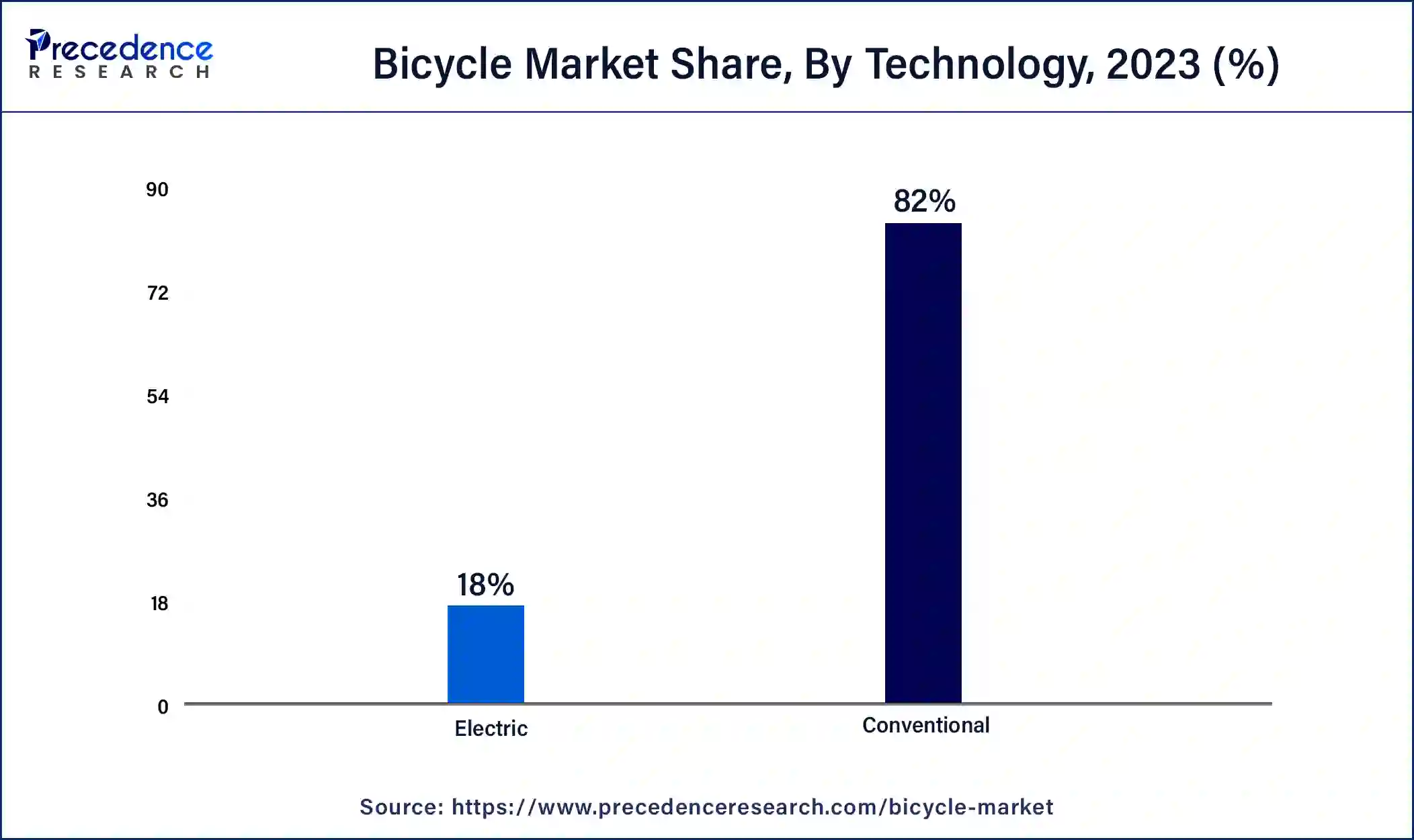
The electric segment is expected to grow at a CAGR of 10.3% during the forecast period, driven by increasing demand for convenient, sustainable, and technology-enabled mobility solutions. The adoption of e-bikes is accelerating due to improvements in lithium-ion battery technology, longer riding ranges, faster charging capabilities, and pedal-assist systems that reduce physical effort. Integration of smart features such as GPS navigation, Bluetooth connectivity, mobile applications, IoT-enabled tracking, and AI-based riding assistance is further enhancing consumer interest in electric bicycles.
Product Insights
The Road Bikes Segment Held a Major Market Share in 2025
The road bikes segment dominated the bicycle market with a major share of 41% in 2025 due to increasing participation in fitness activities, recreational cycling, and professional cycling events. Growing health awareness has encouraged consumers to adopt cycling as part of their daily exercise routines, supporting demand for lightweight and performance-oriented bicycles.
Road bikes are preferred by fitness enthusiasts and athletes due to their speed, aerodynamic design, and suitability for long-distance riding. Additionally, the rising popularity of cycling events, sports tourism, and premium cycling communities is encouraging manufacturers to introduce advanced models with improved components and materials.
The cargo bikes segment is projected to expand at a significant rate during the forecast period, driven by rising demand for sustainable last-mile delivery solutions and urban logistics applications. Businesses in food delivery, retail, and e-commerce are increasingly adopting cargo bikes as an efficient alternative for short-distance transportation. The growing popularity of family cargo bikes for carrying children, pets, and groceries is also supporting segment growth. Furthermore, electric cargo bikes with pedal-assist technology are improving carrying capacity and travel efficiency, making them increasingly attractive for commercial and personal applications.
Distribution Channel Insights
What Made Offline the Dominant Segment in the Market?
The offline segment dominated the bicycle market while holding a 52% share in 2025 due to consumer preference for physical inspection, test rides, and personalized purchasing assistance before buying bicycles. Customers often prefer visiting bicycle stores to evaluate comfort, size, design, performance, and product quality. Offline retailers also provide additional services such as maintenance, repairs, customization, and after-sales support, which strengthen customer relationships and encourage repeat purchases. The availability of specialized bicycle shops and service centers continues to support the segment's leading position.
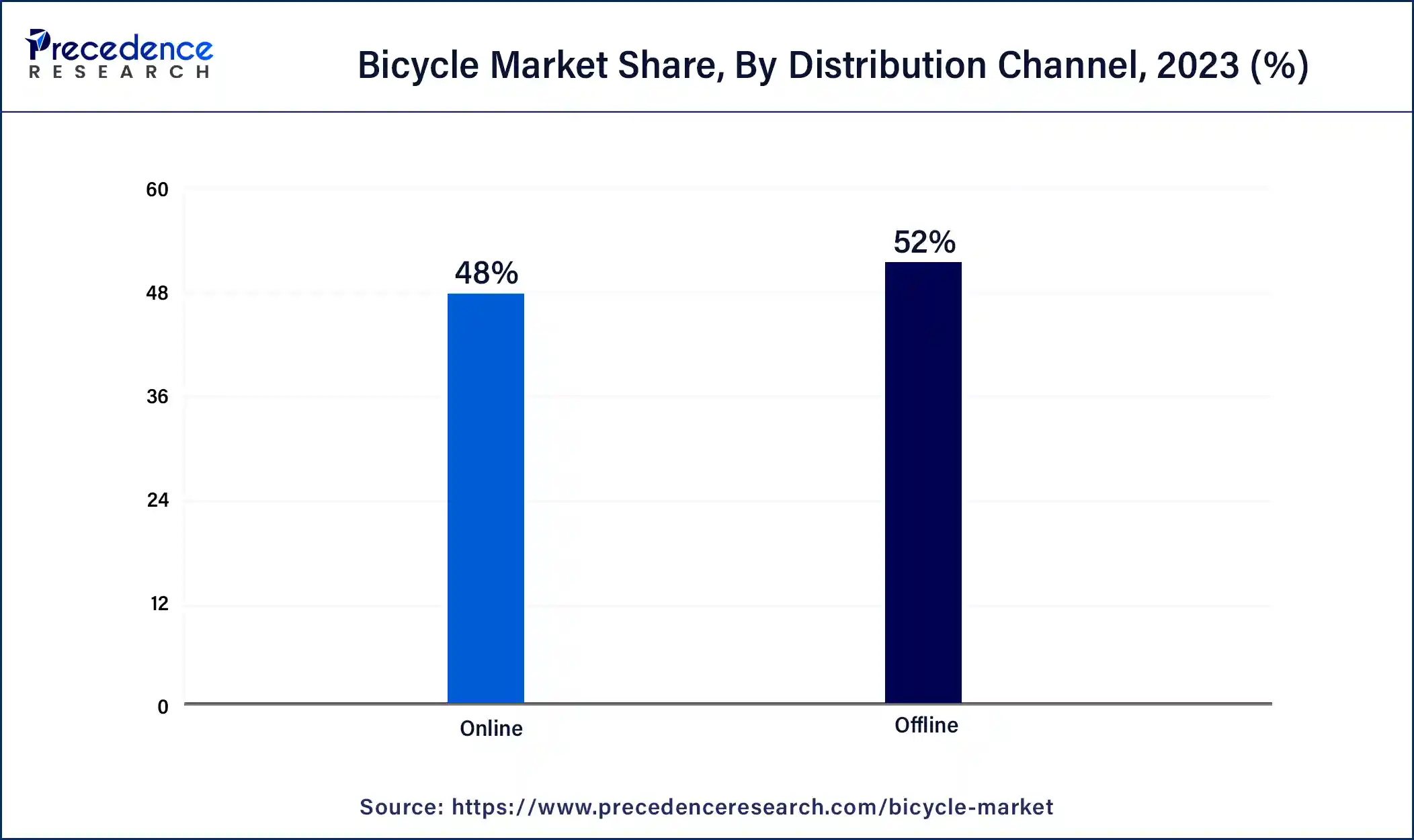
The online segment is expected to grow at the fastest CAGR during the forecast period, supported by increasing digital adoption, expanding e-commerce platforms, and growing availability of direct-to-consumer bicycle brands. Online channels provide customers with wider product choices, competitive pricing, doorstep delivery, and access to customer reviews and digital product comparisons. The integration of omnichannel strategies, including online purchase with in-store pickup and virtual product guidance, is further improving the online buying experience. Increasing internet penetration and rising demand for premium bicycles and accessories through digital platforms are expected to accelerate online sales growth.
Price Insights
Why Did the Mid Range Segment Dominate the Bicycle Market in 2025?
The mid range segment dominated the market in 2025, driven by its balance between affordability, performance, and product features. Consumers increasingly prefer bicycles that provide improved durability, better components, and enhanced riding comfort without the high price point associated with premium models. The strong demand for mid-range vehicles among daily commuters, fitness enthusiasts, and recreational riders seeking reliable transportation solutions also strengthened segmental growth. Additionally, the expansion of urban cycling, rising health awareness, and increasing adoption of e-bikes with moderate pricing are strengthening the position of mid-range bicycles.
The premium segment is expected to witness the fastest growth during the forecast period, driven by rising demand for advanced bicycles equipped with superior materials, smart connectivity features, lightweight frames, and high-performance components. Increasing interest in professional cycling, adventure sports, and premium e-bikes is encouraging consumers to invest in technologically advanced products. Furthermore, growing disposable income, the popularity of luxury mobility solutions, and the integration of AI, GPS, advanced battery systems, and connected features are expected to accelerate premium bicycle adoption globally.
Market Regional Analysis: North America, Europe, Asia-Pacific
What is the Asia Pacific Bicycle Market Size?
The Asia Pacific bicycle market size was estimated at USD 40.54 bllion in 2025 and is predicted to be worth around USD 83.69 billion by 2035, at a CAGR of 7.52% from 2026 to 2035
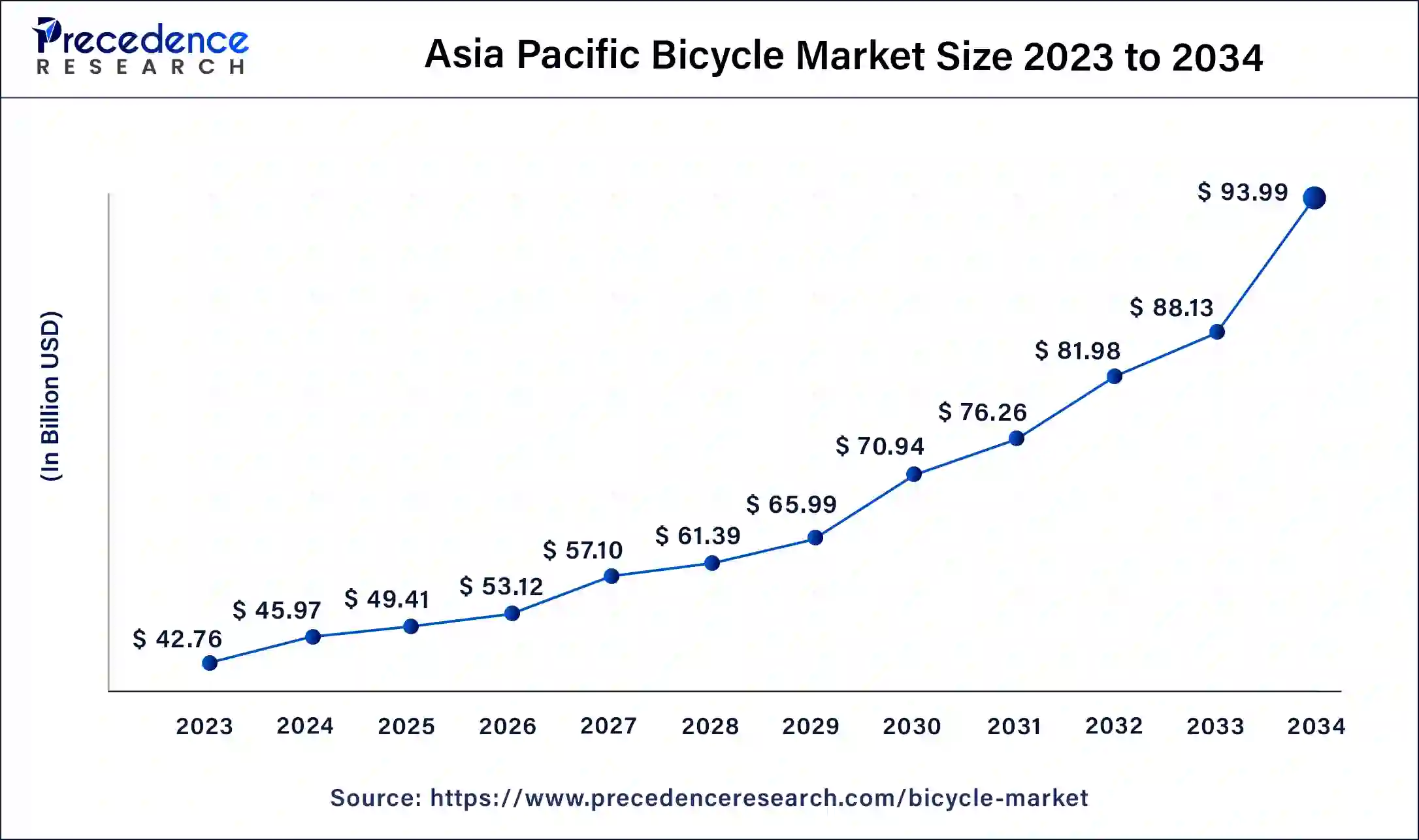
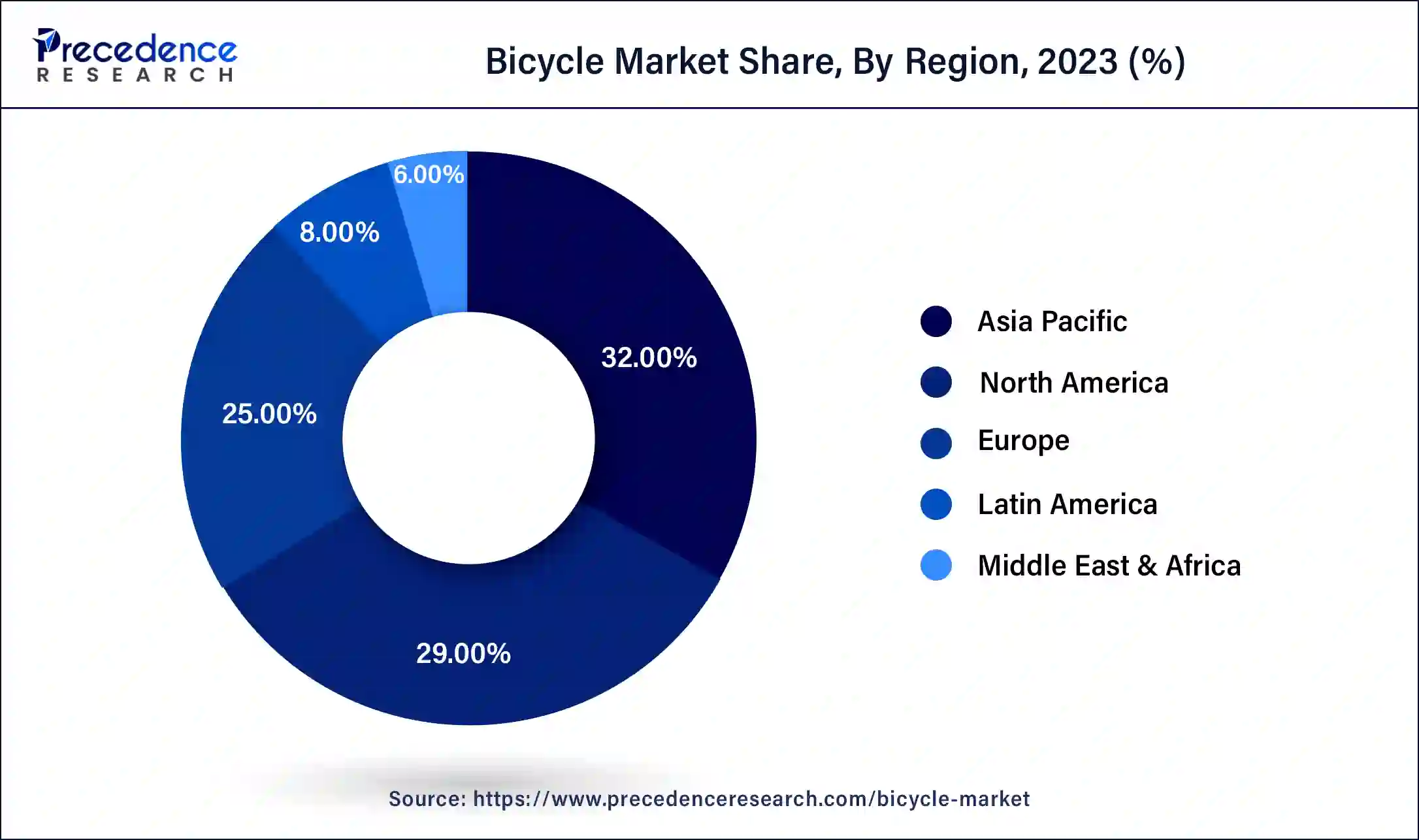
Asia Pacific accounted for a market share of around 31.27% and dominated the global bicycle market in 2025. The various nations in Asia Pacific like Japan, China, and Singapore are investing heavily in the development of the necessary infrastructure that supports and encourage commutation through bicycles. The high number of road traffic accidents is the major restrain that may hamper the growth of the bicycle market in Asia Pacific region. The presence of huge youth population and rapidly ageing population in this region are becoming aware regarding the health benefits of bicycling and the rising disposable income and growing desire to remain healthy and fit is boosting the demand for the bicycles across the Asia Pacific region.
China Market Trends
China leads the market in Asia-Pacific, due to its massive production capacity and strong domestic demand. The market is driven by rapid urbanization and increasing adoption of electric bicycles. Growth in bike-sharing platforms, cost-effective manufacturing, and government support for sustainable mobility are expected to drive continued expansion.
What Makes Europe the Fastest-Growing Region in the Market?
Europe is expected to grow at the highest CAGR of 10.5% during the forecast period. This growth is attributable to the presence of supportive infrastructure in several cities that encourages the adoption of bicycles. Furthermore, the events like Ronde van Vlaanderenare and Tour de France contribute significantly towards the adoption of the bicycles among the consumers. Various European nations like Denmark, Italy, Belgium, and France are rolling out bicycle-friendly infrastructure that promotes commutation through bicycles. The rising concerns over the carbon emission from vehicles and rising incidences of overweight and obesity is further fueling the demand for the bicycles among the European population.
Germany Market Trends
The German market is driven by its advanced cycling infrastructure and strong demand for e-bikes. Supportive government policies, high environmental awareness, and the presence of leading manufacturers are expected to further accelerate market expansion.
What Potentiates the Market in North America?
The market in North America is expected to grow at a significant rate throughout the forecast period. This is mainly due to a rapid shift toward sustainable transportation and increasing environmental consciousness among consumers. Robust regulatory support for cycling infrastructure and safety initiatives is further driving demand across the region. Rising adoption of bicycles for commuting, fitness, and recreational activities positions North America as a key growth hub. Additionally, the strong presence of established brands and a well-developed retail network enhance accessibility to bicycles.
U.S. Market Trends
The U.S. market is growing due to rising health awareness, increasing participation in fitness activities, and strong consumer spending. Expanding bike-sharing programs, growing demand for electric bicycles, and improved cycling infrastructure are expected to support consistent market growth.
How is the Opportunistic Rise of the Latin American Market?
The Latin American bicycle market is growing at a substantial rate, driven by rising environmental awareness, rapid urbanization, supportive government initiatives, expansion of the tourism industry, and emerging health and wellness trends. Increasing concerns over air pollution and climate change are encouraging consumers to adopt greener transportation options, positioning cycling as an attractive and sustainable alternative. Governments across the region are actively collaborating with environmental agencies to launch awareness campaigns and promote eco-friendly transport modes, further supporting market growth.
Brazil Market Trends
The Brazilian market is driven by increasing fitness trends and the rising use of bicycles for daily commuting. Government initiatives promoting cycling infrastructure and growing environmental awareness are expected to further boost market demand.
What Opportunities Exist in the Middle East & Africa?
The Middle East & Africa (MEA) presents significant opportunities in the bicycle market, driven by rising urbanization, a growing middle class, and government initiatives promoting cycling as a sustainable mode of transport. Countries such as South Africa and the UAE are leading the region, supported by investments in cycling infrastructure and awareness campaigns that encourage cycling for health and leisure. Growing interest in cycling as both a recreational activity and a transportation option, combined with favorable government policies, underscores the region's strong growth potential.
UAE Market Trends
The UAE market is driven by strong investments in smart city initiatives and cycling infrastructure. Increasing interest in recreational cycling, tourism activities, and government-led fitness campaigns are expected to drive market expansion.
Trade Analysis of the Bicycle Market
- According to the Observatory of Economic Complexity, the total global trade of bicycles reached $8.12 billion in 2024.
- China, Chinese Taipei, and Germany were the leading exporters of bicycles in 2024, accounting for $2.56 billion, $1.2 billion, and $932 million of exports, respectively.
- The top global importers of bicycles were the U.S., Germany, and the Netherlands.
- The U.S. imported $1.09 billion of bicycles, Germany imported $821 million, and the Netherlands imported $629 million of bicycles in 2024.
What are the Government Initiatives for the Bicycle Market?
- The Government of India initiated the Smart Cities Mission and the Cycling Infrastructure program for promoting bike usage and mitigating urban traffic jams.
- The European Union has adopted the policy known as the European Green Deal that encourages bike travel and low-carbon urban transport among member nations.
- China has also launched policies related to green mobility and financial incentives for electric bikes.
- The U.S. government increased funding for cycling paths via the Bipartisan Infrastructure Law.
- The Government of the Netherlands has made significant investments in developing cycling infrastructure and planning bicycle-friendly cities for promoting regular use of bicycles.
Value Chain Analysis
- Raw Material Sourcing
This stage involves procuring materials like aluminum, steel, carbon fiber, and alloys.
Key Players: Shimano, SRAM, Continental - Manufacturing and Assembly Process
Manufacturers design and assemble bicycles for various terrains or uses such as road, mountain, hybrid, electric, and kids.
Key Players: Trek Bicycle, Cannondale, Hero - Distribution and After Sales
In this stage, bicycles are sold through specialty bike shops, sports retailers, and even online platforms.
Key Players: Decathlon, Amazon, Halfords
Market Competitive Landscape: Leading Companies and Strategies
The global bicycle market is moderately fragmented, with competition driven by product innovation, brand reputation, technological integration, sustainability initiatives, and expanding distribution networks. Market participants are increasingly focusing on developing advanced bicycles, including electric bikes, smart-connected bicycles, lightweight performance models, and urban mobility solutions to address evolving consumer preferences. Growing awareness of health benefits, cycling events, government mobility programs, and sustainability campaigns are further strengthening the competitive environment.
Key players such as Trek Bicycle Corporation, Giant Manufacturing Co. Ltd., Specialized Bicycle Components, Inc., Hero Cycles Ltd., and TI Cycles of India are strengthening their market position through portfolio expansion, advanced product development, and strategic brand-building initiatives. These companies are investing in electric bicycles, premium cycling products, connected mobility features, and consumer-focused designs to capture opportunities across fitness, commuting, recreation, and commercial applications.
Bicycle Market Companies
- Trek Bicycle Corporation – Produces mountain, road, hybrid, and electric bicycles using superior technology for performance and sustainable purposes.
- Accell Group – Produces electric bicycles, cargo bikes, cycling accessories, and mobility devices using several internationally renowned bicycle brands.
- SCOTT Sports SA – Manufactures top-quality bicycles, e-bikes, cycling clothing, helmets, and sports performance equipment for professional cyclists.
- Atlas Cycles Ltd. – Designs commuter, kids, and road bicycles emphasizing value for money, robustness, and urban transport applications.
- Specialized Bicycles Components, Inc. – Designs high-end bicycles, electric bicycles, cycling clothing, and bicycle parts that benefit riders.
Other Major Key Players
- Avon Cycles Ltd.
- Merida Industry Co. Ltd.
- Cervelo
- Giant Bicycles
- Dorel Industries Inc.
Recent Developments in the Bicycle Market (2025–2026)
- In June 2026, AATO organized an interesting World Bicycle Day Rally featuring a range of smart sports bicycles at Asmita League. The multi-purpose rally bolstered the market expansion and promoted eco-friendly tourism and fitness. (Ref: https://andamanchronicle.net)
- In June 2026, the China Cycle 2026 show witnessed the innovation of seven second-generation executives flaunting the potential of Taiwan's bicycle industry. The discussion further led the executives and excellent advancements to confirm the partnership model within the Taiwanese bicycle spectrum. (Ref: https://english.cw.com)
- In April 2026, the municipal corporation of Varanasi, India, launched a public bike-sharing system to reduce pollution and traffic congestion. The initiative benefited pilgrims, tourists, and students, while authorities stated it helped control carbon emissions and improve urban mobility.
(Source: https://www.etvbharat.com ) - In April 2026, the Dubai Roads and Transport Authority launched a new unit, the Personal Mobility Monitoring Unit, to monitor bicycles and e-scooter misuse in Dubai. The unit was launched for all cycling tracks, soft mobility zones, and main roads. (Source: https://curlytales.com )
- In January 2025, Ultraviolette launched its latest F77 model and which is called the F77 SuperStreet. this one is a more street-oriented electric motorcycle and bears a bunch of new bits when compared to the Mach 2. Ultraviolette will commence the bookings for the F77 SuperStreet.
Segments Covered in the Report
By Product
- Hybrid Bikes
- Mountain Bikes
- Cargo Bikes
- Road Bikes
- All Terrain Bicycle
- E-bicycle
- Others
By Technology
- Conventional
- Electric
By Distribution Channel
- Online
- Offline
By End User
- Men
- Women
- Kids
By Price
- Premium
- Mid Range
- Low Range
By Region
- North America
- Latin America
- Europe
- Asia-pacific
- Middle and East Africa
For inquiries regarding discounts, bulk purchases, or customization requests, please contact us at sales@precedenceresearch.com
Frequently Asked Questions
Tags





Ask For Sample
No cookie-cutter, only authentic analysis – take the 1st step to become a Precedence Research client



 sales@precedenceresearch.com
 +1 804-441-9344
 Schedule a Meeting