



Health Insurance Market Size, Key Companies, Company Market Share, Healthcare Spending, Technology Adoption, Reimbursement Analysis, Market Penetration, Cost Structure, and Growth Outlook
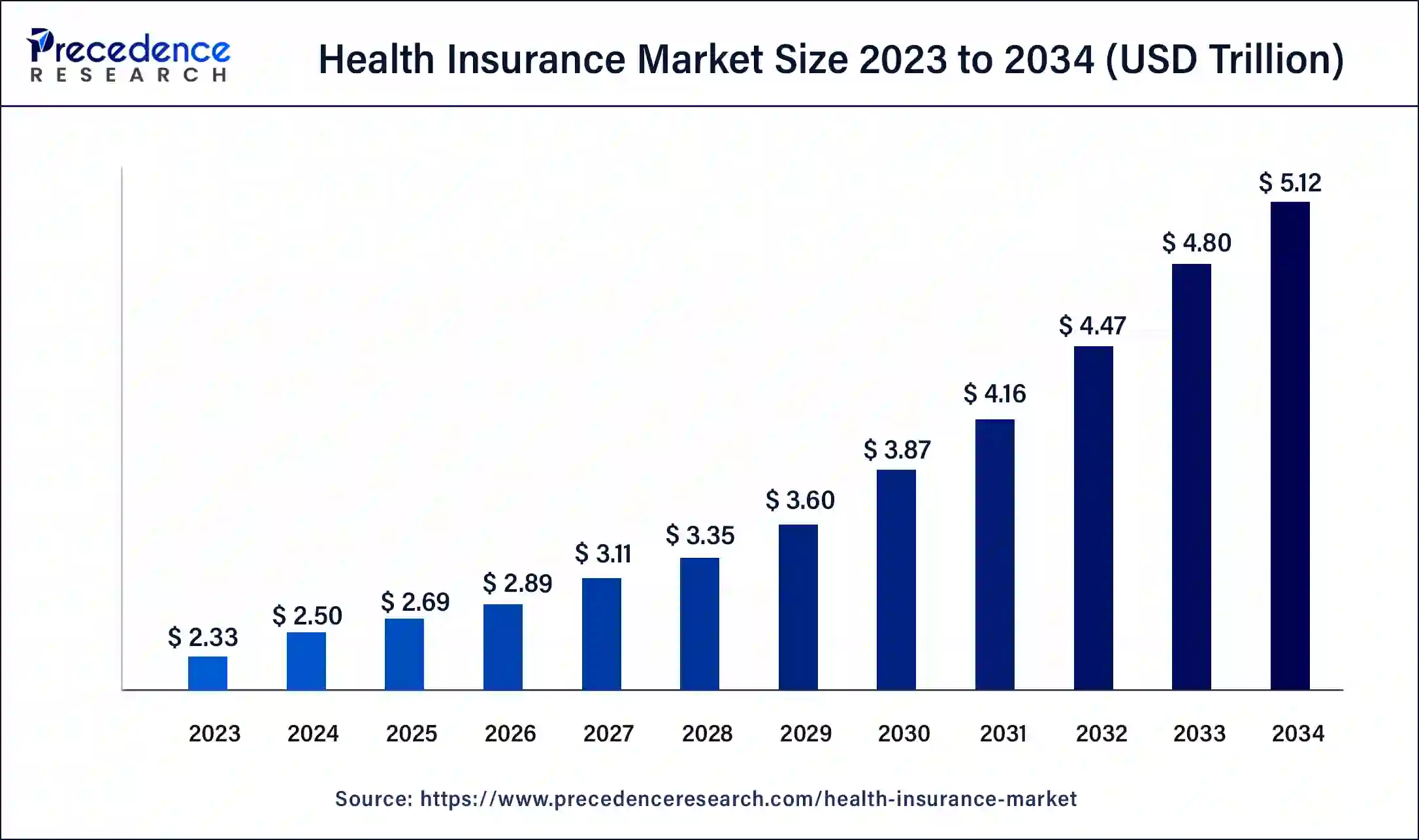
The global health insurance market size surpassed USD 2.89 trillion in 2026 and is projected to attain around USD 5.45 trillion by 2035, growing at a CAGR of 7.32% from 2026 to 2035. Market growth is driven by rising healthcare costs, increasing prevalence of chronic diseases, expanding government healthcare programs, and growing awareness of financial protection against medical expenses.
Source: https://www.precedenceresearch.com/health-insurance-market
 Get a Sample
 Table Of Content


What is the Health Insurance Market Size?
The global health insurance market size was estimated at USD 2.69 trillion in 2025 and is predicted to increase from USD 2.89 trillion in 2026 to approximately USD 5.45 trillion by 2035, expanding at a CAGR of 7.32% from 2026 to 2035. The market is driven by increasing healthcare expenditure, rising prevalence of chronic conditions, increasing awareness of safeguarding one's finances from medical bills, and favorable government policies favoring insurance coverage. Furthermore, the digital revolution and telehealth insurance are fueling growth in the market.
Key Takeaways
- North America led the global health insurance market in 2025.
- Asia-Pacific is expected to grow at the highest CAGR between 2026 and 2035.
- By provider type, the public segment dominated the market in 2025.
- By provider type, the private segment is expected to grow at a significant CAGR during the forecast period.
- By coverage type, the life-time coverage segment held the largest market share in 2025.
- By coverage type, the term insurance segment is expected to grow at a notable CAGR during the studied years.
- By network provider, the preferred provider organizations segment led the market in 2025.
- By network provider, the point of service segment is expected to grow at a significant rate in the upcoming period.
- By distribution channel, the direct sales segment registered its dominance in the market in 2025.
- By distribution channel, the brokers/agents segment is expected to expand rapidly in the coming years.
Market Overview
Health insurance helps mitigate any costs incurred due to illnesses, accidents, surgical operations, or other health-related costs. The importance of health insurance is that it significantly reduces the economic cost borne by people and helps them gain access to high-quality healthcare services. Some of the factors influencing the growth of this industry include the rising inflation rate in the healthcare industry, increased life expectancy, increasing rates of chronic conditions, and the increased use of insurance in different societies. Governments in both developed and developing countries have started implementing universal healthcare coverage schemes.
What is the Role of AI in the Health Insurance Market?
Artificial Intelligence (AI) is revolutionizing the health insurance sector through enhanced underwriting, claims management, fraud detection, and client experience. The use of AI in analytics allows health insurance providers to evaluate risks more efficiently by analyzing real-time data on the health and behavior of clients. Chatbots and virtual assistants ensure that customers get timely responses to their concerns and inquiries as well as round-the-clock customer service. Predictive analytics enables insurers to identify high-risk individuals and advise on preventive measures.
AI is also playing an important role in claims processing by automating document verification and medical coding. Insurance companies are using machine learning to spot and mitigate the risk of fraud as well as speed up claim verification. Moreover, AI-powered personalized insurance products developed on the basis of individual health profiles of customers are boosting customer loyalty and satisfaction.
Health Insurance Market Trends
- Rising Adoption of Digital Health Insurance Platforms: Health insurers are increasingly deploying digital platforms and mobile applications that allow policy purchases, renewals, claims management, and customer support, improving accessibility, convenience, and overall customer experience.
- Growing Integration of Telemedicine Services: Insurance providers are expanding coverage for telemedicine and virtual consultations, enabling policyholders to access healthcare remotely, reducing treatment costs, and improving healthcare accessibility, especially in underserved regions.
- Increasing Demand for Personalized Insurance Plans: AI and big data analytics are enabling insurers to offer personalized and usage-based health insurance products tailored to individual health profiles, lifestyles, and risk levels, enhancing customer engagement and satisfaction.
- Expansion of Government Healthcare Coverage Programs: Governments across emerging economies are introducing and expanding public healthcare insurance schemes to improve healthcare accessibility, increase insurance penetration, and reduce out-of-pocket medical expenditures among citizens.
- Strategic Partnerships Driving Market Growth: Insurers are partnering with healthcare providers, technology firms, and digital health companies to enhance patient care, streamline claims processing, improve operational efficiency, and reduce overall healthcare costs.
Health Insurance Market Growth Factors
The health insurance market is anticipated to witness rapid growth owing to the rising burden of diseases and growing geriatric population across the globe. The prevalence of various chronic diseases such as cardiovascular diseases, respiratory diseases, neurological diseases, cancer, musculoskeletal diseases, and diabetes is rising at a significant pace across the globe. The growing awareness among the population regarding the financial benefits of having health insurance is expected to drive the growth of the global health insurance market.
According to the GLOBOCAN report by the International Agency for Research on Cancer, around 19.3 million new cancer cases and around 10 million cancer related deaths were reported in the year 2020, across the globe. Cardiovascular diseases are the leading cause of deaths across the globe that accounted for 32% of the global death, as per the World Health Organization.
The rising obesity, physical inactivity, increased consumption of tobacco and sugar, increasing prevalence of smoking, and unhealthy food habits are the major causes behind the surging burden of chronic diseases across the globe. The cost of treatment is expensive and it can drain all the savings of an individual. Therefore, the rising financial literacy among the modern people and the easy availability of various types of health insurance providers are the significant factors behind the burgeoning demand for the health insurance.
- Under the federal government subsidies (United States), the amount of health insurance for people under age 65 is projected to be $1.6 trillion in 2032. Whereas the medicine and the children health insurance program is expected to account for about 42% of the total subsidies during the period of 2022-2032
- An increasing prevalence of chronic diseases and lifestyle disorders is alarming demand for full health coverage.
- The aging population worldwide has been facilitated in its increased reliance on health insurance.
- Increasing awareness and financial literacy for insurance-related benefits promotes its broader adoption.
- Increasing accessibility through private and public insurance providers gives a stronger boost to the market.
- High treatment costs for unplanned occurrences motivate increased financial protection.
Key Regulations for the Health Insurance Market
|
Country
|
Key Health Insurance Regulation
|
Focus Area
|
|
India
|
IRDAI mandates the removal of entry age barriers, caps waiting periods for pre-existing diseases at 3 years, and mandates 3-hour cashless authorization.
|
Consumer Protection and Accessibility
|
|
USA
|
NAIC and state regulators are finalizing frameworks for AI-driven underwriting, data privacy, and climate-related financial risk assessment in insurance.
|
AI Governance and Tech Compliance
|
|
China
|
Strict enforcement of real-name registration, mandatory traceability of online diagnosis data to physical records, and tightened rules on online prescription drug sales.
|
Digital Health Integration
|
|
EU/Germany
|
Implementation of stricter sustainability reporting (ESG) and operational resilience standards, aligning with IFRS 17 for solvency and financial data.
|
Sustainability and Risk Resilience
|
Health Insurance Market Outlook
- Industry Growth Overview: The health insurance market is set for robust growth between 2026 and 2035, primarily driven by soaring healthcare costs, the rising prevalence of chronic and lifestyle diseases, an aging population, and heightened consumer awareness of the need for financial protection. High-growth segments include critical illness policies, specialized plans for seniors, and outpatient care coverage.
- Global Expansion: Leading players are expanding their geographical footprint, particularly into high-growth emerging markets in Asia-Pacific and Latin America, driven by rising disposable incomes, rapid urbanization, and supportive government initiatives to provide universal health coverage. North America remains a dominant market due to its established infrastructure and high healthcare spending.
- Major Investors: Private equity and venture capital firms are actively investing in the sector, drawn by its defensive growth characteristics and integration with health tech. Strategic investors, including major tech companies like Microsoft and Nvidia, are also entering the space. Noteworthy investments include those from KKR, Carlyle Group, and Blackstone in related healthcare sectors.
- Startup Ecosystem: The startup ecosystem is flourishing, especially in areas leveraging technology for improved accessibility and efficiency. Innovations focus on digital-first platforms, AI-driven risk assessments, telemedicine integration, and RaaS models for healthcare delivery, offering solutions such as on-demand micro-insurance and simplified, transparent policy management.
What are the Government Initiatives Contributing to the Health Insurance Market?
- Universal health coverage is being increased through government insurance plans which ensure that all citizens can have access to affordable health care without having to spend much money on medical services.
- Health insurance subsidized programs are introduced for poor and rural areas to provide better access to healthcare at reduced costs.
- Governments are also investing in building digital infrastructure within the health sector, such as using electronic health records, claims management through digital platforms, and health databases for efficient service delivery.
- Stringent regulations are set up to ensure that there is fair pricing, consumer protection, transparency in claims, and adherence to ethical standards by health insurance firms.
Market Report Coverage and Key Metrics
| Report Scope | Details |
| Market Size in 2025 | USD 2.69 Trillion |
| Market Size in 2026 | USD 2.89 Trillion |
| Market Size by 2035 | USD 5.45 Trillion |
| Market Growth Rate from 2026 to 2035 | CAGR of 7.32% |
| Base Year | 2025 |
| Forecast Period | 2026 to 2035 |
| Segments Covered | Provider Type, Coverage Type, Network Provider, Distribution Channel, and Region |
| Regions Covered | North America, Europe, Asia-Pacific, Latin America, and Middle East & Africa |
Market Dynamics
Driver
Rising Healthcare Costs and Increasing Disease Burden
The market is being driven by the rapid increase in healthcare costs and medical inflation, coupled with the growing prevalence of chronic diseases such as diabetes and cancer. Additionally, rising awareness of financial protection and supportive government initiatives are encouraging individuals to adopt health insurance, making it an essential tool for managing high out-of-pocket medical expenses.
Restraint
High Premium Costs and Low Awareness
However, a significant constraint is the high cost of insurance premiums, which limits affordability for lower-income populations. Furthermore, low awareness levels, particularly in rural areas, along with concerns about complex policies, claim settlements, and trust issues, continue to restrict the wider adoption of health insurance products.
Opportunity
Digital Transformation and Expansion in Emerging Markets:
On a positive note, the market presents strong growth opportunities through digital transformation, including AI-driven platforms, telehealth integration, and mobile-based insurance services. Moreover, expanding coverage in emerging markets, an increasing demand for personalized and preventive healthcare plans, and innovative product offerings are creating new avenues for market expansion.
Market Segmentation Analysis
Provider Type Insights
Why Did the Public Segment Dominate the Market?
The public segment dominated the health insurance market with the highest revenue share in 2025 due to the extensive presence of government-sponsored healthcare programs, universal health care, and a massive number of beneficiaries. The benefits offered by public providers include affordable healthcare services that are easily accessible, as they are funded by the government. This makes them highly accessible among different income groups, and they also contribute to lowering out-of-pocket expenses on medical bills as well as improving healthcare penetration levels.
The private segment is projected to expand at the highest CAGR in the upcoming period because of the increasing need for holistic health insurance coverage, reduced waiting times for treatment, availability of high-quality health care services, and expansion of middle-class populations in developing economies. The growing awareness among consumers about the health benefits offered by employers, as well as tailor-made insurance coverages, also contributes to segmental growth.
Coverage Type Insights
The Life-Time Coverage Segment Led the Market in 2025
The life-time coverage segment dominated the health insurance market with the biggest share in 2025. This dominance is attributed to the increasing preference for comprehensive and long-term financial protection against rising healthcare expenses. Lifetime health insurance plans provide continuous coverage, helping individuals manage the growing costs associated with hospitalization, medical treatments, and critical illnesses. The growing awareness regarding healthcare security, increasing life expectancy, and the need for long-term protection have encouraged consumers to opt for lifetime coverage plans.
The term insurance segment is expected to expand rapidly in the market in the coming years, driven by the increasing demand for affordable health protection solutions, flexible coverage options, and cost-effective premium structures. Term insurance products appeal to consumers seeking financial protection for specific periods while maintaining lower premium commitments. Growing awareness among younger populations, increasing digital insurance adoption, and the expansion of online insurance platforms are expected to support the growth of this segment in the coming years.
Network Provider Insights
What Made Preferred Provider Organizations the Dominant Segment in the Market?
The preferred provider organizations segment dominated the health insurance market in 2025, owing to its flexibility, wider choice of healthcare providers, and convenient access to medical services. PPO plans allow policyholders to receive care from a broad network of hospitals, physicians, and specialists without requiring referrals, making them a preferred choice among individuals seeking greater control over their healthcare decisions. The availability of extensive provider networks, coverage flexibility, and reduced restrictions compared with other health plan models has supported the adoption of PPOs.
The point of service segment is expected to grow at the fastest CAGR over the projection period, driven by increasing demand for cost-effective health insurance plans that combine the benefits of both Health Maintenance Organization (HMO) and Preferred Provider Organization (PPO) models. POS plans provide policyholders with flexibility to choose between in-network and out-of-network healthcare providers while encouraging the use of coordinated care systems. Growing awareness of affordable healthcare options, rising healthcare costs, and demand for personalized coverage solutions are expected to support the expansion of the POS segment in the coming years.
Distribution Channel Insights
Why Did the Direct Sales Segment Dominate the Market?
The direct sales segment dominated the market with a major share in 2025 due to the development of good relationships between insurers and consumers, effective communication of the policies, and better control over customer acquisition and retention strategies. Most insurers still employ specialized salespeople and enter into collaborations with companies to sell their policies. This segment also facilitates better advisory services and trust-building among consumers. Direct interaction allows insurers to learn about customer preferences and retain them.
The brokers/agents segment is projected to grow at the highest CAGR during the forecast period due to the increasing demand for personalized insurance guidance and support in selecting suitable health insurance plans. Brokers and agents play an important role in simplifying complex insurance policies, explaining coverage benefits, and helping customers choose plans based on their healthcare needs and financial conditions. As insurance products become more diverse and complex, consumers continue to rely on professional advisors for policy comparisons, claim assistance, and regulatory guidance.
Regional Analysis
U.S. Health Insurance Market Size and Growth 2026 to 2035
The U.S. health insurance market size was estimated at USD 660.08 billion in 2025 and is predicted to be worth around USD 1,345.61 billion by 2035, at a CAGR of 7.38% from 2026 to 2035.
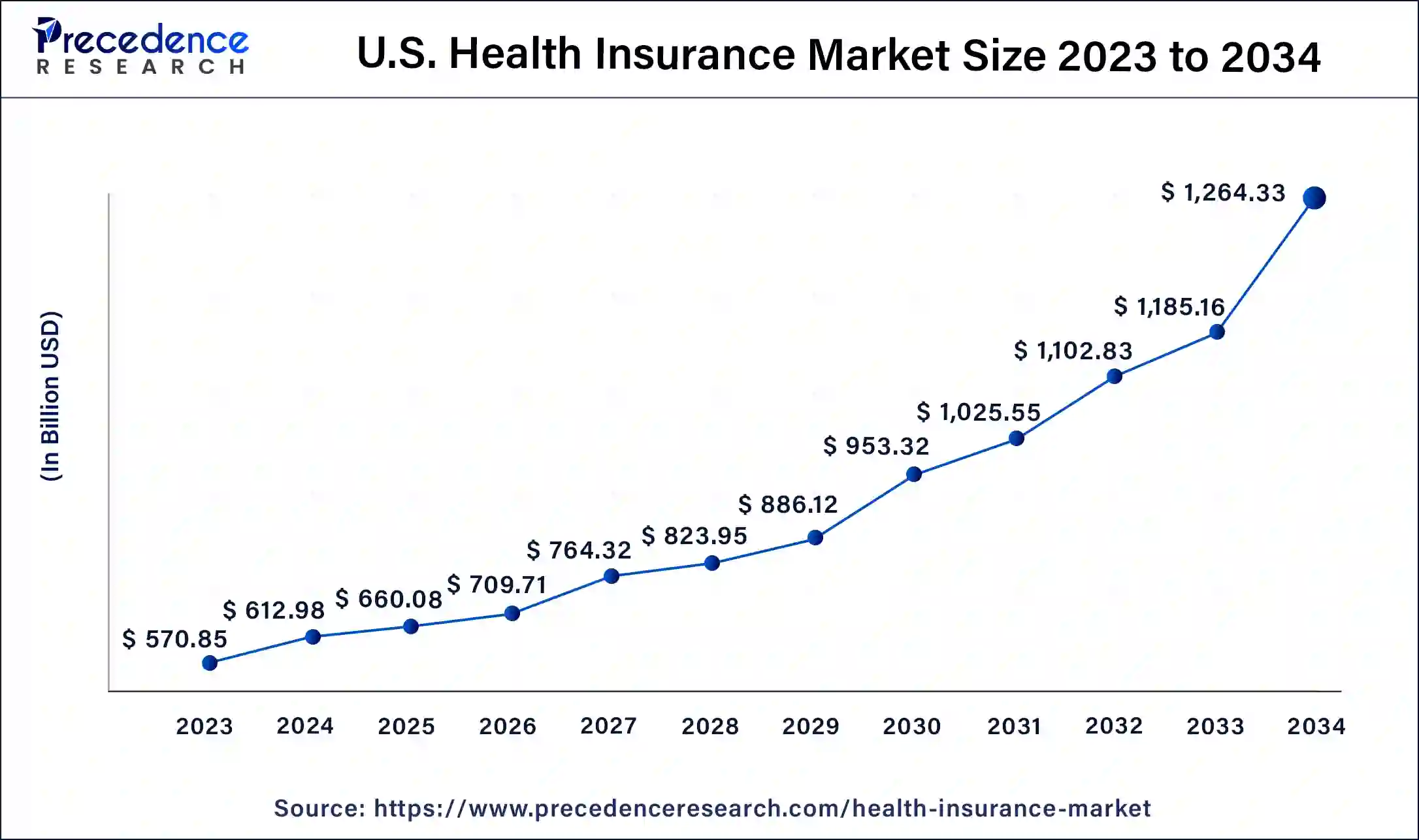
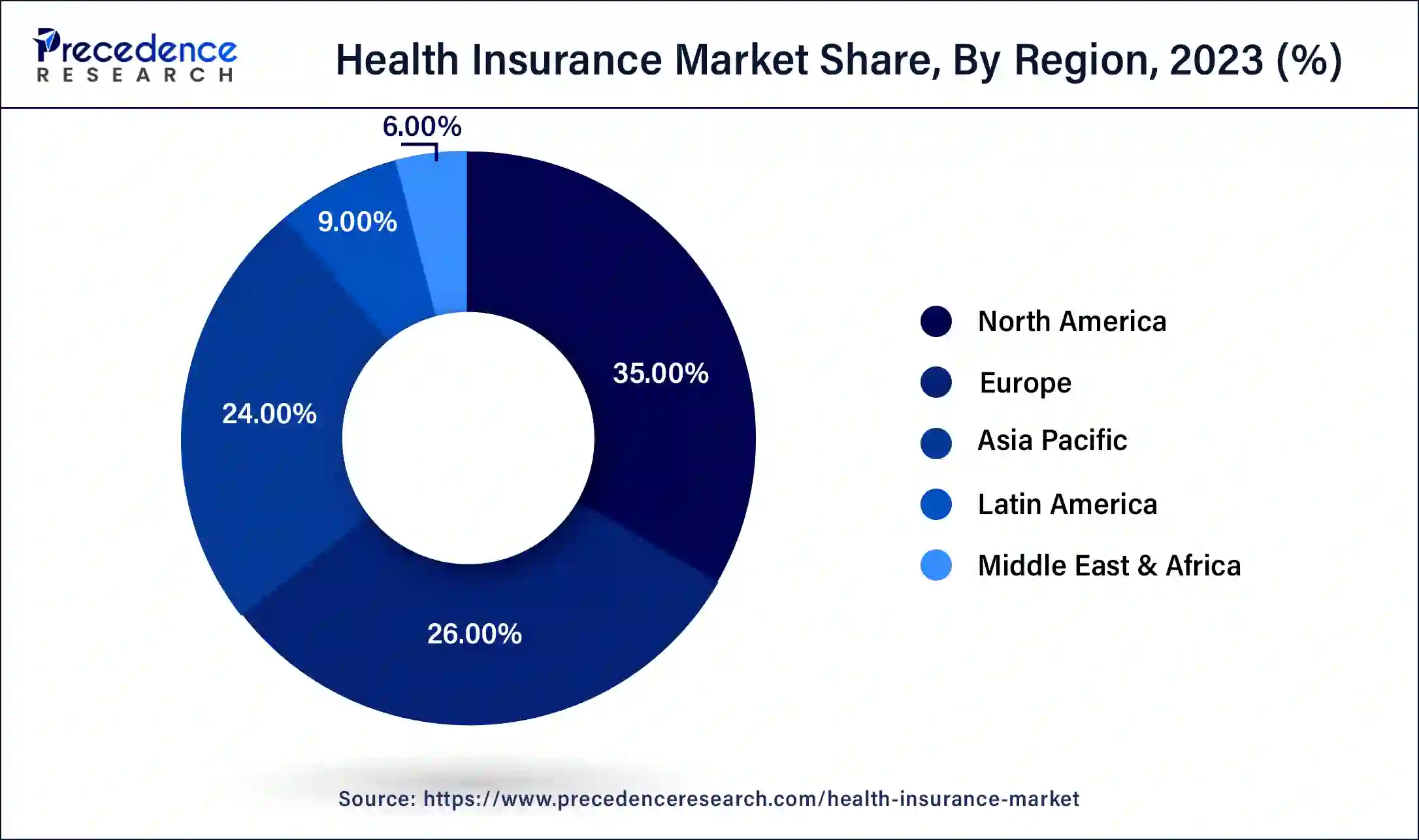
North America led the global health insurance market in 2025. The higher penetration of the health insurance in North America has led to the growth of this segment. The healthcare costs and expenditure are very high in North America. In fact, most of the people depend on the reimbursements for receiving the treatments. Furthermore, the prevalence of chronic diseases is very high in the major market like U.S. It is estimated that approximately 60% of the U.S. population is suffering from one or more chronic conditions. The availability of advanced healthcare infrastructure and improved access to the advanced healthcare facilities are the major factors behind the high healthcare costs. The increased awareness among the population regarding the benefits of insurance policies and the high literacy rate in the region are the prominent factors behind the rapid growth of the health insurance market.
U.S. Market Trends
The U.S. plays a key role in the market, serving both as the direct insurer for over a third of the population through major public programs like Medicare, Medicaid, and military/veterans benefits, and as the main regulator for the leading private insurance sector. Through significant legislation such as the Affordable Care Act (ACA), the government sets consumer protections, mandates essential coverage, and provides substantial financial subsidies to promote employer-sponsored insurance.
What Factors are Boosting the Growth of the Health Insurance Market in Asia-Pacific?
Asia Pacific is expected to exhibit the highest growth rate during the forecast period. The Asia Pacific region is the home to the world's largest population. The rapid urbanization and growing penetration of the insurance companies is fueling the market growth. The changing lifestyle of the consumers, unhealthy eating habits, and rising obesity are the major factors behind the growing prevalence of chronic diseases in the region. The rising disposable income, improving access to the internet, rising literacy rates, increasing investments on the development of advanced healthcare infrastructure, and rising awareness regarding the health insurances among the population are the most prominent factors that are expected to drive the growth of the Asia Pacific health insurance market in the forthcoming years.
China Health Insurance Market Trends
China is a major contributor to the Asia Pacific health insurance market due to its large population and rapidly growing middle class, which is increasingly seeking private healthcare coverage. The government's focus on expanding healthcare access and reforms aimed at improving insurance penetration further boost market growth. Rising awareness of health risks, coupled with increasing chronic disease prevalence, drives demand for comprehensive health insurance plans. Additionally, the presence of both domestic and international insurers offering innovative policies strengthens China's position as a key market in the region.
How is the Opportunistic Rise of Europe in the Health Insurance Market?
Europe is seeing significant growth in the health insurance market, marked by strong public universal healthcare systems and a sizable private insurance sector. The private market mainly grows from individuals seeking additional coverage to access more services, shorter wait times, and a wider choice of providers. Strict regulations protect consumers and ensure data privacy. There is also a focus on preventive healthcare, along with the integration of AI and data analytics for personalized policies and expanding digital health platforms.
Germany Health Insurance Market Trends
Germany is a major contributor to the European health insurance market due to its well-established statutory health insurance (SHI) system, which covers the majority of the population, alongside a competitive private health insurance (PHI) sector for high-income earners and professionals. The market's growth is driven by an aging population, rising healthcare costs, and a focus on improving claims processing and customer-centric services. Strong regulation and the presence of both public and private insurers ensure high market penetration and innovation in coverage options.
What Potentiates the Growth of the Latin America Health Insurance Market?
The health insurance market in Latin America is steadily expanding, driven by growing health awareness, increasing middle-class incomes, and the demand for better healthcare options beyond public systems. The region features a mix of public and private coverage, with a focus on private insurance to manage rising healthcare costs and improve access to better facilities. Key drivers include the adoption of digital health solutions like telemedicine, strategic partnerships between local and international insurers such as Bupa and MAPFRE, and government initiatives aimed at expanding coverage. Brazil holds the largest market share, but countries like Costa Rica and Peru are also showing significant growth potential.
Brazil Health Insurance Market Trends
Brazil's health insurance market is growing quickly. Many people try to avoid the long wait times and restrictions of the public healthcare system. The market's growth is fueled by economic expansion, rising disposable incomes, and regulatory changes that promote private-sector involvement. A key trend is the rising demand for supplemental health insurance and the fast adoption of digital healthcare solutions, including Bradesco Saúde, Amil, and Hapvida.
A New Era for Health Insurance in the Middle East and Africa
The MEA health insurance market is set for robust growth, driven by rising healthcare costs, a high prevalence of chronic diseases, and increased health awareness. Government-led initiatives and the implementation of mandatory health insurance policies in several countries, especially in the Gulf Cooperation Council (GCC) region, are key market drivers. The private sector plays a leading role, providing faster claims processing and a wider network of hospitals. A major trend is the adoption of digital health technologies.
Saudi Arabia Health Insurance Market Trends
Saudi Arabia has a large and tightly regulated health insurance market, managed by the Cooperative Health Insurance Council (CCHI). This council requires coverage for all expatriates, private-sector employees, and their dependents. The market is mainly led by the private sector, with major companies like Bupa Arabia and Tawuniya, due to increasing healthcare costs, the privatization of public health services, and efforts to achieve universal health coverage.
Government Initiatives in the Health Insurance Market
China
- In July 2026, China's basic medical insurance program added efforts to encourage major cities to support flexible workers who look for insurance coverage at their workplace or stay location. China's authorities have also enabled individual medical insurance accounts to be shared across provinces. It will enable parents, children, spouses, and other close relatives to use each other's account balances. (Source: https://medicalbuyer.co.in)
United States
- In February 2026, the Committee for a Responsible Federal Budget projected high federal health program costs and reported that federal health programs will cost over $26 trillion through 2036. It will position healthcare as the central focus area of federal expenditure. (Source: https://www.crfb.org)
Germany
- In April 2026, Germany's Health Finance Commission recommended higher alcohol taxes to stabilise public health insurance. It has also been reported that outpatient care rose by 7.6%, pharmaceuticals by 5.9%, and medical treatments by 12.6%. Hospital care remains the largest driving force for the rising expenditure. (Source: https://movendi.ngo)
Brazil
- In September 2025, Brazil's 2026 Health Budget planned to target primary care expansion, backlog reduction, and higher immunisation coverage. It has been reported that immunisation received a major investment, with BRL10.3bn to raise vaccination coverage. (Source: https://www.fitchsolutions.com)
Saudi Arabia
- In December 2025, the government authorities reported that the Gulf Cooperation Council (GCC) countries are expanding health insurance, adding $10 billion in gross written premiums (GWP) in the year 2026. This growth is driven by a compound annual growth rate of 10%-15% and regulatory mandates expanding coverage. (Source: https://www.rgare.com)
Investments/ Revenue in the Health Insurance Market
- In May 2026, CVS Health reported its first-quarter net income of $2.96 billion, or $2.30 a share. It was up from $1.78 billion, or $1.41 a share than 2025, which has led to the company's positive momentum in the health insurance industry. (Source: https://www.wsj.com)
- In February 2026, Humana Inc. invested $1.7 million to accelerate better health outcomes across Illinois. This investment aims to support workforce development and housing stability, expand access to maternal and behavioral healthcare services, and reduce disparities across Illinois. (Source: https://policy.humana.com)
- In February 2026, the Cigna Group reported strong results for the fourth quarter and full year 2025, establishing an increased dividend and 2026 outlook. The company reported its total revenue for the year 2025, which increased 11% to $274.9 billion. (Source: https://newsroom.thecignagroup.com)
- In July 2026, Elevance Health reported an operating revenue of $49.8 billion for the second quarter of 2026, up 0.8% from the second quarter of 2025. The company is boosting its targeted investments in capabilities that simplify the experience of members and providers, lower healthcare costs, and strengthen Carelon's integrated solutions. (Source: https://www.elevancehealth.com)
Value Cain Analysis
- R&D: At this stage, new drugs, therapies, and medical technologies are researched and developed.
- Key Players: Merck & Co., Roche
- Clinical Trials and Regulatory Approvals: This stage involves testing new treatments on humans and getting approval from regulatory bodies such as the FDA before a product can be sold.
- Key Players: IQVIA, ICON plc
- Formulation and Final Dosage Preparation: This phase involves the combination of active pharmaceutical ingredients with other components to prepare a stable, effective, and acceptable final drug product.
- Key Players: Catalent, Lonza
- Packaging and Serialization: This process involves packaging drug products and labeling individual units with unique identifiers for tracking and tracing along the supply chain, hence novelty to counterfeiting and ensuring product authenticity.
- Key Players: Gerresheimer AG, AptarGroup, Inc.
- Distribution to Hospitals, Pharmacies: The stage the logistical process of transporting approved drugs and other medical products to healthcare providers and pharmacies, thus allowing them for patient use.
- Key Players: McKesson Corporation, Cardinal Health
- Patient Support and Services: The stage of activities meant to improve patient experience and treatment adherence, such as patient education, follow-up care, and loyalty programs.
- Key Players: Star Health and Allied Insurance Co. Ltd., Care Health Insurance
Market Competitive Landscape: Leading Companies and Strategies
The health insurance market is highly competitive, with major insurers focusing on expanding coverage offerings, improving customer experience, strengthening digital platforms, and developing value-based healthcare solutions. Market participants are increasingly adopting advanced technologies such as artificial intelligence (AI), data analytics, and digital health platforms to improve underwriting, claims processing, risk assessment, and personalized healthcare services.
Leading health insurance providers are expanding their market presence through strategic partnerships, mergers and acquisitions, product innovation, and broader provider network development. Companies are focusing on offering flexible insurance plans, employer-based coverage solutions, individual health policies, and integrated healthcare ecosystems to address changing consumer needs and rising medical costs.
Top Companies in the Health Insurance Market and Their Offerings
- UnitedHealth Group: A direct-to-consumer digital shopping platform, transparent pharmacy care model, integrated programs, etc.
- Elevance Health: Commercial and employer-sponsored plans, government-backed solutions, fee-based plans, risk-based plans, Medicare Advantage plans, Medicaid managed care, whole-health supplementary benefits, community pharmacy total care, and integrated care management.
- Cigna Healthcare: Traditional Medicare Supplement (Medigap) and ancillary products, traditional and tiered network products, comprehensive global health plans, etc.
- CVS Health: Comprehensive Managed Care plans, standalone prescription drug plans, consumer-directed health insurance plans, state-subsidized health care management contracts, etc.
- Humana Inc: Integrated healthcare delivery services, Medicare programs, and state-based contracts.
Top Companies in the Health Insurance Market
- UnitedHealth Group
- Elevance Health
- Cigna Healthcare
- CVS Health
- Humana Inc.
- Centene Corporation
- Bupa
- AXA
- Allianz
- Ping An Insurance
- AIA Group
- Zurich Insurance Group
- Manulife Financial
- Prudential plc
- Munich Re
Recent Developments
- In May 2026, Even Healthcare gained IRDAI approval to provide retail health insurance products, allowing direct sales to individuals and families. This approval enables customers to port existing policies to Even, marking a major transition from its previous focus on group insurance offerings. (Source: https://www.pharmabiz.com)
- In March 2026, Shriram General Insurance launched Shri Health Suraksha 2.0, a flexible health insurance suite. It offers unlimited restoration benefits, no room charge caps, cumulative bonuses, and covers ambulance costs, medical procedures, and AYUSH treatments within selected sums insured. (Source: https://www.expresshealthcare.in)
- In June 2026, Egypt has made strides in developing its Universal Health Insurance System through its preparation to roll out the next stage in Minya governorate that will benefit millions of people. The government has worked on improving hospitals' capabilities and increasing access to digital healthcare facilities. (Source: https://www.dailynewsegypt.com)
- In March 2026, The Shriram General Insurance Company introduced Shri Health Suraksha 2.0, which is a revamped version of its health insurance product that comes with unlimited sum insured restoration, no room rent cap, and improved ambulance costs coverage. (Source: https://www.expresshealthcare.in)
- In May 2026, Aditya Birla Health Insurance Launched Activ Yuva for Young India. The insurance offers OPD cover, unlimited sum insured, and Yuva Credit. The insurance covers worldwide maternity and offers income protection. The insurance provides rewards for activities like 7-8 hours of sleep, eating two meals a day, and walking 10000 steps. (Source: https://www.passionateinmarketing.com)
- In May 2026, KB Insurance launched KB Direct Fit Tech Health Insurance. The insurance is trending among consumers in their 20s and 30s, and it consists of the No-Claim Contract Conversion System. The insurance offers coverage for surgery, cancer diagnosis, and hospitalization. The insurance provides protection packages for health checkups, heart & brain disease, outpatient care, daily life's risk, health checkups & obesity, hospitalization, cancer, and nursing. (Source: https://www.asiae.co.kr)
- In March 2025, Battery X Metals Inc. an energy transition resource exploration and technology company, announced it has completed, effective acquisition of the remaining 51% of the common shares of Li-ion Battery Renewable Technologies Inc. under the exercise of its Call Right, as defined therein, from the LIBRT shareholders in consideration for 3,030,296 common shares of the Company.
- In February 2025, Blue Whale Materials, a leader in lithium-ion battery recycling, announced a strategic partnership with Call2Recycle, the leading battery stewardship organization in North America. As an output partnership, Blue Whale Materials' advance sorting and recycling facility in Bartlesville
- In May 2025, Solidion Technology, Inc., an advanced battery technology solutions provider, today announced that a series of key patents on solid-state batteries have been granted to Solidion, which have potential to transform the entire lithium battery industry.
- The health insurance market is highly fragmented with the presence of numerous top players in the market. These market players are constantly engaged in various developmental strategies such as mergers, joint ventures, business expansion, acquisitions, partnerships, collaborations, and new product launches to strengthen their position and expand their market share.
Segments Covered in the Report
By Provider Type
- Public
- Private
By Coverage Type
- Term Insurance
- Life-time Coverage
By Network Provider
- Point of Service
- Preferred Provider Organizations
- Exclusive Provider Organizations
- Health Maintenance Organizations
By Distribution Channel
- Direst Sales
- Brokers/Agents
- Banks
- Others
By Region
- North America
- Europe
- Asia-Pacific
- Latin America
- Middle East & Africa
For inquiries regarding discounts, bulk purchases, or customization requests, please contact us at sales@precedenceresearch.com
Frequently Asked Questions
Tags





Ask For Sample
No cookie-cutter, only authentic analysis – take the 1st step to become a Precedence Research client
 Get a Sample
.webp)



 sales@precedenceresearch.com
 Schedule a Meeting
